The sharper edge to traveling in Asia

Welcome to Macau, city of tradition and leisure

Written By: herbrunbridge - Jun• 01•10
 

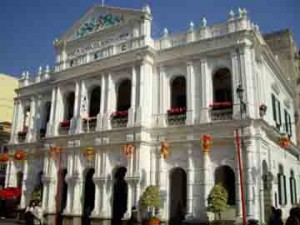
Portuguese colonial architecture abounds in Macau

Whether it’s spelled “Macao,” or “Macau,” millions of people visit here every year as their “Fun HQ,”  the gaming headquarters of Asia.  There’s a lot to do here too, even if you don’t gamble. 

We recommend seeing the classic Colonial Portuguese architecture, embodied in her colonial churches, and a couple of the museums are well worth a stop (we’d take the risk of calling the Macau Museum of Art “world-class”… it’s that good.)  

Take a peek at our Macau Top 4, and use our GPS-enabled coordinates to get around, even if your taxi driver doesn’t speak English.  Shop at the many antique furniture stores and art galleries, and boutiques, where you’ll pay less for equal value than you would in neighboring Hong Kong. 

Nightlife has traditionally been set up for guys here in Macau, and not much has changed, and much of the vibe centers around casino life.  Essentially Macao is here to provide entertainment value, whether you’re gaming or socializing.  The great news is, you can have a great time in Macau by doing neither, and enjoy the culture instead! 

Caveats?  Only one.  Few people here speak English, and Cantonese is the rule.You’ll therefore have to carry one of the free local tourist maps with you when you’re in a taxi, so you can point to the dual-entry Chinese-English word for a place.  Same goes for people on the street.  The good news is that Macau is small, and even when you’re lost, you’re still centrally-located.  The GPS coordinates in our Macau pages will help you tremendouslyas you navigate through this fascinating city. 

Getting to and around Macau  

Flights arrive at the Macau International Airport, a few kilometers away on the neighboring island of Taipa, and 15 minutes from the Macau ferry Terminal.  Arrival and departure information can be found at www.macau-airport.gov.mo  Lots of boats are available to and from Hong Kong, including the TurboJet at www.turbojet.com.hk

Taxi fare in and around Macau is cheap (flag drop begins at $11 HKD.)  All taxis have meters, but few drivers speak English, so carry a map with you with Chinese and English place-names.

Malang, gateway city to East Java, Indonesia

Written By: herbrunbridge - May• 31•10

Warm smiles greet the visitor walking through Malang's Islamic neighborhood

The pretty Dutch colonial city of Malang is a great place to spend a couple of days, with good restaurants, nice hotels, interesting things to see in the city, and a good city from which to book tours to nearby temples and the extraordinary volcanic region of Gunung Bromo. 

Malang Top 4 

1) We found the most intriguing part of Malang was to take a walk through the Islamic quarter, starting at the mosque on Jalal Kauman Merdeka. Here, you’ll find a moderate Islamic culture you probably won’t read about in the Press. The people are friendly, love western visitors, and are ready with a quick smile. As we were taking pictures, we were invited into a home to meet the whole family and share tea. The whole neighborhood is a fun walk, and not crowded with tourists. 

2) Tour the Gunung Bromo volcanic area. This fascinating trip is worth two or three days of your time, taking you to interesting spots such as Gunung Bromo, Gunung Penanjakan, and the extraordinary turquoise lake and sulphur area at Kawah Ijen. Other tours available in Malang will take you to Gunung Semeru, the highest peak in Java. 

3) To the west, book a one day tour that will take you to the wonderful temples at Panataran. These are close to the nearby city of Blitar, where a visit to the Sukarno boyhood home, and Sukarno’s grave and museum are worthwhile for an insight into Indonesia’s development as a nation.

4 For a very nice half-day trip just 20 km to the east, visit the nearby temples of Candi Kidal and Candi Jago.

Candi Kidal & Candi Jago temples in Java, Indonesia

Written By: herbrunbridge - May• 31•10

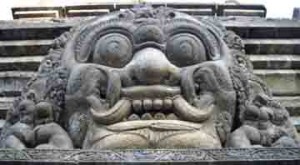
Sculpture at Candi Kidal

These two small but interesting templesare best visited on a day trip from the nearby city of Malang, roughly 20 km away.

Candi Kidal has wonderful examples of Javanese sculpture. Construction was begun in approximately 1250 as the funerary temple of King Anusapati. The temple is located at GPS S08°02.181’ E112°42.500’ 

Candi Jago, while in a state of disrepair, has intesting carvings, and is in a very pretty setting, maintained by a family that lives onsite. Candi Jago is located at GPS S08°00.343’ E112°45.858’

Magnificent Panataran Temples in Java, Indonesia

Written By: herbrunbridge - May• 31•10

The temples at Panataran are noted for their architecture as well as for their extraordinary sculptures, and are located in a beautiful setting. Considered by several scholars to be among the best examples of East Javanese architecture and sculpture, they were initially constructed in 1200 ACE, but took another 300 or so years to finish. These keystones of the Majapahit dynasty are best seen in the late afternoon sun, and there is also a very nice museum onsite. 

The entrance of the temple complex is at GPS S08°00.962’ E112°12.554’
The museum is located at GPS S08°00.760’ E112°12.499’ 

Just 16 km from the city of Blitar, the Panataran temples can also been seen in a day trip from the city of Malang as well.

WoWasis Book review: Timothy Hallinan’s ‘Nail Through the Heart’

Written By: herbrunbridge - May• 31•10

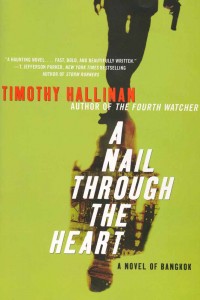
One of the gripes voiced by veteran readers of Bangkok Fiction is that the common plot of western man-meets-bargirl has become so hackneyed that it’s really served its time, and should either be upgraded or retired. We’ve started to feel the same way about its replacements, the girl gets trafficked or children are molested by gross Westerners themes. Author Timothy Hallinan, is his A Nail Through the Heart (2007, ISBN 978-0-06-125580-9) has managed, to a large extent, to overcome the bathos inherent in much of the writing on children get molested themes, providing a scenario that offers compelling twists and turns for the reader. 

The is the first in a series of books Rafferty has either written— or will write — about his protagonist Poke Rafferty, who lives in Bangkok. Recurring people in his life include Rose, an ex-bargirl, and Miaow, a young girl with some serious street experience. We don’t know a whole lot about Rafferty at the beginning, other than the fact that he’s written a series of edgy travel books on Asia. Along the way, we find he’s pretty proficient at breaking and entering, and hand-to-hand and small arms combat. In ‘Nail,’ he takes on a missing person’s case that soon involves child pornography, and eventually involves a real nasty foe that was responsible for some egregious actions on behalf of the Khmer Rouge in Cambodia at the infamous Tuol Sleng prison. 

Overall, the plot is good, the writing prosaic, and several of the characters are memorable. Hallinan does a nice job of character development, especially concerning the street urchin ‘Superman.’ The author displays a good working knowledge of the Bangkok police system as it relates to money, bribery, and favors, and like all Bangkok Fiction, involves the city as a character unto itself. He has an unmistakable flair for the dramatic, and with 60 or so pages to go at midnight one night, we elected to make a strong pot of coffee and finish the book, rather than waiting until the next day for the suspense to unravel, a compliment to any author. 

We were less comfortable, though, with the feeling we get that Hallinan just doesn’t like punters, otherwise known as western men that engage in Bangkok’s adult nightlife. It’s tempting for western authors to paint Bangkok’s troubles, from bribery, to kiddie porn, to adult trafficking, on the canvas of western male visitors, who after all, are as varied in terms of their personalities as the countries from which they come. Whether this concern has merit should be borne out by the following book in the series, The Fourth Watcher. In summation, Hallinan’s a very good writer with a uniquely different perspective on the Bangkok experience than many of the authors in the genre that have preceded him. We look forward to his subsequent books in the series. Buy it now at the WoWasis estore, powered by Amazon.

Interview with Timothy Hallinan

Bold color fashions from Bangkok: Introducing Muung-Doo’s Masiri Tamsakul

Written By: herbrunbridge - May• 31•10

Masiri Tamsakul’s striking, colorful fashions seem to literally leap out at unsuspecting Bangkok fashion enthusiasts, their playful, yet elegant lines showing themselves off boldly in timeless designs, ready for urban, resort, and elegant occasions. 

As a child, she enjoyed drawing and sketching, and later developed a passion for advertising, getting her BA in Mass Communications and Advertising from Bangkok’s Chulalongkorn University, and an MFA in Visual Communication from Washington D.C.’s George Washington University. She arrived at Muung-Doo in 1999, where owner Na-Chanok Ratanadaros, seeing her talented eye for design, promoted her to product designer in.  She soon was designing cushions and candleholders for Muung Doo’s housewares line.   In 2001, Muung-Doo decided to go full-force into fashion, and Masiri, who had by this time become enamored of Thai silk, launched her first clothing line at Elle Fashion Week in Bangkok. 

In 2003, after taking a pattern class at Alliance Française, she took all pattern-making and sewing in-house.  Today, she has two pattern-makers and five sewers. 

Khun Masiri’s strength is color and texture, and she eschews seasonal fashions, preferring instead to evolve the line as time goes on.  For this reason, shoppers will be able to buy her fashions with constantly progressing detail work.  “Because colors change subtly each time I buy silk, the creations still look new each time I make them.  I will put only two or three examples of each design in our shops, and if Western shoppers cannot find their size, I can make a design for them, generally in one week.”  In addition, she’s custom-designed for Middle Eastern women, who tend to desire longer skirts. 

Masiri has launched three lines of clothing.   Urban Chic has a teenage look, Elegant Chic can be worn for formal and semi-formal occasions, and Resort Chic is a dressy, exotic line that can be worn just about anywhere. 

She’s been heavily influenced by French design, having traveled there continuously since she was small (her father worked for Air France).  Several of her designs include art-deco influenced motifs, and she’s begun to use “smocking” elastic techniques more and more to allow for greater options in sizing.  She prefers Thai silk, both in one and two-ply.     

While you can see her designs on the ThaiOasis website, Masiri encourages you to visit her shops, where you can feel the rich texture of her garments, and admire the fascinating colors of her palette. 

Design Philosophy 

“People want to wear unique clothes, and that’s why I only put 2 or 3 examples of a design in each store.  I produce one or two new designs each week….. I love changing color schemes.I don’t like the idea of developing season-based fashions.  These are fluid designs, and people like wearing these fashions the whole year.  I don’t like silk to look too traditional… I like to add humor and fun, and reach for the younger generation. Sometimes, I’ll reverse the stitching to make it more funky… I’ll cut out pieces, then stitch them back on.  One of the issues with silk is that it can be stiff… and that’s why I like smocking, to allow the fabric to expand and contact with the wearer. I want people who wear my clothes to feel that they’re wearing an art piece… I don’t want people to wear my designs and feel that they’re out of fashion.” 

See Masiri Tamsakul’s designs at: 

Muung-Doo boutique
Emporium department store, 1st floor
BTS Skytrain Phrom Phong station

Muung-Doo boutique
Bangkok Fashion Society shop
Gaysorn Plaza department store, 2nd floor
BTS Skytrain Phrom Phong station

Bangkok’s Fashion Trio: Introducing Chai Jeamamornrat, Patsarun Sriluansoi, and Sunshine of Headquarter Bangkok

Written By: herbrunbridge - May• 31•10

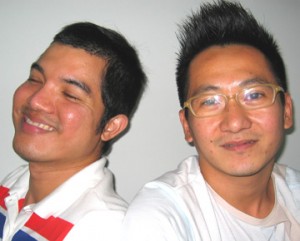
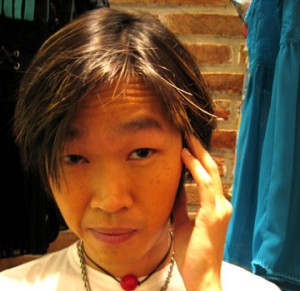
Pat and Chai from Headquarter Bangkok

It’s always exciting to see the work of a young, talented designer, and here, the experience for Bangkok fashion enthusiasts is trebled at Headquarter Bangkok, where three extraordinary designers have pooled their creativity to create three distinct, but complimentary lines at their own boutique.  They use high-quality fabric from Japan and Hong Kong, among other places, and are not currently planning for export.  When you wear HeadQuarter fashions in your own country, you’ll be wearing something truly unique. 

Chai Jeamamornrat, 27, was born in Nakhorn Si Thammarat,  has known Patsarun for 10 years.  His father was a tailor, mother a dressmaker.   He holds a BA in Visual design form Silpakorn University, and another BA, plus an MA in the Department of Fashion and Costume Design, in Oslo.  Prior to HeadQuarter, his collections included ‘Mae Fah Luang’ in 2000 and 2002, ‘RIKO’ in 2001, and Senada Sense in 2003, all presented at Elle Magazine’s Fashion Week. 

Patsarun Sriluansoi’s parents encouraged him in his goal to be a designer.  His father was  a civil servant (now a monk), and his aunt was a dressmaker.  Patsarun studied Fashion  Design at LaSalle College in Montréal.  His brand “Realistic Situation”, for men and women, will be sold in HeadQuarter, as well as the GEO store on Sukhumvit 55.  

Sunshine (Jirat  Subpisankul), 27, recived a BA from Bangkok University in Communication Arts, and a BA in Fashion (Womenswear) from Central Saint Martin’s College of Art and Design.  He designed for the Passaya house for two years, sites tribal and Victorian influences.  His collection of 2001 featured Akha-style headgear in a muted palette of colors.  Additional collections show a marked influence of Op Art from the 1960s.  His “Knots” collection for Passaya suggests bondage motifs in the large yarn ropes which adorn his designs.  Additional influences appear to be Japanese-themed bondage cinema (he was unavailable for interviews as we went to press).  

Design Philosophy 

“I am influenced by music and nature.  I like organic life and free movement in light and shadow, reflected light as well.  I try to transfer a concept like Techno music into street clothes…” We are a new generation, and are going to launch something between creativity and commercial… before, I used silk, but I feel the look is an old one.  Today, I prefer cotton, stretched cotton, and linen. I like texture… I experiment with the surface of the textile.  I like prints, wrinkled, layered pleats, matte and glossy.  I call my work ‘Streetcraft,’ using needlework, patchwork, and embroidery. My creations are simple in structure… I tend to use fabric from Japan and Hong Kong, and feel it’s softer and better-woven, due to the higher technology in the looms there. I want to keep everything unique… everything in the shop will be limited edition.  At the same time, we want our fashions to be affordable, so prices will range from 1,000 to 7,000 baht ($25-$175 USD).” 

–  Chai Jeamamornrat 

“I like experimental design… something more fun, the concept is really deconstruction’…  lots of my fashions are meant to be worn wrinkled. Fashion is all about change.  Today, we’re more influence by the media than ever, and world teen culture is becoming [homogenized] as information races from country to country. I am influenced by the politics of the Russian Revolution, and Russian Constructivism from the 1920s.  I like advertising posters from at that time…  black, white, and red, with a masculine look.”  

–  Patsarun Sriluansoi 

“I love going to exhibitions and galleries to discover new hype and talent.  In my leisure time, I avidly read the important style magazines, music, interior and exterior decorating.  I also collect second hand and vintage clothes.” 

– Sunshine 

To see these striking, bold fashions made by these young designers, visit:
Headquarter Bangkok, located on the 3rd floor of the Siam Centre shopping complex, near the BTS Siam Square Skytrain station

From Thumbelina to India: Bangkok Fashion Designer Nat Mangkang of Kloset

Written By: herbrunbridge - May• 31•10

One of the leading lights of the Bangkok fashion industry, Bangkok-born Nat Mangkang chuckles today when he recalls his studies in the field of Human Resources.  “I was always reading fashion magazines,” he remembers, “and I acquired a number of friends who loved fashion as much as I did.”  Soon, his friends were asking him to design clothes for them.  This small but significant endeavor eventually landed him a tiny shop in Siam Square, where he debuted his “Figure” brand.    His Siam Square neighbor was Natthavipha Ruangkritya, who, with sister Mollika, was launching the Kloset fashion brand. 

In 2001, the Ruangkritya sisters moved their operation to the Zen department store, and invited Nat to join them as a designer.  Nat’s first collection for Kloset was the “Country Girl” collection, a whimsical tribute to the American west, and introducing his butterfly motif, to evoke a “soft wing-like natural country girl.” 

Today, Nat’s casual fashions, with their French, Korean, Japanese, Indian, and Thai fabrics, and multi-faceted design elements, are representative of the evolution of his butterfly concept to his “Thumbelina” muse.  Designing primarily for younger women, he utilizes sheer Indian chiffon, hand-stitching, sequined borders, shoe-lacing, and embroidery.  His clothes have become popular in Kloset shops in Central Chitlom, Central Phuket, Emporium, Zen, and the Kloset flagship store in Gaysorn Plaza, and they are exported to Hong Kong and Singapore. 

Design philosophy 

“I envision my Thumbelina concept to make a woman feel like she’s floating on wings, combining cotton with soft chiffon tops, allowing women to have more fun, while still retaining an innocent charm.  I love mix-and-match, with lots of details.  Lots of women love to wear jeans, and I’ve created a softer look through colorful cotton, which I think women will love to wear.”  

At the young age of 30, Nat sees the quality of his clothing becoming more highly evolved through his sales in stores such as Kloset Gaysorn.  “Before, when I had my small shop, I couldn’t afford the best fabrics because the market just wasn’t there.  Now, even though I make clothes for all budgets, I can create intricate, beautiful designs of high quality.”  Nat Mangkang is an emerging, exciting designer whose work will soon, we believe, be seen increasingly in international shows and events. 

Nat’s designs are featured in Kloset shops at the department stores listed above.  For a comprehensive selection, visit the Kloset flagship store, 2nd floor of Gaysorn Plaza.  www.klosetdesign.com

Sassy Bangkok fashion wear for everyday use: Introducing Kay Sachakul of The Oddyssee

Written By: herbrunbridge - May• 30•10

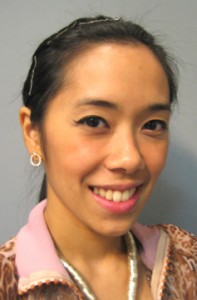
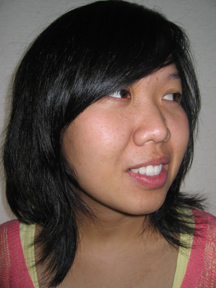
Kay Sachakul

When Prin “Kay” Sachakul says she wants her fashions for young women to be accessible

for the average Thai lady, she means it. In the world of Bangkok fashion, she’s an iconoclast. Rather than locating her shop at a glitzy complex, she put her first shop on the second floor of the slightly down-market Siam Theatre, on the south side of the Siam Square BTS station. There, on the same floor, were hair salons, a beauty school, and nail parlors, catering to the same customers for whom Kay designs.  

Her shop doubled as an art, sculpture, and photography gallery, incorporating a coffee shop.  “There’s never as much to do, gallery-wise, as there should be in Bangkok,” she notes. “Here, I change the shows every two weeks to one month.  What we’re doing is creating a “scene” for Bangkok, much like what you’d find in New York, Paris, or London.” 

After her smashing success at the November, 2004 Elle Bangkok Fashion Week ,  she moved across the street, to Siam Centre, still along the trading lanes traveled by her savvy, street-smart clientele.  Future plans include regenerating the coffee shop-art gallery in another space, which she’ll coordinate with designer Romain Dupuy. 

One quickly finds that Kay is more than the designer of smart, sassy streetwear. Kay’s background is heavily steeped in the arts.  Born in the U.S., her parents are professors who have always supported her desire to design clothes. She received her BA in Graphic Design from Chulalongkorn University in 1998, then opened a store in Chatuchak Market, selling her silkscreened t-shirts.  Soon, she was on her way to Paris where she received a diploma in textile design from the prestigious L’institut Superieur de L’art Appliqué.  

Returning to Bangkok in 1998, she ran into Chanita “Lee” Preechawitayakul of Senada Theory, who hired Kay two days later.  In her 18-month tenure with Senada, she designed the Senada Sense and Senada Vintage lines.  “It was exciting working at Senada… looking after design and all elements of production was tiring, but ultimately gratifying.” 

Kay’s first store was launched on October 1, 2003.  Why Siam Square?  “I like to see young people become involved in art. Maybe one out of every ten passersby walk in, and Bangkok doesn’t have many small museums and galleries… we wanted to put ourselves in the middle of a shopping district that attracts lots of young people.” Her prices are affordable for the average young Thai working woman, the designs contemporary. 

Her first collection, “Funk Nouveau”, was inspired by 1970’s Funk culture (she’s a fan of Kool & the Gang), and her current collection is called “Wannabe…” with designs loaded with small details, buttons, snaps (we loved the architecture-like working snaps on a great-looking tan and beige pair of pants).  

Oddyssee pants, skirts, and tops are essentially urban streetwear, utilizing rich cottons with motifs such as block printing and working snaps incorporating old bolts of vintage fabric, and juxtaposing them with the new.  “I mix old colors with old motifs, graphics…”  She holds up a nicely made top consisting of a cinematically-inspired photo montage: “This is made from block printing, and are photos of my friends.”  She selects a skirt with a printed design reminiscent of old French embroidered fabric, and discusses her enjoyment of older fabrics and design elements:  “It’s important, I know, to track all the new trends form year-to-year, and I do… but they’re not necessarily going to affect what I do with my own designs.” 

It’s apparent to us that Kay’s more than just an emerging, talented designer.  Her shop is worth a stop, and represents an interdisciplinary approach to art and design that we’re convinced will contribute to the Bangkok scene for sometime to come. 

The Oddyssee Mode Visual Loft, 3rdd Floor, Siam Centre,  BTS Siam Square Skytrain station.  Tel: (02) 658 1173

Extraordinary houseware designs through sustainable materials: Introducing Bangkok’s Pawinee Santisiri of Ayodhya

Written By: herbrunbridge - May• 30•10

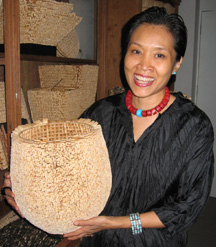
If “doing well by doing good” is a measure of success, Khun Pawinee of Ayodhya must be doing well indeed.  Her Ayodhya designs make resplendent use of water hyacinth, a plant that is normally seen as a fast-breeding threat to navigable waterways.  She employs hundreds of families in processing the vines for production, providing economic solutions for country families and helping to solve a navigation crisis in the bargain. 

Perhaps the most striking element of Ayodhya’s houseware products are the astounding selection of textures, from the cork-like endpieces of the hyacinth that can be found on bowls and rugs, to the intricate weavings found on boxes.  These unique pieces are a feast for the eye, and are displayed in Khun Pawinee’s beautifully designed clean, uncluttered shop interiors in Bangkok and Chiang Mai.

Her story 

Khun Pawinee was born in Bangkok, one of six children.  Her father, a Thai Air Force Marshal, raised the family in an open-minded manner along with Pawinee’s mother, who sewed clothes for the family.  Pawinee began drawing and painting at an early age, and, finding an early affinity for architecture, began drawing trees for her cousin’s architectural plans. 

She entered Bangkok’s Silpakorn University to study interior design and architecture, and received her Bachelor of Fine Arts degree in Decorative Arts in 1976.  She founded Sahacha, Ltd. architectural and interior design firm in 1979.  In 1989, after having spent two years researching the feasibility of utilizing water hyacinth as a commercial resource, she co-founded Yothaka International Co., Ltd., which sells furniture utilizing the plant.  In 1995, she founded Ayodhya Ltd., which distributes water hyancinth-based designs world wide, and operates retail shops within Thailand. 

The water-hyancinth story is a fascinating look at the process of building a sustainable, ecologically-friendly product line that benefits local economies in several ways.  The project began with the Friends of Women’s World Banking Association in Thailand (FWWBT), who funded Pawinee’s research as to the feasibility of using water hyacinth stem as raw material for furniture manufacturing.  The raw material was found in abundance in Lake Phayao in northern Thailand, where its rapid growth presented a generations-old problem in navigating blocked waterways.  Pawinee’s work included studying potential ways of processing hyacinth, investigating the effect of mold on the material, and dealing with variation in color.  

Human resource issues were important as well, in determining the best localities for processing, where workers would be motivated to do the work.  She experimented with sewing, weaving, and placing the material on frames.  Finally, she developed prototype room displays, and opened her first Yothaka shop at Peninsula Plaza, adjacent to Bangkok’s Chao Phraya river. 

In 1995, she opened her first Ayodhya shop, specializing in high-design housewares, including baskets, bowls, placemats, rugs, and small boxes.  Together, the Yotaka furniture and Ayodhya houseware lines have utilized over 7 million meters of water hyacinth, supplied by over 500 families, and processed by over 200 workers.  The material is cut, dried on off-season rice paddies, then woven in the workers’ spare time. 

Along the way, Pawinee’s managed to keep busy working on side projects that interested her, one of which was the traditional Thai design of the Shangri-La Hotel shuttle boat on the Chao Phraya, done in 1990.  She also developed the interior design prototype of  the Jim Thompson shop’s local and overseas branches. 

As an important social contribution, she designed and manufactured handicrafts and furniture using the warehoused products of Her Majesty Queen Sirikit’s SUPPORT Foundation.  The final product was twenty sets of furniture, auctioned to support the Queen’s initiative for training villagers to grow and process native materials, and produce crafts that will economically benefit their families and communities.  The auction raised more than 100 million baht for the program. 

Design philosophy 

“I’m a texture person, and need to see variations… sometimes ceramic textures inspire me, and I test everything myself, from weaving through design.  I always have at least four or five designs in process, then pick the one that interests me the most.” 

“There has to be a lot of balance in selecting a product… can we make it affordable, and also pay our workers well?  We experiment with a prototype for two months to determine if all the factors are there to make the product work, commercially.  Every year, we strive to differentiate our products, looking for new designs, new ways of processing the material…  we have a new collection each year, with our focus on designing exciting products that will appeal to the world market.” 

“I’d like visitors to our shops to appreciate the idea that in buying beautifully designed housewares and furniture, that they’re also benefiting Thai villages and workers, and helping to raise their standard of living.” 

Ayodhya designs are available in Bangkok at: 

Ayodhya
Third Floor, Gaysorn Plaza
BTS Skytrain Chitlom station
Tel: (02) 656-1089 

Ayodhya boutique
Exotique Thai shop
Emporium, 4th Floor
BTS Skytrain Phrom Phong station 

Panta
Siam Discovery Center, 4th Floor
BTS Skytrain Siam station
Tel: (02) 658-0415 

Ayodhya designs are available in Chiang Mai at: 

Ayodhya
Nimmanhemin Soi 1
Chiang Mai
Tel: (053) 358-249
GPS:  N18°47.984’  E098°58.062’