The sharper edge to traveling in Asia

Bangkok Fashion’s New Traditionalist: Adisak Rojsiriphan of Zenithorial

Written By: herbrunbridge - May• 30•10

Adisak Rojsiriphan is an important player in Bangkok’s fashion scene. With influences as varied as Frank Lloyd Wright, Charles and Ray Eames, Le Corbusier, and Philippe Stark, you wouldn’t be surprised to discover Adisak’s masculine fashions to have a firm basis of construction, a strong foundation over which to build a decorative façade of color, texture, and design.  “My clothes are contemporary, but they’re classic designs that will never be out of date… they are made to last, and I use 8 stitches per centimeter, and no one else does that.” 

As a young boy in Bangkok, Adisak became enthralled with fashion when he went to his mother’s dressmaker, and became curious as to how a paper pattern could be turned into clothing.  The dressmaker taught him the essentials, and he began working for a tailor as a teen.  Although his parents encouraged his fashion pursuits, he got his BA, from Bangkok’s Assumption University, in Business Administration. 

In 1987, he opened a small shop on Rama IV’s Issara Tower, then the fashion hub of Bangkok, and he light-heartedly refers to his first collection as “quite messy — colorful, complex, with lots of detail.”  Ornamentation elements in the collection included origami-styled pockets, and soon magazines were taking notice.  After one and a half years, he perceived that Issara was starting to lose its luster, and moved his shop to Siam Square, which was becoming a center known for young designers.  Soon, he launched his first show, a collection for women with mix-and-match patterns, held at the Oriental Hotel. 

In 1992, he joined four other designers at the “Through the Power of Five” show at the Landmark Hotel, and received enough acclaim that he decided to become a full-time designer, with 70% of his production geared toward women.  Two events soon temporarily derailed him, however.  In 1994, Siam Center caught on fire, and his shop was closed for a year as the center was repaired. Then, in 1997, Thailand’s economic crash forced him to close his shop.  For a number of months, he left fashion, selling jewelry in his mother’s shop, while continuing to amass his growing and notable collection of classic European furniture. 

In late 1997, he decided to open his shop at Gaysorn Plaza.  When asked how he could afford moving his shop to the glamorous shopping complex, he replies “I sold a lot of my furniture… and truthfully, I really miss my old pieces.”  His fashions for men were in the classic palette of black, white, and gray, and he used high-end fabrics from Japan, Hong Kong, Singapore, and Europe. 

Today, Khun Adisak is one of the few designers working exclusively in classic men’s fashions, and his line includes classic, sport, and casual clothes.  His background is tailoring, so if you’re a man with a traditional western build, he will make anything on display for you, fully customized, for the same price you’ll see on the rack (just make an appointment while you’re at the shop, and he’ll arrange a fitting.) 

Design Philosophy 

“All of my designs are unique, and I produce only eight to ten pieces of each design.  What you see on my racks is what I have, as I do not have backstock.  In Gaysorn, much of my clientele is not Thai, so I’m quite used to making customized sizes of what I have in the shop for visitors, who are generally larger in stature than many Thais. Roughly 40% of my business is custom.” 

“I design for men, because women, especially ion Bangkok, have so many choices, and men do not.  You can call my styles exclusive, but trendy, and affordable.  I love the traditional English tailoring, Saville Row, the quality and tradition.  I specialize in slender, European style fit, with a de-emphasis on shoulder pads, and men really like my low-waisted pants… if you’re big, I can give you a slimmer silhouette.” 

“Much fashion is so trendy, it’s out of style very quickly.  My fashions are meant to be timeless — they can be worn forever.   We create clothes for every occasion, and love it when men look like gentlemen.” 

In addition to his design and architectural influences, he has been heavily motivated by the philosophy of King Bhumibol, and his concept of sufficiency, which encompasses learning, self-reliance, and participation.  “I have the conscience of the King as my rule, that everyone must do the best he can, within his limits, to be self-sufficient.” 

Taking the King’s philosophy one step further, Adisak is planning a book that will teach Thai men the basics of fashion.  “We’re not as educated as we could be, and today, Thai men don’t have a guide that gives them information on how to dress, or when to dress for specific events.”  

It is at the nexus of trend and classicism, that New Traditionalist Adisak Rojsiriphan of Zenith, is evolving the concept of men’s fashion in Thailand. 

Zenithorial, 2nd Floor, Gaysorn Plaza, Bangkok (BTS Chitlom Skytrain station.   tel: (02) 656-1064.
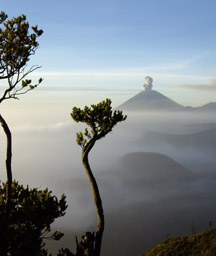
The stunning Gunung Bromo volcanic area in Java, Indonesia

Written By: herbrunbridge - May• 29•10

Gunung Semeru as seen from Gunung Penanjakan

The volcanic area near Gunung Bromo is a not-to-be-missed experience in East Java, and is best booked as a two day trip from the city of Malang. Better still, add another day for a visit to the spectacular sulphuric atmosphere of the volcano Kawah Ijen as well, and stay overnight in a coffee plantation. 

Prior to visiting Gunung Bromo, you’ll want to make a stop at dawn to Gunung Penanjakan along the way, where you’ll see wonderful sunrise vistas which include the plumed Gunung Semeru to the south, Java’s highest peak at 3676 meters in altitude. On a clear Penanjakan morning, you’ll also be able to see the adjacent volcanoes of Gunung Bromo, Gunung Batok, and Gunung Kursi which ring a huge crater spanning 10km. 

After Penjanakan, your visit will take you to Gunung Bromo, where you’ll climb to the spectacular crater rim to look into the caldera’s still active surface, a stunning vista that makes this trip unforgettable.

Kawah Ijen sulphur haulers in Java, Indonesia: the world’s worst job?

Written By: herbrunbridge - May• 29•10

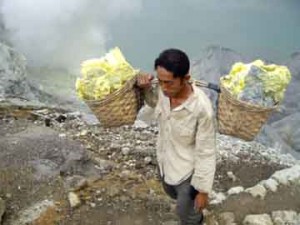
A sulphur worker climbing up the rim at Kawah Ijen volcano

The trek up the Kawah Ijen volcano, then down to the fiery natural sulphur furnace near the famed turquoise lake is one of the most interesting treks in Java. It’s roughly 2km up to the crater’s edge, then perhaps another 1 km down the steep interior to the beds of raging sulphur fountains, where workers break the drying sulphur slabs free, then load them onto the double baskets carried by workers, who bring their 100 lb loads up the crater, and over to the transfer station on the other side. During this arduous climb, on scree-laden slopes, poisonous clouds of sulphuric gases rise from the pits and sear the lungs, making this one of the most challenging working environments in the world. 

The workers are paid little, and live in a camp over the rim, adjacent to the transfer station.  There’s not a lot of work in this part of Java, and these hardy workers have been doing this for generations. 

For travelers, the views can be breathtaking, but the climb down the crater takes a physical toll, as the switchbacks are narrow, the path rough, and sulphur gases omnipresent. At the bottom, visitors dodge gas clouds propelled by the breeze as they watch the workers braving rivers of molten sulphur as they break apart the drying chunks of rock. 

At 6,000 feet in elevation, the lake bubbles in correspondence with the billowing clouds of gases spewing continually from vents in the volcano. Trekking guides don’t like this climb for its danger, and hikers have been known to fall to their deaths, or have been overcome by the toxic clouds. 

Tours, which include the volcano of Gunung Bromo, can be booked from the city of Malang. In the area, stays can be arranged at many of the coffee plantations which surround the area. We enjoyed the Catimore Homestay (Tel 0868-12107942), which has meals, clean rooms, and hot water. 

Although it’s a tough trek, we recommend a visit to Kawah Ijen for the views, the volcanism, and for a sobering look at one of the world’s most dangerous and challenging jobs.

The Good Manner: When the lady is a ladyboy

Written By: herbrunbridge - May• 29•10

The Good Manner: Love & Relationship Advice from WoWasis’ Pa Farang
This week’s dilemma: my grifriend is a ladyboy

Dear Pa Farang, 

As a twenty-year military man now stationed in Thailand, I’m faced with something I never encountered at home.  I’m writing to you, because I can’t discuss this with anyone at the base.  I might add that I’m considered handsome, a man’s man, and 100% heterosexual. 

I’ll lay it on the line.  My ex and I divorced last year after a twenty year marriage, mostly good, occasionally one or snafus, and we raised a couple of good kids.  The military life can be a lonely one without some companionship, and last year, to my utter joy, I fell in love with Tilac, a stunning 22 year old girl who is a wonderful conversationalist, and has taken over my house, washing my clothes, making dinner, and generally keeping a good house.  Initially, I had noticed that her hands and feet were a bit on the large side (the latter she told, me, was because she swam a lot as a youngster).  Anyway, Pa Farang, the girlfriend of a buddy told him that Tilac is no lady at all, but a man!  I thought this was absurd, and told Tilac, who ran out of the house in tears.  She’s been away for two days, and I’ve never been sadder.  I don’t know what to do.  As a Baptist, I’m going to have a difficult time accepting this, if it turns out she is, in Thai nomenclature, a Ladyboy.  I must add that we had normal sexual relations, so I never saw anything like this coming. 

Do you know of any other westerners who’ve been faced with this?  And how is a man supposed to react to this?  Have I been deceived?  Was she after my money? And how am I supposed to react now?  I’ll admit it: I miss her.
–          Sergeant in Suspense

Dear Sarge, 

While you’re obviously in pain, I do want to ask, as a Baptist, isn’t premarital sex prohibited by your sect?  If so, and you have violated that rule, why are you worried about with whom you have violated it?  This is not a column dedicated to spiritual matters, but you might want to sort this one out.  These dilemmas are common in Thailand, and have convinced many a westerner to consider the merits of the Buddhist philosophy.

 Now to the specifics of your challenge.  Based on what you’re saying, Tilac is, indeed a Ladyboy.  This does not make you, as my colleague Uncle Go would put it, a “gay king”.  It is estimated by scholar Richard Totman that between .01 to .05% of the Thai population are ladyboys, so at roughly 62 million people, that would amount to between 62,000 and 310,000 individuals in a geographical area the size of France.  Ladyboys often determine their future while in their early teens, and begin living and dressing as women at that time.  As a rule, Thai families are far more accepting of the preferences of their adolescents that are western families, and in Theravedic Buddhism, being a ladyboy is often considered a result of certain activities in past lives.  The Thai philosophy, therefore, is one of compassion or sympathy, as each Thai may have been, or could be, a ladyboy in another life.  Throughout Thailand, you will encounter ladyboy entertainment shows, and Thai soap operas often feature them as characters.  Ladyboys sometime have sex-change operations , some do not.  From your description, Tilac did. 

What should you do?  If you’re in love, I suggest you re-contact Tilac, who is probably waiting for you, but concerned about your reaction.  Tell her that, as a western man, you find the situation not common to your culture.  Show The Good Manner by discussing things calmly, and follow your heart.  Even though bringing your ladyboy girlfriend to an important business dinner may be something you may want to reconsider, most Thais will accept your relationship.  This will not be the case in other SE Asian countries, and you may have a problem getting her into your own country, as her passport will identify her as being male.  Incidentally, you will often hear the word “katoey”, instead of “ladyboy”.  Many ladyboys consider this a pejorative term, so be sure you ask Tilac which word she prefers.  Tilac is a lady, and should be treated with the same dignity with which you’d treat any other lady you care deeply about.

– Pa Farang

Read Pa Farang’s other columns for more advice on relationships in Southeast Asia

Bachelor in Bangkok: Those Generous Sponsors

Written By: herbrunbridge - May• 29•10

A very common topic of conversation among local guys is the strange phenomenon of men who don’t live in Thailand full time but send money every month to an entertainment provider. We refer to these guys as “sponsors” or “providers” but generally the girls just call them “farangs.”  Well, there are some less flattering terms we use for these guys but heck, this is my first column and I am trying to be nice!

Last week I was chatting with a lovely young lass I have known for a year or so who works in a Bangkok Beer Bar. She was quite depressed as her best friend had just left the bar, and if there is one thing that keeps these girls going its having a close friend in the workplace to pass the time with. As it turns out, her friend has quit working at the bar because she has a sponsor from England who is sending her money every month. This girl is actually quite lovely and has a pretty nice Thai boyfriend as well. He is a decent sort and the 4 of us have gone bowling a number of times. The English sponsor comes to Thailand 2 or 3 times a year for a couple weeks at a clip, so she will be free 90% of the time. What I found most interesting was that most of the “sponsors” I have met actually think that by sending money to the girl every month they are literally putting her up on a shelf away from other men. However in this case, as in many cases, the exact opposite is true. She now doesn’t need to worry about money so she has quit the bar. Her Thai boyfriend also has quit his job as a construction worker as there is plenty of money for both of them. She now doesn’t have to work, gets to live full time with the love of her life, and spends a few weeks a year traveling to Phuket and Ko Samui with her sponsor. A perfect life by any gal’s standards. My friend in the bar tells me this a a very common scenario for these types of cases. When I commented to her that she has a perfect life with no worries, she said that she still has one real worry. She worries about what her boyfriend will be doing (and WHO he will be doing it with) during the time she spends with her sponsor.

So to all you sponsors and providers out there, you really are doing a great service! The gal doesn’t have to work, the Thai boyfriend gets to quit his job too, and the lovers get to spend their days and nights living a life of leisure. Please keep the money coming and don’t forget that I’m not above accepting donations myself. I guarantee I would use the money on the necessities of life!

Read Khun Lee’s other WoWasis columns for more advice on navigating the adult dating scene through the backstreets of Bangkok

WoWasis introduces two exciting new weekly columns

Written By: herbrunbridge - May• 29•10

Pa Farng's 'The Good Manner'

This week, we’re introducing two new columns by veteran writers on the Southeast Asian beat. Pa Farang and Khun Lee each have unique perspectives on the social scene in Bangkok, and their opinions have value when dealing in social situations all over Asia.

Pa Farang’s The Good Manner provides love advice to expat men and women, for the curious, the lonely, the confused, and the cautious. Every week, Pa Farang answers the most vexing of your questions, helping you, by understanding SE Asia’s cultural and social mores, to weave your way through the minefield of broken hearts scattered throughout the region.

Khun Lee's 'Bachelor in Bangkok'

Khun Lee’s Bachelor in Bangkok is a harder-hitting, no holds barred romp through the nightlife scene. A veteran, opinionated, and occasionally acerbic commentator, Khun Lee’s  focus is to prevent you from losing your money, dignity, and self-respect, while navigating Bangkok’s nightlife scene. Bachelor in Bangkok is not for the faint-of-heart, nor the easily offended.

Sukarno Museum and Memorial sites in Blitar, Java, Indonesia

Written By: herbrunbridge - May• 28•10

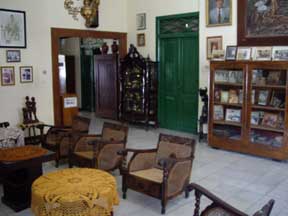
Sitting room in Sukarno's boyhood home

Born Kusno Sosrodihardjo, Sukarno (also spelled Soekarno) was the first president of Indonesia. He was born in the city of Blitar on June 6, 1901, was overthrown by one of his generals, Suharto, in 1967, and died June 21, 1970. 

Known affectionately as Bung Karno in his native city, his body was eventually transferred from an unmarked grave to the large monument called Makam Bung Karno, where a museum dedicated to the life of Sukarno now stands, adjacent to his grave. A visit to the museum is recommended for anyone wishing to learn more about the emergence of Indonesia as a country. It’s located 2 km north of the city at GPS S08°05.152’  E112°10.507’ 

In addition to the burial site and museum, we recommend a visit to Sukarnos’ boyhood home, known as the Museum Soekarno. The house itself is a beautiful example of Dutch Indonesian architecture, and many of Sukarno personal effects have their repositories here, and include his bedroom and state car. Sukarno’s house and museum are located at GPS S08°05.889’  E112°10.568’

Top 3 in Jogjakarta, doorway to Central Java, Indonesia

Written By: herbrunbridge - May• 28•10

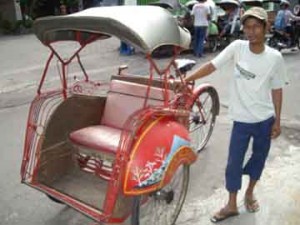
Ride a becak through the old quarter of Jogjakarta

Jogjakarta (also spelled Yogyakarta) is a beautiful city replete with colonial and traditional buildings, cultural events, and is a terrific central location from which to visit nearby temples such as Borobudur. Travel in Jogjakarta is easy by renting any of the colorful three-wheel becak pedicabs that are plentiful throughout the city. 

Jogjakarta Top 3

1) Walk through the kraton, the old walled city. 25,000 people live within the old walls. Here you’ll find the fascinating Water Castle (Taman Sari), the underground mosque, and the Pasar Ngasem (bird market). A walk through the surrounding neighborhood is fascinating. Of particular note is the Golden Pavilion (Bangsal Kencana), part of the Sultan’s palace, which also contains a museum. 

2) See an evening puppet show and dance program. Shadow puppet shows are held nearly every night at the Sonobudoyo Museum, and authentic Ramayana dance and gamelan performances are held at the Purawisata Amusement Park. 

3)  Visit nearby temples. You can take day trips to a number of nearby temples. Among those not to be missed are: 

Borobudur
Dieng Plateau
GedungSongo

Mendut Temple
PlaoSan Temple
Pranbanan Temple

Meraki volacano lahar buries village of Kaliadem

Written By: herbrunbridge - May• 28•10

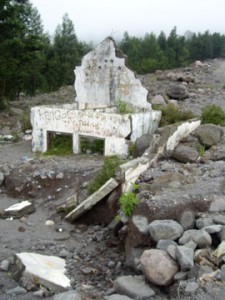
Meraki lahar continues to encroach on one of the few remaining structures at Kaliadem

Gunung Meraki, 30 km north of Jogjakarta, remains Java’s most active volcano. The destructive force of Meraki includes a series of lahars, one of which, in 2006, raced down the bebeng River and buried the town of Kaliadem. Today, a visit to Kalidem is interesting, both for the half-buried remains of the town, as well as for the massive retaining wall that’s been built to confine the detritus as well as can be expected from continuing its destructive path downward to heavy rains. The destroyed village of Kaliadem is located at GPS S07°35.388’  E110°26.551’

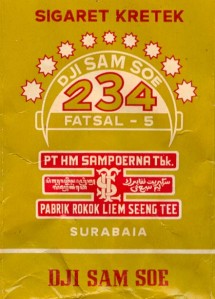
Kretek clove cigarettes Dji Sam Soe 234 from Indonesia

Written By: herbrunbridge - May• 28•10

Wherever you go in Indonesia, you’re going to be feasting on the redolent fragrance of kretek clove cigarettes, and Dji Sam Soe 234 is by far the most popular brand. Blended from Maduro and American tobaccos, kreteks are laced with clove casings, and the tastiest are the unfiltered variety. They are inexpensive and hand-rolled, and we’ve found a wonderful short video that shows exactly how they’re made. 

We found that kreteks’ wrappers quickly became unglued in our mouths, and found small cigarette holders, easily available in Indonesia, as the best way to enjoy the flavor without having the whole thing unravel in our mouths. The kretek is wonderful with coffee, a relaxing way to sit back and enjoy the sights and sounds of Indonesia.