The sharper edge to traveling in Asia

WoWasis on fashion: a great-looking environment-friendly bikini from Aqua Green

Written By: herbrunbridge - Jul• 23•11

Aqua Green's Eco Swim bikini

Here at WoWasis, we’ve been championing natural fiber clothing and accessories for some time. Travel socks made from bamboo, for instance, are the ones we always use at home and on the road. 

Eco fashion is now a buzzword making the rounds, and designer Linda Loudermilk has crafted a bikini that is totally “green,” in the sense that it will completely biodegrade when disposed of. It will not degrade when being worn in water, so it makes for a compelling purchase for an all-green travel wardrobe. Designed as part of her Luxury Eco collection, this no plastics, no poly-anything bikini is now available in stores all over the U.S. 

Designer Jenni Saylor of Aqua Green’s Eco Swim line has designed a fetching bikini that uses recycled natural fibers, nylon, and polyester, and boasts foam cups made from biodegradable plant oil. While not compostable, the design is formidable, and a great step in using recycled materials that make for attractive, comfortable,  and eye-catching swimwear.

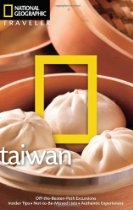
WoWasis book review: Guidebook for Taiwan by National Geographic

Written By: herbrunbridge - Jul• 18•11

Whenever we’re in a foreign country, we here at WoWasis always travel with a guidebook: they’re easier to use and markup than online guides, and we always end up running across stuff by accident that we wouldn’t have discovered otherwise. Our local bookshop only carried one guidebook for Taiwan, and that’s how we acquired (and soon began using) veteran Asia writer Phil Macdonald’s National Geographic Traveler: Taiwan (2011, ISBN 9781426207174). We don’t like panning books (we don’t like dwelling on the negative), but we’ve used this book, and we have some concerns about its usefulness. There are some good points to the book, but there some caveats, too, and they’re important.

Taiwan’s a fascinating place that has great museums in Taipei, coral reef scuba diving and snorkeling in the south, the magnificent Toroko Gorge, the spectacular Jiji railway, and tons of beautiful vistas along the coast. The guidebook is easily divided into 5 color-coded sections, each for a different area of the country. The territorial area maps are good (though city maps are almost non-existent), superior venues highlighted, and Macdonald provides interesting commentary and historical items throughout. The guidebook is in its 3rd edition, but doesn’t differ very much from the 2nd edition, which is the one we use. One of the best elements of the book is its sturdy plastic-coated cardboard cover, with flaps front and rear that are easily used for bookmarking while on the road. This book can take a beating. At 270 pages, it’s compact, and useful. We would have liked a couple of blank notes pages at the end, because we’re inveterate note-takers, but we carry a small notebook anyway for that sort of thing, so it’s not even a minor annoyance. Our feeling is that the dearth of city maps and lack of blank notes pages was the publisher’s call, not the writer’s.

Perhaps the strongest caveat to the book was our feeling that perhaps the author hadn’t really visited all those places he was writing about. The ferry to Green Island would be one example. The Fugang harbor signage was poor or non-existent to the ferry port, the ferry doesn’t hold cars (we had a rented car), you can stay at a hotel on the island, and you can park your car near the ferry terminal on the mainland. None of this important stuff was in the book, so when we found that the last ferry was at 4:30 pm (that wasn’t in the book either), we really didn’t have the time to quickly pack overnight gear and head off to the island. But we actually had to drive there ourselves to find all this stuff out, which is why you’re reading it here in the WoWasis blog. If we could have written about it, so could have Macdonald. That’s what a guidebook is for, isn’t it?

Another example: In Beitou (p. 102), he refers the reader to a place called “Hell Valley.” That’s not how it’s signed (it’s “Thermal Velley”). After mis-naming it, he doen’t say that the sign is fairly well hidden on the left-hand size of the road. Has he ever been there?

During the time we’ve used this book, we’ve taken wild goose chases (poor directions) enough that we’ve burned a lot of time. 

We also would have loved it if the author had been a bit more critical of the crass commercialism at some spots that most travelers, we’d imagine, would find as annoying as we did. There’s no longer free parking at Basian caves, due to the fact that the area that could have been used for parking was taken up by a series of t-shirt, sunglasses, and trinket shops. So now you have to pay for parking to have the privilege of walking past the junk stores on the way to the caves. This sort of obnoxious behavior will always propagate if no one’s willing to call attention to it. short in actual fireld tests.  

We originally recommeded this book for a number of reasons, but have since found that it comes up short in actual field tests. Too many wild goose chases, too much time lost with this one.

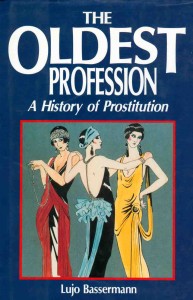
WoWasis sex book review: Lujo Bassermann’s ‘History of Prostitution’

Written By: herbrunbridge - Jul• 08•11

We here at WoWasis were skeptical at first: would this be just another titillating tome, or would there be real substance here?  We were thrilled, because Lujo Bassermann’s The Oldest Profession: A History of Prostitution (1967, ISBN 0-88029-248-2) is scholarly, well-written, and readable. And it’s not a history of prostitution so much as it is a history of some of the best-known prostitutes of all time, albeit limited to those residing in countries associated with Western civilization. He really digs, too. You’d expect to find luminaries such as La Belle Otero and Mata Hari, but we were delighted to read of the excesses of the Greek heterai Phryne in particular, as well as others in the era. Bassermann covers the Romans, medieval times, prostitution associated with the Church, the Russian monarchy, Viennese housemaids, and other fascinating topics as well.

We appreciate Bassermann’s non-judgmental perspective on prostitution, as set forth early in his foreword:

“Accordingly, the subject of venal love and its place in the history
of civilization have been treated in this book from the standpoint
that these are historical themes and do not greatly differ from other
features of human development. A history of torture, for example,
would discuss far more drastic perversions of the nature of man than
are dealt with here. A history of diplomacy would be concerned with
a great deal more wickedness, venality and fraud than are to be
found in the following pages, while if anyone were ever to give an
honest and duly documented account of prison conditions, slavery
or the marriage market, any public prosecutor would be more
justified in ordering the confiscation of such a work than in seizing
my own study of the oldest profession in the world.”

One of our favorite quotes on the matter (as stated by many Westerners in Bangkok) is “the difference between paid sex and free sex is that free sex costs more,” owing to the funding associated with marriages and mistresses. Some of the more sobering aspects of his book concern the exorbitant monies paid to prostitutes by many of their favorites. When their money ran out, so did their women, and a number of them committed suicide as a result. Caveat Emptor.

All in all, this book is a great read, and one that will appeal to historians, culture junkies, and followers of the art alike. Buy this book now at the WoWasis eStore.

Bachelor in Bangkok: Khun Lee on Western men who’ve lost perspective on Thai women

Written By: herbrunbridge - Jul• 07•11

One of the most amusing aspects of living in Paradise is watching the bizarre antics of the western guys here in regard to their relationships with the ladies.  At any given period of time one can see a 55 year old man being reduced to a sniveling, emotionally distraught 5 year old boy by a bar girl he has known for 3 days or perhaps be lucky enough to be witness to a 45 year old guy crying like a baby and laying his body down in front of the taxi his lady is inside of in order to prevent her from leaving him.  The fun never ends and I must admit there are times that I cannot prevent myself from bursting out in laughter.  One such pathetic individual lives in my apartment building and I am often in the lift with him and his lady as they live several floors above me.  She knows that I can speak Thai and am privy to the normal bar girl antics and tricks so she never speaks to me or even looks in my direction.  To these gals who are fleecing a naïve and immature guy of his money, the presence of a savvy local guy is a danger signal.  In their minds it is possible that I will tell their victim just what is going on and therefore their income stream is in peril.  What these gals don’t know is that I would NEVER in a million years do any such thing.  It is simply none of my business.  If some guy I barely know wants to drain his bank account and give all his money to some bow-legged, over-weight low class pro that is up to him.  This particular guy provided my mates and me with one of our all-time favorite lines.  A year or so ago I saw him crying his eyes out in front of our apartment building. I asked him what was wrong and he proceeded to blurt out his sad story about how he had given all of his money to his lady but he had recently found out that she still has a Thai husband.  He was so heartbroken and really was almost having a nervous breakdown.  At this point in the story I have to remind my readers that I live in the middle of the naughty nightlife area and there are so many young, sexy, available ladies on my street that the main problem is figuring out how to avoid them during the times that you are not out on the hunt.   This guy was standing at ground zero.  The epicenter of hot, young, easily approachable women on this planet.  Well, this guy looks at me, throws his hands up in the air and exclaims “where will I ever find another girl?”  I looked at him in puzzlement, glanced down my street which at that time probably had at least 500 beautiful, sexy available women going about their daily business and could only reply “I have absolutely no idea mate.”   Man, this guy could be standing in the middle of the Sahara desert and still be convinced that he’ll never see another grain of sand.

Now anytime my mates and I are out on the prowl and one of us is experiencing a lack of success with whatever gal we are chatting up at that moment, we will throw our hands up in the air and say “where will I ever find another girl?”  It is guaranteed to elicit a burst of laughter from all the other guys in our group.  The gals tend to look on in bewilderment but who the hell cares?

My best mate here is English and I am American, so we often compare notes about various aspects of our culture or just chat on about the antics of our locally based countrymen.  It really is embarrassing when you see some western guy making a complete asshole of himself and he turns out to be from your home country.  I don’t really know why, but I feel somehow partially responsible for the other 300 million people from my homeland.  I must say that Americans and Englishmen do make up the two largest groups of western people here, but it still seems that too often the most complete wankers come from one of our two countries.   Now we have devised a subtle but effective system for abstaining from accepting responsibility for these jokers.  Whenever my best mate and I are out and about and we witness some guy acting like a moron, I always say “please, please God don’t let him be American” and my mate will say “please, please God don’t let him be English.”  Works for us.

Is it just me or is the world becoming more homophobic again?  Recently a former friend of mine went completely berserk when another guy joked with about the possibility of his being gay as no one had ever seen him with a babe.  I just don’t understand that at all.  In my country whenever a lady sees a guy who is handsome, well built and immaculately dressed, they say “he must be gay.”  If anyone asked me if I were gay, I would just say “I don’t think I am handsome, well-built or fashionable enough to be confused with a gay guy but I appreciate the compliment.”

This column’s interesting quote comes from my Sunderland, England mate who, upon entering Central World Plaza shopping center and seeing literally hundreds of perfect looking, sexy, young Thai babes walking around said “if this place were in England they could charge ten pounds admission for the privilege of just coming inside.”

Read Khun Lee’s other WoWasis columns for more advice on navigating the adult dating scene through the backstreets of Bangkok

5 travel tips from WoWasis on avoiding getting robbed overseas

Written By: herbrunbridge - Jul• 04•11

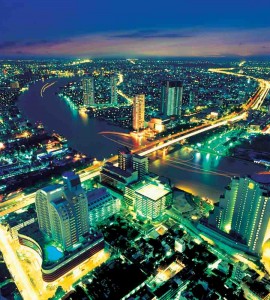
Cities like Bangkok are genearally safe, provided you excercise a modicum of security

Compared to most Western countries, we here at WoWasis feel Asia is pretty safe. Most travelers can go just about anywhere, any time, and not have to be constantly looking over their shoulders. Nevertheless, travelers not practicing basic security measures are leaving themselves open to the occasional theft. So here are some things to keep in mind to ensure you’re not a victim of crime: 

1) Look cheap. Theft is a crime of opportunity, and you want to look less like a target than the person walking ahead of or behind you, especially in crowded streets, sidewalks, and marketplaces. If you insist on traveling with gold jewelry, keep it in your hotel’s safe. WoWasis has recommendations for a cheap watch, cheap but effective money belt, and a cheap phone, so take a look at those links. 

2) If you carry a shoulder bag, drape it over your shoulder and carry the bag on your opposite hip. Snatchers on foot or on motorbikes will usually avoid snatching a bag if it looks like the person carrying it will come along with it. 

3) Use clothes with zippered pockets. In general, we’re not believers in carrying purses in crowded areas (see above). Choose instead shirts and pants with zippered pockets, or at the very least, buttoned pockets. We have our tailor in Bangkok make us pants with two hidden front zippered pockets with lock-down zippers, and two rear ones that zip under a button-down flap. We’ve never been pickpocketed. 

4) Attach your phone to a lanyard, then loop it around your belt. This prevents you from it being pickpocketed or accidentally falling out of your pocket while exiting a taxi. 

5) If traveling with a laptop, notebook, or pad computer, lock it with a cable lock to something in your hotel room. Hotel thieves don’t commonly carry cable-cutters. 

Taking these precautions will make your trip more enjoyable, and ensure that thieves will seek an easier target than you. For more on traveling security, read these WoWasis articles on additional security ideas: 

Tips for Women Travelers to Asia  

6 Tips to avoid being drugged & robbed Thai street women   

4 rules for western women who want to socialize in Bangkok

Leafsnap phone app allows you to identify trees instantaneously

Written By: herbrunbridge - Jul• 04•11

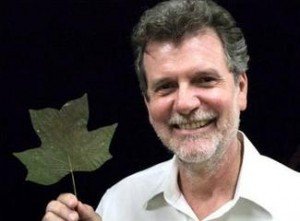
John Kress, Chief Botanist at the Smithsonian, and Principal Investigator for the Leafsnap project

Here at WoWasis, we’re often curious about what kind of tree we’re seeing in Asia, but don’t want to carry a tree guide (book or human) around with us. So now there’s a solution, that while focused on North American trees, will allow iPhone and iPad users to begin identifying Asian trees as well. It’s called Leafsnap. In essence, it allows users to snap a photo of a leaf on a white background, upload it to the Leafsnap website, and receive data on which tree it’s from. It uses facial recognition technology, and for a database, uses trees already identified in New York City’s Central Park (which has a number of Asian trees in its inventory), and Washington D.C.’s Rock Creek Park. 

Here’s the story, from Leafsnap’s website

Columbia University, the University of Maryland, and the Smithsonian Institution are working on visual recognition software to help identify species from photographs. Leafsnap is the first in a series of electronic field guides being developed to demonstrate this new technology. This free mobile app helps identify tree species from photographs of their leaves and contains beautiful high-resolution images of their flowers, fruit, petiole, seeds, and bark. Leafsnap currently includes the trees of New York City and Washington, D.C., and will soon grow to cover the trees of the entire continental United States.

Leafsnap turns users into citizen scientists, automatically sharing images, species identifications, and geo-coded stamps of species locations with a community of scientists who will use the stream of data to map and monitor the ebb and flow of flora nationwide. 

The Leafsnap family of electronic field guides aims to leverage digital applications and mobile devices to build an ever-greater awareness of and appreciation for biodiversity. Click on “Species” above to browse Leafsnap’s gallery of species.

 The genesis of Leafsnap was the realization that many techniques used for face recognition developed by Professor Peter Belhumeur and Professor David Jacobs, of the Computer Science departments of Columbia University and the University of Maryland, respectively, could be applied to automatic species identification. 

Professors Jacobs and Belhumeur approached Dr. John Kress, Chief Botanist at the Smithsonian, to start a collaborative effort for designing and building such a system for plant species. Columbia and the University of Maryland designed and implemented the visual recognition system used for automatic identification. In addition, Columbia University designed and wrote the iPhone, iPad, and Android apps, the leafsnap.com website, and wrote the code that powers the recognition servers. The Smithsonian was instrumental in collecting the datasets of leaf species and supervising the curation efforts throughout the course of the project. As part of this effort, the Smithsonian contracted the not-for-profit nature photography group Finding Species, which collected and photographed the high-quality photos available in the apps and the website. 

WoWasis spoke with botanist John Kress, principal investigator at the Smithsonian for the Leafsnap project, who informed us that Central Park’s Asian tree inventory could be a valuable asset for tree spotters using Leafsnap in the tropics. The application is really still in its formative stages, and may be ported to other mobile devices in the future as well.

WoWasis spa review: Wilbur Hot Springs in Northern California

Written By: herbrunbridge - Jul• 03•11

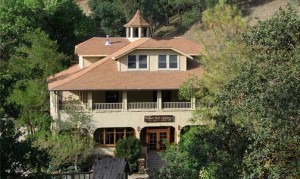
So why is your WoWasis Asian field team in California for a spa review? Because we heard that many Asian visitors go there on visits from overseas, and now we can see why. Wilbur Hot Springs is located roughly 2.5 hours north of San Francisco, 22 miles from the town of Williams on Interstate 5, where there are reasonably priced motels and a terrific restaurant (Granzella’s, open for breakfast, lunch and dinner). 

People have been coming to these springs for centuries, and the current spa peration began in 1972. It’s located within a private reserve, so reservations should be made in advance. As the brochure states: 

The greatest gift of Wilbur Hot Springs is the natural hot mineral water. Sheltered by a fluminarium, the water is channeled into three long flumes, with temperatures ranging from a gentle 98 degrees to a challenging 109 degrees. Clothing is optional in the bathing area (clothing is, however, required everywhere else on the property). There is a large, cool-water pool, an outdoor hot mineral sitting pool, and a dry sauna next to the fluminarium. With a sweeping deck connecting it all, there’s lots of space for enjoying Wilbur’s sulfur creek and the encircling mountain view, or for simply stretching out in the sun or shade. 

After taking a shower, we began resting in the first fluminarium channel, one of three in the building, each progressively hotter. No talking is allowed in there, and many people bring a book and enjoy a good read while luxuriating in the waters. Outside, there is another pool, where people enjoy the waters and chat. We found guests from Japan, China, Korea, and Malaysia there. Several feet away, there is a sauna, and all in all, we found it an enjoyable visit for a half day. The clothing optional aspect is wonderful. Day use is $49 USD for adults, and $22 for children 4-12. 

They offer other services, too, including massage ($89 per hour), and camping, bunkhouse, and private room overnight stays. Guests are allowed kitchen privileges in the main house to cook their own meals. Private rooms are pricy, ranging from $149-$215. We recommend taying in Williams instead, where you can use the money you save for lodging to pay for a great dinner at Granzella’s. 

Our only negative was that we found the desk staff to be grumpy and rather unwelcoming. They welcomed our money, though. Once we were away from the main building and entered the spa area, we enjoyed ourselves. It was clean, well-maintained, and made for an enjoyable hot springs experience. 

Wilbur Hot Springs
3375 Wilbur Springs Road
Wilbur Springs, CA 95987-9709
Phone: (530) 473-2306
www.wilburhotsprings.com 

Directions, coming from the San Francisco Bay Area 

Accessible via main highways, Wilbur Hot Springs is a 2.5 hour drive northeast of San Francisco, and 1.5 hours north of the Sacramento Airport. The most preferred, direct and scenic route to Wilbur Hot Springs from the Bay Area is Highway 80, then taking Interstate 505 north to Highway 16, and to Highway 20. From the intersection of Highways 16 and 20, go west on Highway 20 for 675 feet and turn right onto Bear Valley Road (it’s fairly well hidden, at GPS N39°00.729’  W122°21.636’). Follow this dirt road for about 4 miles and turn left to cross the historic silver bridge at GPS N39°02.426’  W122°24.484’. Continue one more mile and you’ll arrive at Wilbur Hot Springs.

WoWasis field test review: a durable travel watch & calculator that will never be stolen

Written By: herbrunbridge - Jul• 02•11

Here at WoWasis, we like to think we dress well when we travel, but we like to look cheap, too. Cheap enough that criminals won’t target us for robbery when we’re far from the police. Some folks like to wear Rolexes (even fake ones) and gold jewelry when they travel to countries with low average incomes, but not us. Even with the care we take, we’ve gotten robbed, too. But they’ve never stolen our watch.

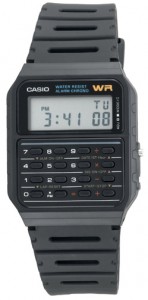
Two members of the WoWasis field test team have used the durable Casio CA53W calculator watch for years, and swear by it. We use the calculator with raised buttons all the time, because we have to instantly convert foreign currency when we’re buyig something. We need the time in two time zones, the date, and an alarm, so that we don’t miss a travel connection.

This mighty little watch has gone through innumerable rainstorms, been dropped, sat on, kicked, pounded, and pummeled, and we’ve never even replaced the battery. And it looks cheap, so no one’s going to be following us around thinking we have money. At under $15 USD, it’s a great bargain, and we highly recommend it. Buy it now from the WoWasis travel eStore.

Shop at the new WoWasis Spycraft eStore for exotic covert gizmos & goodies

Written By: herbrunbridge - Jul• 01•11

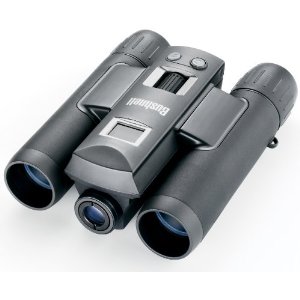
Bushnell binoculars with integrated camera for long-distance objects

A number of WoWasis visitors comprise folks who’ve dealt in covert ops, detective work, and general surveillance, and sometimes don’t find it all that easy to find well-working trade goods. Our WoWasis Spycraft eStore is the answer. But it’s not just for ops folks, either. If you’ve ever accidentally locked yourself out of a rental car, wanted to hear distant bird calls, wished you could photograph a far-distant object with a small camera, or wanted to determine the distance of that distant peak you’re headed toward, the store is for you, too. These items will make trekking a lot more fun.

Fact is, most of us who travel to distant lands can use all of this stuff at one time or another, but it’s not offered in standard online travel shopping venues. We’ve got separate WoWasis eStores for travel clothing and accessories, travel gadgets & gizmos, and Asia-themed books, but we feel the Spycraft eStore really does offer a unique experience in travel shopping. Please take a look at the Spycraft eStore, and you’ll see what we mean.

Is it time for a website to archive NGO abuses in Cambodia?

Written By: admin - Jun• 30•11

The most controversial and commentaried post we’ve ever published at WoWasis is NGO Pedophilia controversy heats up in Cambodia. Everyone has a strong opinion on the subject of NGOs (Non-Governmental Organizations) and how they’re dealing with the issue of pedophilia in Cambodia. Several respondents mentioned they had archival documents that pointed to NGOs as having been involved with the arrests and convictions of people that were innocent of the charges, and claims have been made that unnamed public officials in that country were in on the scam. One respondent mentioned that he was a victim himself. 

In addition, respondents derided NGOs for encouraging Cambodian visitors to photograph male tourists in the company of Cambodian women and children, to presumably send those photos and videos to the NGO. Our feeling is that sending Western tourists as “Junior G-Men” to photograph Every Single White Guy visiting Cambodia is neither right nor is it good for the Cambodian tourist industry. 

We elected not to post most of the comments, as we’re neither judge nor jury. But we do have an idea. With all the finger-pointing and accusations, we think there would be a great deal of value in having a website that would document these issues and serve as an archive for supporting documentation. WoWasis.com, which specializes in travel to Asia, is not the site for this, but we would like to encourage readers who have strong opinions on the subject to create one themselves. We hope all of our readers want children to be as protected a we do, and we also hope our readers also share the belief that people should not be unjustly accused of crimes they did not commit. We think, therefore that it’s time for an archival site to begin collecting hard data — rather than opinions — on what’s really happening in this area of concern.