The sharper edge to traveling in Asia

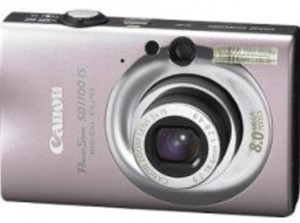
WoWasis travel gear review: a durable, small, sharpshooting camera you’ll take everywhere, Canon’s SD1100

Written By: herbrunbridge - Jun• 16•11

Here at WoWasis, we always carry a digital camera that’s small enough to fit in a pocket, durable enough to take a beating, takes great pictures, has a zoom and optical viewfinder, and requires no maintenance. The best we’ve ever used is the Canon PowerShot SD1100IS Digital Elph, and we’ll tell you why you’ll want to own one. 

For years, we used the Nikon F Body 35mm SLR. Although it took great picture and was built like a tank, its weight and overall bulk forced us to make decisions as to when we took it along. We almost never took it out at night, and during the tropical heat, its shoulder strap and bulk made it cumbersome. When the digital revolution came along, we made the decision to adopt small cameras which we could carry everywhere. The optics weren’t quite as good, but we took them everywhere, and got lots of shots we never would have taken with our SLR packed away in the hotel safe. We’ve tested and used half a dozen small digital cameras, but the one we fell in love with and still use is the Canon SD1100. 

The optics are terrific, the camera’s metal casing makes everything durable, and it’s smaller than a pack of playing cards. Most importantly, it’s got an optical viewfinder, essential for shooting in tropical and sunny conditions, when the sun is often behind you, and thus washes out the digital viewfinder in back of the camera, rendering it useless. This 8 megapixel camera (the Canon SD1200, nearly identical, offers 10 megapixels) has never taken a crappy picture, also shoots sound movies, has all the features you’d expect, and has fallen on the floor or dropped out of more pants pockets than you’d believe. And all the optics work like the day we bought it. 

The camera has been around for a while, but its price never seems to go down. We surmise that it’s a secret of the hard-driving travelers’ world, and your WoWasis field team travels harder than just about any. Savvy travelers just keep buying it. If you’re looking for a quality, durable camera you’ll take everywhere, this is the one. If you’re ever going to shoot in sunny conditions, Never buy a travel camera without an optical viewfinder. If you do, we guarantee you’ll change your mind after your first trip. We’ll end this review by telling you that we  recommend this camera highly for its overall quality, versatility, and durability.  Here are its specs:

Type of Camera 
Type Compact digital still camera with built-in flash, 3x Optical/4x Digital/12x Combined Zoom with Optical Image Stabilizer System
Image Capture Device 
Type 8.0 Megapixel, 1/2.5 inch type Charge Coupled Device (CCD)
Total Pixels Approx. 8.3 Megapixels
Effective Pixels Approx. 8.0 Megapixels
Lens 
Focal Length 6.2-18.6mm f/2.8-4.9 (35mm film equivalent: 38-114mm)
Digital Zoom 4x
Focusing Range Normal: 12 in./30cm-infinity
Macro: 1.2 in.-1.6 ft./3-50cm (W), 1.2 in.-1.6 ft./3-50cm (T)
Digital Macro: 1.2-3.9 in./3-10cm (W)
Autofocus System TTL Autofocus
Viewfinders 
Optical Viewfinder Real image optical zoom viewfinder
LCD Monitor 2.5-inch low-temperature polycrystalline silicon TFT color LCD with wide viewing angle (PureColor LCD II)
LCD Pixels Approx. 230,000 pixels
LCD Coverage 100%
Aperture and Shutter 
Maximum Aperture f/2.8 (W) – f/4.9 (T)
Shutter Speed 15-1/1500 sec.; Long Shutter operates with noise reduction when manually set at 1.3-15 sec.
Exposure Control 
Sensitivity Auto, High ISO Auto, ISO 80/100/200/400/800/1600 equivalent (Standard output sensitivity. Recommended exposure index)
Light Metering Method Evaluative*, Center-weighted average, Spot**
* Control to incorporate facial brightness in Face Detection AF
** Metering frame is fixed to the center
Exposure Control Method Program AE; AE Lock
Exposure Compensation +/-2 stops in 1/3-stop increments
White Balance 
White Balance Control Auto, Preset (Daylight, Cloudy, Tungsten, Fluorescent, Fluorescent H), Custom
Flash 
Built-in Flash Auto, Red-eye Reduction, Auto Red-eye Correction, Flash On, Flash Off; FE lock, Slow Synchro
Flash Range 12 in.-11 ft./30cm-3.5m (W), 12 in.-6.6 ft./30cm-2.0m (T) (when sensitivity is set to ISO Auto)
Recycling Time 10 sec. or less (battery voltage=3.7V)
Flash Exposure Compensation +/-2 stops in 1/3-stop increments
Shooting Specifications 
Shooting Modes Auto, Camera M, Portrait, Special Scene (Foliage, Snow, Beach, Sunset, Fireworks, Aquarium, Underwater, Indoor, Kids & Pets) Night Snapshot, Color Accent, Color Swap, Digital Macro, Stitch Assist, Movie
Photo Effects My Colors
Vivid, Vivid Blue, Vivid Green, Vivid Red, Neutral, Sepia, Black & White, Positive Film, Lighter Skin Tone, Darker Skin Tone, Custom
Self Timer Activates shutter after an approx. 2-sec./10-sec. delay, Custom
Wireless Control Not available
Continuous Shooting Approx. 1.3 fps (Large/Fine)
Image Storage 
Storage Media SD/SDHC Memory Card, MultiMediaCard, MMC Plus Card, HC MMC Plus Card
File Format Design rule for camera file system, DPOF Version 1.1
Image Recording Format Normal, Fine, SuperFine
JPEG Compression Mode Still Image: Exif 2.2 (JPEG)
Movie: AVI (Image: Motion JPEG; Audio: WAVE (Monaural))
Playback Specifications 
Playback Modes File Still Image: Single, Magnification (approx. 2x-10x), Jump, Auto Rotate, Rotate, Resume, My Colors, My Category, Transition Effects, Histogram, Overexposure Warning, Index (9 thumbnails), Sound Memos, Slide Show, Red-eye Correction, RAW, Trimming, Resize, Image Inspection Tool
Movie: Normal Playback, Special Playback, Editing, Auto Rotate, Resume
Erasing Specifications 
Erase Modes Still Image: single image, select range, select by date, select by category, select by folder, all images
Movie: part of movie, all of movie
Interfaces 
Computer Interface USB 2.0 Hi-Speed (mini-B jack)
Video Out NTSC/PAL
Audio Out Monaural
Other Memory card slot; direct connection to Canon SELPHY Compact Photo Printers, PIXMA Photo Printers and PictBridge-compatible printers via camera’s USB 2.0 Hi-Speed cable
Power Supply
1. Rechargeable Lithium-ion Battery NB-4L
2. AC Adapter Kit ACK-DC10 (optional) Still Image: approx. 240 shots (NB-4L)* Approx. 360 min. (NB-4L)
* LCD screen on. The above figures comply with CIPA testing standards and apply when fully-charged batteries are used.  
Power Source
1. Rechargeable Lithium-ion Battery NB-4L
2. AC Adapter Kit ACK-DC10 (optional)
Shooting Capacity Still Image: approx. 240 shots (NB-4L)*
Playback Time Approx. 360 min. (NB-4L)
* LCD screen on. The above figures comply with CIPA testing standards and apply when fully-charged batteries are used.
Physical Specifications 
Operating Temperature 32-104°F/0-40°C
Operating Humidity 10-90%
Dimensions (W x H x D) 3.42 x 2.16 x 0.87 in./86.8 x 54.8 x 22.0mm
Weight Approx. 4.41 oz./125g (camera body only)
WoWasis travel gear review: collapsible Cargo Duffel bag by Eagle Creek

Written By: herbrunbridge - Jun• 16•11

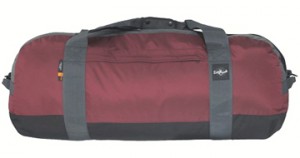
If you’re like us here at WoWasis, you always seem to be bringing back items from your travels. And you probably have the same problem we do: you buy from everywhere, so you have multiple items that all have to be somehow packed together for the flight home. We’ve found the durable, lightweight extra-large cargo duffel bag from Eagle Creek to be indispensable, for a whole lotta reasons: 

1) We don’t want to buy yet another large travel bag (that we’ll never use again) every trip when we pack our stuff for the plane ride home
2) We want a bag that we can stash at our “home” hotel, pack it with things we’ve bought, and leave it there until we return from side trips
3) We want it big, so it can hold large items, and durable, because sometimes the things we buy have pointed surfaces (e.g. cardboard boxes with breakable items that are well-packed)
4) When empty, we want it to pack flat, to fit into the TUMI roller bag we always use
5) We want really good locks and zippers, which keeps the hotel staff hones when we leave it in the hotel’s storage room 

Our cargo bag has been with us all over the world, and it’s really taken a beating. It’s brought back a 100 lb stone sculpture from Thailand, ceramic figurines from Vietnam, books, you name it. On the way back, I usually pack my dirty laundry around everything, so things don’t shift around too much. I cinch the two compression straps down, lock the zipper to one of the two D-bolts, and take it to the airport. The heavy 1000D HP Cordura from which the bag is made never reps, and the YKK zipper is built like army tank treads. When not loaded, it folds down neatly into a 12”x12”x2” package. It comes in a number of colors, but we like black, because it looks unobtrusive. 

Here are the specs: 

  • Capacity: 8100 cu. in. / 133 L  
  • Dimensions: 36 x 15 x 14″ / 91 x 38 x 36 cm   
  • Weight: 2 lbs. 9 oz. / 1.16 kg   
  • Fabric: 500 x 420D Double Box, 420D Nylon HT Ripstop, 1000D HP Cordura®
  • Storm flap protected, main compartment opens with beefy #10 two-way, lockable YKK® zippers
  • Top external compression straps secure and stabilize the load
  • Removable padded shoulder strap adjusts for a comfortable carry
  • Hypalon® top carry handle and super durable three inch webbing straps for an easy hand carry
  • Front exterior zip pocket for quick access items
  • Reusable “stuff” pouch stores duffel and works as an internal packing accessory for shoes and gear 

If you’re planning to carry stuff around the world, then back home, this is a bag you’ll use for years. In fact, Eagle Creek warrants it, as follows: “If your bag is damaged – even by the airlines – Eagle Creek will fix it, No Matter What.” Highly recommended, and our guess is you’ll neither replace it nor need to have it fixed. Buy it now at the WoWasis estore, powered by Amazon.

WoWasis goes shopping: 54 exquisitely crafted ethnic Vietnamese ceramic figures

Written By: herbrunbridge - Jun• 14•11

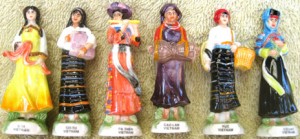
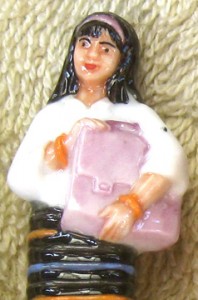
Each figurine is only 2 inches tall, exquisitely detailed

Going to Vietnam and want to bring back something truly unique? And inexpensive, too? We were thrilled with the exquisitely-crafted tiny ceramic figurines detailing each of Vietnam’s 54 ethnic groups, crafted by the Minh Long 1 company. Each figure, which is 2 ½ inches tall by 1 inch wide, details a female representative of her group in traditional tribal dress, often depicted carrying items such as baskets and drums. They come packed in individual boxes of 5 figurines each, and you can buy them at Minh Long’s shop in Saigon, where they’ll pack all of them in a box measuring 10” x 7” x 7”. They’re unique, beautiful, and inexpensive. We here at WoWasis paid something like $50 USD for the entire collection. They also make a tinier collection, but some of the detail is lost, so we suggest the larger figures.

Minh Long 1 was founded in 1970 by Ly Ngoc Minh, and specializes in ceramic supperware (they make over 15,000 items). The ethnic collection seems to be a labor of love, since these figures aren’t distributed to traditional worldwide outlets. The Minh Long store is easy to find in Saigon, so if you’re looking to buy a gift for someone that is truly different, inexpensive, lightweight, and easy to pack, we can’t think of anything better. They’re exquisitely detailed, right down to footwear (or lack of it). 

Minh Long 1 Co. Ltd
92 Tran Hung Dao St., Pham Ngu Lao Ward, District 1
Ho Chi Minh City (Saigon), Vietnam
Tel: 84 8 38368265 – 38361193 

Five of the 54 figures in the collection
About Vietnam’s ethnic groups 

 Roughly eight million of Vietnam’s current 86 million population comprise 54 ethnic groups, divided into dozens of subgroups some with a mere hundred or so members. Each of the following groups is represented in Minh Long 1’s collection.

1.Ba Na (Bahnar)VietnamPromoBanner
2.Bố Y (Buyei)
3.Brâu
4.Bru-Vân Kiều
5.Chăm – Descendants of the Champa kingdom in southern Vietnam
6.Chơ Ro
7.Chu Ru (Chru)
8.Chứt – related to Vietnamese, only 2000-4000 people
9.Co
10.Cờ Ho
11.Cờ Lao (Gelao)
12.Cơ Tu
13.Cống (Cong)
14.Dao – Yao people, also known as Mien, many speak Iu Mien language, distant relatives of Hmong
15.Ê Đê (Rhade)
16.Gia Rai (Jarai, J’rai)
17.Giáy
18.Giẻ Triêng
19.Hà Nhì (Hani)
20.H’Mông (Hmong, Hơ-mông, Mong; formerly known as Mèo) – Also known as Miao in China
21.Hoa (Chinese)
22.Hrê (H’re)
23.Kháng
24.Khmer Krom (Khmer, Khơ Me Crộm)
25.Khơ Mú (Khmu)
26.Kinh (also called Viet, the largest ethnic group in Vietnam)
27.La Chí
28.La Ha
29.La Hủ
30.Lao – People from Laos
31.Lô Lô (Lo Lo, Yi)
32.Lự
33.Mạ
34.Mảng
35.M’Nông
36.Mường – Closest to Kinh Vietnamese, the other main part of the Viet-Muong branch of the Vietic sub-family
37.Ngái (Chinese, separately classified from Hoa)
38.Nùng
39.Ơ Đu
40.Pà Thẻn
41.Phù Lá
42.Pu Péo
43.Ra Glai (Raglai)
44.Rơ Măm
45.Sán Chay (San Chay, Cao Lan)
46.Sán Dìu (San Diu, Chinese, separately classified from Hoa)
47.Si La
48.Tà Ôi (Ta Oi)
49.Tày (Tay) – The largest minority in Vietnam
50.Thái (Thai)
51.Thổ (Tho) – Related to Kinh Vietnames
52.Xinh Mun (Xinh-mun)
53.Xơ Đăng (Sedang, Xo Dang)
54.Xtiêng (Stieng)


WoWasis book review: ‘Ying Yang: The Chinese Way of Love’ by Charles Humana

Written By: herbrunbridge - Jun• 13•11

Upon reading Charles Humana and Wang Wu’s The Ying Yang: The Chinese Way of Love (1971, SBN 85523 019 3), it’s pretty apparent that the Chinese have been studying the art of love-making for a long, long time. This fascinating book isn’t merely about sex positions, either. Here at WoWasis, we were transfixed and mortified by the chapter entitled The duties and the Desires of the Eunuch, with subheadings such as these: The Effects and Techniques of Castration, His search for the means of restoring his lost virility, His use of Sex instruments, His role as executioner and torturer. Sobering material. 

Humana and Wang provide a historical basis for Chinese lovemaking through a discussion of Confucianism and Taoism, and make liberal use of old texts and stories to underscore the differing sexual mores of varying dynasties and times. And they seemingly leave no stone unturned, from foot binding practices to sex instruments to scatological practices, all in 248 pages, each of which has compelling information. There’s a nice bibliography, too. 

The brothel was a well-established venue in old China, and the following pieces of advice — to customers as well as providers — are timeless: 

Advice to Men Visiting Brothels, by Li Shang-Yin

Do not boast of your prowess as a lover.
Do not make excuses for your failures.
Do not perform your toilet in her presence.
Do not spit on the matting.
Do not bore holes in the partition to observe others making love.
Do not make false promises to her.
Do not flatter her with poems unless they are sincere.
Do not believe her flattery or loving words.
Do not make it apparent that you covet her ‘foster-sisters’.
Do not steal her possessions on the pretext of borrowing.

Advice to women from a ‘foster mother’ (mama-san)

If a man returns to your side four or five times in the
same week, and insists on your company rather than that
of one of the other girls, the time has come to raise your
price. After all, if he wishes to monopolise you, he must
pay extra. It is more profitable and more gracious, how-
ever, to obtain this extra in the form of presents. The girl
should indicate discreetly that she is wearing nothing to
indicate his love for her, while the other girls in the estab-
lishment are constantly flaunting the Jewellery they have
received. This is the kindest way of saying that she expects
to be taken on a visit to a jeweller’s, arrangements already
having been made with the jeweller about the pieces that
should be recommended to them. When the visit takes
place the girl should show no eagerness for expensive
pieces since they will be suggested by the craftsman. If the
finest pieces do not meet with the approval of the lover,
this is because they are too expensive. After criticising the
fine pieces, however, he will still buy what he cannot really
afford. When he has been persuaded to do this, remove
the Jewellery you are wearing, and which he knows to be
a present from a previous lover, and contemptuously
throw it into the craftsman’s waste-basket. This discarded
piece will later be returned by the jeweller.

The texts quoted in the book spare no one, and Chinese writers could be extremely opinionated about and condescending to Westerners, as quoted from The Diary of Tseng Kuo-Ting (Advanced Publishing Society, Peking, 1932):

… there are two features of western women that
hardly gain favour with the Chinese male. The rawness of
her odours are exactly as one would expect from ‘raw’
barbarians, and no amount of soap or scent can change
this. Secondly, the pubic hair of many western women –
how coarse it seems after the Chinese female. It reminds
one of riding camels and donkeys bareback, rough and
wiry, and sometimes extending in a fuzz towards navel or
knees. 

All in all, we found this book to be a fascinating look at how the Chinese view (or viewed) themselves in fundamental matters related to sexuality. Although paid sex is officially illegal in today’s China, Chinese practitioners of the craft today work all over the world, and this book goes a long way to explaining many of the historical philosophies relating to sexual practices that perhaps color the thoughts of the management and workers in today’s Chinese-run erotic establishments.

WoWasis book review: ‘Japanese Street Slang’ by Peter Constantine

Written By: herbrunbridge - Jun• 12•11

Why buy a foreign language dictionary when one doesn’t speak a word of the language in question? When it’s as fun to read as Peter Constantine’s Japanese Street Slang (2006, ISBN 13 978-0-8348-0250-6), that’s when. First published in 1992, the book has never been out of print, and even has a 2011 edition (we found the 2006 edition we’re reviewing here in a used book store). 

The book, as it says in the foreword, concerns words that “refer raunchily to all known forms of sexual activity, that refer contemptuously to mental, moral, anatomical, and physiological shortcomings of other persons, or that make light of conditions ranging from flatulence and bad breath to pregnancy and poverty.” Known in Japanese as ingo, or “hidden language,” the words in this book are used by diverse members of Japanese street society: pickpockets and thieves, the Yakuza underworld, those engaged in the business of selling sex, and even High School students. Constantine has written a funny, yet etymologically useful book that’s cross-referenced in both English and Japanese indexes. He provides wonderful examples as well as various essays on the origins and common usages of these words and phrases. 

The reason this book appeals to non-linguists is its explanations of various and fascinating elements of Japanese culture. We have many favorite entries, but this one, on names of male and female sexual organs, was particularly interesting: 

CHINCHIN. Penis.

This expression has a playful, childlike quality to it, which
makes it useful in colloquial speech as one of the few direct
references to the male sexual organ that is too cute to be crass.
Chinko, chimpo, chimpoko, or its inverted form/ pokochin, are
other conveniently euphemistic terms that may be used judi-
ciously in mixed society, if circumstances call for a direct but
playful reference to the penis.

Chiisai/okii chinchin.
A small/large pecker.
Aitsu wa chinko o shiko shiko sum.
He’s playing with his pecker.
Tatta chimpo.
A hard dick.
Chimpoko no atama.
A dick head.
Pokochin marudashi de uro wo!
He’s wandering around with his dick hanging out!

     Recently, much to everybody’s surprise, chinchin broke out
of its masculine semantic confines when the Saitama Board of
Education decreed it to be the only acceptable term for vagina
in elementary school sex-education classes. For years ochinchin
(literally, honorable pecker) has been the official elementary-
school word for penis. Unfairly enough, the Japanese language
has no term of an equivalently euphemistic caliber for vagina.
Perplexed teachers were resorting to terms like opampom, or
dubious words fashionable in the red-light district like wareme-
chan (literally. Miss Crack). The burning debate at school-
board meetings focused on establishing an agreeable word for
vagina, a word that would not offend the delicate sensibility
of a preteen girl (boys are excluded from official sexual enlight-
enment until much later). When the ochinchin edict was passed,
many teachers were too relieved to lodge official complaints
about the oddity of this solution, although some individuals
voiced concern as to whether young ladies in the year 2000
would know an ochinchin from an ochinchin.

     Back in down-to-earth circles you might hear dekachin in
reference to a large, well-proportioned sexual organ. Deka
(from dekai) means huge and is a popular word that was
adopted from the Osaka dialect.

Aitsu no asoko wa dekachin da na!
His thing’s like a ramrod!
Kare no dekachin dakara, hairu to saiko yo!
He’s hung like a bull! He drives me crazy when he puts
it in!

     Furuchin, “wagging penis,” and yokochin moreru, from yoke
kara chimpo ga moreru, “the penis escapes from the side,” are
two terms used for inadvertent penile exposure.

Sonna furuchin no mama de arukimawaranaide yo!
Don’t walk around with your dick hanging out like that!
Hayaku mite! Aitsu yokochin morete’ru!
Quick, look! His dick’s hanging out!

Here at WoWasis, we found this wonderfully researched 190 page book a joy to read. It covers a lot of material, and would be of interest to anyone wishing to explore the fascinating demimonde of an age-old culture, told from the perspective of its language. Quite simply, you don’t have to have any Japanese language facility at all to thoroughly enjoy this book. Buy it now at the WoWasis estore, powered by Amazon.

WoWasis field test review: the world’s greatest travel pen, Sharbo Zebra SBA1 pen/pencil

Written By: herbrunbridge - Jun• 10•11

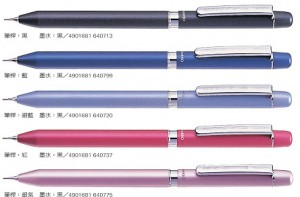
The Sharbo Zebra SBA1 is available in array of day-glo colors

As travel writers, we here at WoWasis have some pretty heady requirements for a writing instrument. We need a reliable pen, but also need a pencil to write notes in the back pages of books we’re reviewing. It’s got to be small, in order to fit in any pocket (we carry it everywhere, all the time.) It’s got to be durable, because we often travel in challenging conditions, where a lot of stuff gets broken. That’s why we’ve been carrying the durable, versatile Shabo Zebra SBA1 for over a decade. It simply never fails.

In addition to its metal body and light weight, we can change from pen to pencil with a simple twist that we can perform one-handed. It’s only 5 inches long, so we always carry it in any shirt pocket. The clip is located near the top of the pen, so we don’t look geeky: only ¼ inch is visible above the pocket, and that’s the screw-cap that holds the pencil erasure.

This pen has been rained on, fallen upon, dashed against hard surfaces, dropped from desks, you name it. Amazingly, the pencil lead has never broken (it’s encased in a metal sheath of its own), and the pen has never stopped working due to the abuse we put it through. We bought our first one at Tokyo’s Narita airport, and always have an extra stashed somewhere. We also carry spare refills, which can be found at any store selling Japanese writing instruments, easy to find in Asia, and on the internet, easily available in virtually any Western country.

Zebra’s story is interesting, too. It was originally established in Japan in 1897, and its founder, Tokumatsu Ishikawa, decided to use zebra print as its trade mark in the hope that business’ employees and customers herd together like a big zebra family. The name Sharbo is a combination of “sharp” (i.e. mechanical pencil) and “ball” (i.e. ballpoint pen).

Here are the SBA1’s stats:

  • full metal barrel and clip, screw cap out to retrieve built-in eraser
  • barrel size: 0.32″ (Grip dia.) x 5.12″ (Length) or, 8mm (Grip dia.) x 130mm (Length)
  • refill: Zebra 4C-0.7, Pencil lead 0.5mm

You can buy the remarkably durable SBA1 on the internet, at prices ranging from $10-$20 USD. It’s a miracle of miniaturization that you’ll use forever; no other travel pen/pencil matches up. Highly recommended.

WoWasis field test review: the Inova X5 lithium-powered LED flashlight

Written By: herbrunbridge - Jun• 10•11

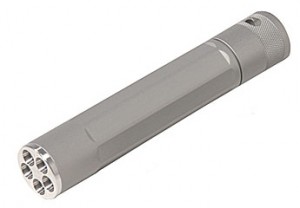
At just over 4 inches, this powerful, durable flashlight can be carried anywhere

The Inova X5 flashlight is the one we carry everywhere. Here’s why. A flashlight is one of those travel items that you never seem to think of until you need one. And we here at WoWasis always need one when we’re exploring old jungle temples and ancient Buddhist caves at dusk. Our flashlight requirements are pretty severe:

  • it can’t be heavy, or else it won’t fit in a pocket
  • it’s got to be small for the same reason
  • it’s got to be waterproof, because it rains in the tropics, and for the same reason, it can’t rust
  • it’s got to be durable, because we’ll fall on slippery surfaces, particularly in the dark; if you’re in the dark, you’re in trouble with a failed flashlight
  • it’s got to be powerful enough to light a dark path, and illuminate cave and temple walls dozens of feet away

Pretty strenuous requirements, and that’s why we carry the remarkable Inova X5 lithium-powered LED flashlight. It does it all, and at under $30 USD, we consider it a bargain. Most of the time, this tiny, durable, powerful flashlight just sits in the bottom of our carry-on, but when we need it, it performs like a champ. Its powerful 5 LED illumination system is the reason we retired our sturdy and venerable Maglite (Maglite makes an LED now too, but we’ve fallen in love with our Inova). It uses 3 lithium batteries that apparently last for 20 hours, but we swear our have lasted longer. It twists for always-on, but also has a push-button mode for spotlight use, and its normal position is “off,” so you won’t accidentally leave it on and deplete your batteries. Here are its stats:

  • Effective range of up to 120 feet
  • Signal visible as far away as 1.75 miles
  • Dimensions: 4.75” x .865”
  • Weight: 3.56 oz.
  • Stainless-Steel Head protects optical system
  • Patented Precision Optical System for superior light projection
  • High-Powered, energy-efficient lifetime LEDs
  • Water-Resistant Construction protects it from the elements
  • Aerospace-Grade Aluminum with military spec anodized finish
  • O-Ring ensures seal integrity and threads are anodized for reliability
  • Generous Size Lanyard Hole for easy threading
  • Tactical End-Cap Switch activates momentary on, constant on/off and lockout mode
  • Limited Lifetime Warranty USA

That’s a helluva flashlight for less than 30 bucks. We’ve has ours for several years, and we’ve put it through a lot. Its toughest test was in a cave in western Thailand with slippery wet conditions and wonderful geological formations and fauna, sometimes 50 feet away. Perhaps most importantly, we had to light the walking path for several others, whose flashlights weren’t good enough. We pointed our Inova straight ahead, which made it safe for everyone. We fell at one point, and the Inova got cracked against a rock formation. The stainless steel head protected the LEDs, and it kept performing like a champ. All in all, the Inova X5 is highly recommended by WoWasis for its versatility, performance, and durability. Buy it now at the WoWasis estore.

WoWasis travel clothing review: The incredible Tilley T3 hat

Written By: herbrunbridge - Jun• 09•11

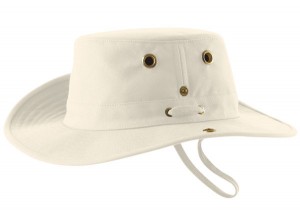
Alex Tilley wearing the T3

Here at WoWasis, we are famous for wrecking clothes that are deemed unwreckable. We’ve been traveling with Alex Tilley’s durable, fashionable, and versatile T3 Tilley Hat for years. At $80 USD, it’s expensive for a cotton duck hat, but amortized over the two decades we’ve worn it, packed it, scrunched and crunched it, the damn thing seems to never wear out, and it’s worth every penny. The label says it’s guaranteed for life against wearing out and theft. Our luggage was stolen with our Tilley hat in it, and sure enough, Tilley sent us another, free of charge.

We compress it flat when we pack it. In our hotel room, we soak it, dry it in shape, and it comes out looking new. It floats, has a waterproof secret pocket that we use to store a copy of our passport, ties neatly around our chin when it’s windy, and is smart enough that we can wear it anywhere in the tropics, from parties to jungles. It sheds water terrifically, so we use it as a rain hat as well.  It was designed by Alex Tilley. About him, the Tilley Endurables website says: “Alex was a self-employed art consultant and avid sailor. Tired of hats that blew off his head, sank when they fell into the water or shrunk when they got wet, he decided to oversee the creation of his own ideal sailing hat. After several months of research and the assistance of a sail maker, he designed and made a hat for himself. When sailors asked for one, he made and sold hats as a hobby. Still an avid traveller, Alex has been to over 1053 different cities and 53 different countries researching and wear testing potential hats and gear. The classic T3 Tilley Hat, designed with a medium brim that snaps up on both sides, belongs to the category of Tilley Hat fabrics that started it all – the cotton duck. The fabric is derived from an incredibly durable sailcloth that is still used in boating today.”

Tilley makes a bunch of hats, but we like the look of this one best. We never travel without it, and if it ever gets ripped to shreds by African bush thorns (better the hat than our head), we know Tilley will replace it, just like they always have.

WoWasis field test: the tiny but durable Utra-Sil day pack miniaturizes to 2×3 inches

Written By: herbrunbridge - Jun• 05•11

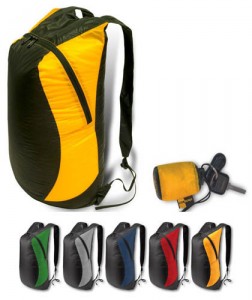
Compare the Ultra-Sil's size when packed in your luggage, then folded out for days use, in day-glo colors

So here’s the dilemma as we see it here at WoWasis: you’re traveling overseas, have one piece of big luggage, another smaller padded one for your netbook/tablet computer, which also holds a book or two. You know you’ll want to take a daypack overseas too, because you’ll be running around, and don’t want to take your padded computer bag as a daypack. But day packs can take up too much space in your standard luggage. How about taking a day pack that packs down into a 3 inch by 2 inch space? There is one! 

The Ultra-Sil daypack is made out of sturdy Cordura. When it unpacks, you get 2 back straps and a pack that holds 20 liters worth of anything, perfect for wet & dry beach towels, food, books, you name it. Here’s what they say about their pack: “The tiny packed size fits easily onto your key ring, in a jacket pocket or a purse. Packs down small so it easily fits in pockets, purses or luggage, lightweight 2.4 oz / 68g, bartack reinforced stitching on all stress points, two-way zipper closure.” 

It sells for $25 USD, but we’ll gladly pay for miniaturization when airlines are charging so much for added luggage and weight. We tested it, like its durability and convenience, and are now leaving our other day packs at home, we always carry this one. Highly recommended. Buy it now at the WoWasis estore.

WoWasis field test: the durable, inexpensive Nokia 1280 phone for Asia

Written By: herbrunbridge - Jun• 05•11

While traveling, if you need a pricy phone that browses the internet, takes pictures, breaks easily, and is a target for theft, this is not the review for you. If, on the other hand, you want an inexpensive, durable telephone that works well in any Asian country, the Nokia 1280 telephone is your best pal. At a price point of $20-$30 USD (and you can find good used ones at a fraction of that price), no one will ever steal it from you, either, which is not the case with tri or quad band phones.

This phone is durable. Here at WoWasis, we’ve dropped it more than a few times, with nary a problem. The audio is crystal clear, important for noisy urban areas. Although it’s ancient by today’s standards, it’s still sold everywhere. It travels well, too. Just slap a SIM card inside when you visit a new country, and you’re in business (check out our post on using mobile phones in Bangkok for more info on how all this stuff works).

The Nokia 1280 is actually a replacement for the durable Nokia 1112, which was released in 2006. The software is bulletproof. With graphical icons and large font sizes the Nokia 1280 is an easy to use mobile phone that aims at first-time mobile phone users. As a dual-band device it operates on GSM-900/1800 networks, which includes most of Asia, Europe, and Africa, but not in the Americas (for more on differnces between dual, tri, and quad band phones and supported frequencies, see the note at the bottom of this post). The Nokia 1280 has a 96 x 68 pixels resolution monochrome display with white backlighting and an integrated handsfree speaker. The cell phone has built in utilities, such as a calculator and a stopwatch and it supports polyphonic ringtones. Beside other basic features like SMS and picture messaging it has a speaking clock and alarm. Its internal memory is 4 MB in size, enabling it to hold up 200 phonebook entries. The battery powers the phone for up to over 5 hours talk time, or up to 15 days if left in stand-by mode.”

AsiaPromoBannerLost and stolen phones are a way of life for the traveler these days (we recommend a cheap snap-off lanyard that you can loop around your belt, which will keep your phone from accidentally falling out of your pants pocket). We left our Nokia 1280 in a taxi one day, called the number an hour later, and our driver returned it. I can’t guarantee that would have happened if our phone hadn’t been a cheapy. Durable phones are a necessity. A friend’s phone slid off a nightstand onto a hotel rug, and the screen broke in half. We’ve dropped our 1280 off bigger heights, and it’s taken a sound beating, generally speaking, as we travel. If you need a sturdy, expensive phone in Asia that will humbly keep on working, the Nokia 1280 is for you.

Additional note on bands, frequencies, and countries. The folks at chankaudaya have an excellent post on the subject. Here’s what they say:

Different Frequency Bands used in different continents of the world.

If you want to travel to different  continents of the world with your mobile phone, not only the mobile operator or SIM card matters, but also the capabilities of your mobile phone. You may sometimes want to go to USA ( say you are living in Srilanka). You will go to one of the mobile operators and ask for the roaming facility. First question they will ( should ) ask from you is that whether your phone is a dual band, tri band or quad band. All of a sudden you have got into a some kind of trouble because you don’t know about these frequency bands. This post will give you some idea about different frequency bands used in different countries.
Dual-band – An Asian dual-band phone operates at both the 900 MHz and 1800 MHz spectrum. Dual-band works in Europe, Africa, Asia, Australia, New Zealand and much of South America. Normal 2G phones used in Srilanka like Nokia 1200, 3310 are included into this category. In Europe two bands (900/1800 MHz) are used in the same country to improve coverage.In America two bands (850/1900 MHz) are used in the same country to improve coverage.Dual band phones are also used to enable roaming between different countries. For example, a cellphone with dual band 850/1800 MHz will work in both the United States (850 MHz) and India (1800 MHz).
Examples for Dual Band Phones: Nokia X6, 1800, 1280, N900 Tri-band – A tri-band phone operates on three frequency bands, 900 MHz, 1800 MHz and 1900 MHz, allowing you to use it in Europe, Africa, Asia, nearly all of North America, Australia and New Zealand2G Triband phones are mobile phones that support the GSM 900/1800/1900 MHz bands commonly sold in Europe, Asia and Africa, (for example the LG KE820 is a triband mobile phone that is sold in Europe, but works in big cities of America but not so well in suburbs and rural areas).Or alternatively the 850/1800/1900 bands (commonly sold in the Americas). The Motorola V300 formerly carried by Rogers Wireless used a rare combination of 850/900/1900. A 2G Quad band (850/900/1800/1900) offers more coverage and is now quite common.
Examles for Tri-Band Phones: Nokia 5530, 6700, X3, C5
A 3G Quad band offers more coverage. Quad-band – A quad-band phone allows you to roam almost anywhere globally. It covers the 850 Mhz, 900 MHz, 1800 MHz and 1900 MHz frequency ranges. Many countries in South America only have 850 MHz GSM service while both 1900 MHZ and 850 MHz GSM services are supported in the USA. 99% of all countries use the GSM standard. We believe eventually GSM will be the only cell phone standard in the world.A quad-band mobile phone is used to designate a phone that can operate in the following GSM frequency bands:
• 850 MHz (U.S./Canada/Latin America/Brazil (Only the carrier Vivo))
• 900 MHz (Africa/Europe/Brazil/Africa/Australia/Asia (ex Japan and S. Korea))
• 1800 MHz (Africa/Europe/Australia/Asia/Brazil)
• 1900 MHz (U.S./Canada/Latin America)