The sharper edge to traveling in Asia

Shops & markets in Kuala Lumpur, Malaysia

Written By: herbrunbridge - Jun• 09•10

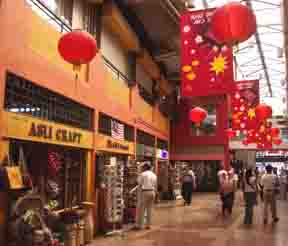
Central Market in KL

Shopping opportunities abound in Kuala Lumpur, with everything ranging from high end boutique items to brand-name knock-offs that keep international lawyers busy. 

Jalan Petaling: Same Old, Same Old, Day and Night 

By day, on two blocks of one of Chinatown’s main streets, you can visit Chinese shops selling everything from incense to dresses, but by night, when mid-street stalls are brought in, it turns into a wall-to-wall mass of humanity that only the most confirmed shopaholics will enjoy. Here, you’ll find that Che Guevara t-shirt you’ve always wanted, that knock-off Louis Vuitton handbag for Cousin Boo, and as many fake Rolexes as you can carry home. Reminiscent of Bangkok’s Patpong Night Market, with just as many people in a confined space, but without the spiciness of the sex touts.  

To get here:  Chinatown, Jalan Petaling, between Jalan Sultan on the south, and Jalan Gheng Lock on the north.  

 Central Market: Tourist Brik-a-Brak in an Art Deco Setting 

A few years ago, local preservationists saved the wonderful old Art Deco Central Market from going under the wrecking ball.  Today, it’s been resurrected, ostensibly as a center for the sale of arts and crafts, but someone’s been asleep at the switch.  You’ll find nothing out of the ordinary here, but optometrists, flower vendors, and sellers of baskets ply their trades, amidst one of the nicer Art Deco buildings in Malaysia. 

To get here: Its southeast corner is at Jalan Gheng Lock and Jalan Hang Kasturi in Chinatown.  Its southern entrance is at GPS N03°08.698’  E101°41.719’

We love exceptional market shopping experiences, but couldn’t find any in KL. If you know of one, please blog about it.

Art Galleries in Kuching, Sarawak, Malaysia

Written By: herbrunbridge - Jun• 09•10

Artist Narong Daun

The art scene is just taking off in Kuching, and there are several galleries of note.  We expect the gallery scene to grow, so do keep an eye on the art scene here. Here are our favorites: 

Atelier Gallery
104 Main Bazaar Street
Tel: 082-243-492
GPS N01°33.448’ E 110°20.915’
Here, contemporary Malaysian art and design are melded, in a nicely-designed store appealing to interior décor fans.  There is a gallery of contemporary art upstairs. 

Artrageously Ramsay Ong – The Art Gallery
94 Main Bazaar Street
Tel: 082-424-346
www.artrageouslyasia.com
Contemporary art from Malaysia is exhibited here in a wonderful space, featuring the paintings of Ramsay Ong, Narong Daun (our favorite), and others.
Located a few meters west of GPS N01°33.448’ E 110°20.915’

Galleria
Wesberly House
Lot 2812, Block 195, Rubber Road West
Tel: 082-429-361
www.wesberly.com.my
GPS  N01°33.090’ E110°19.816’
Melton Kais is a fine local painter who sells his own art, as well as paintings by others.  He and Irene Lim have set up a fine gallery on the ground floor of Westberly House, and offer painting classes as well, with an option of home-stay on premises.  To get here, take a taxi from city center for about RM10. 

Sarakraf Pavilion
Lot 78, Section 43, Jalan Tabuan
Tel: 082-258-771
www.sarakraf.com.my
GPS N01°32.590’ E110°21.256’
Sarakraf is one of the great experiences in Kuching, offering classes in crafts, dancing, and cooking.  There is a small gallery here as well, featuring the paintings and ceramics work of Gerald Goh, among others.

WoWasis on Bookstores in Kuching, Sarawak, Malaysia

Written By: herbrunbridge - Jun• 09•10


You can always just rent a book, provided it's in Malay

Sarawak’s  capital city of Kuching has a number of bookstores, and this is your best spot in Malaysia to pick up books on Sarawak.  Several of these stores are within a few blocks of each other, allowing you to browse and compare selection before buying.  See our book reviews for an idea of what’s available.  

Premier Bookshop
Sarawak Plaza, Level 2 (next to Holiday Inn)
Jalan Tunku Abdul Rahman, Kuching
Tel: 082-423-378
Owner Christopher Tan is a former school principal dedicated to proving a comprehensive series of books on Borneo and Sarawak, along with a nice supply of stationery items and other books. 

Mohamed Yahia & Sons
Sarawak Plaza, basement, and Holiday Inn, lobby, both on Jalan Tunktu Abdul Rahman
Tel: 082-254-282
Yahia stocks many of the strange, hard-to-get books that others don’t carry, but you’ll risk getting a hernia from the cramped shelves that are tough to navigate if you’re a Westerner.  Well worth a look.  The Sarawak Plaza store closes at 9, while the lobby store next door at the Holiday Inn remains open until 10 pm, or when you leave.
GPS N01°33.470’  E110°21.196 

Times The Bookshop
Riverside Shopping Complex (First Floor), next to Crowne Plaza Hotel
Jalan Tunktu Abdul Rahman, Kuching
Tel: 082-412-231
This well-laid out store is part of a Singaporean operation that stocks a fair number of Malaysian and Sarawak-oriented titles.  It’s just a bit west of Premier and Yahia bookshops.

Steve Rosse on Jack Reynolds, author of ‘Woman of Bangkok’

Written By: herbrunbridge - Jun• 09•10

Books are among mankind’s most powerful inventions.  Das Kapital changed the world as surely as the steam engine ever did, and with one small thesis Copernicus changed the whole universe.  The list of books that have changed human existence includes Mein Kampf, Mao’s Little Red Book, The Bible, The Koran, Uncle Tom’s Cabin and The Origin of  Species.  But less well known books change individual lives every day.  A young man reads All Creatures Great and Small and goes on to become a veterinarian, a young woman reads Dr. Spock’s Baby Book and cancels her wedding.  Every serious reader can tell a story about how a book changed their life, and this is mine. 

Ten years ago I was a set dresser in the New York film industry, and in 1986 I spent 13 weeks in Atlantic City, New Jersey, working on a movie called Penn and Teller Get Killed. Penn and Teller were a briefly popular comic duo who were appearing in their first (and only) feature film, and the director, Arthur Penn, had won Academy Awards for Bonnie and Clyde and Little Big Man, but was finishing his career with sorry little projects starring relative unknowns.  In one scene of this awful movie Teller spends the afternoon in a movie theatre, and in order to get the establishing shots of him entering and exiting the theatre the company rented an old night club called the Apollo. 

Donald Trump and the Mafia brought casino gambling into Atlantic City in the 1970’s, and in an effort to keep the punters at the tables, they either bought out or burned out every other business in town, turning America’s oldest seaside resort into a ghost town almost overnight.  The Apollo was one of the businesses that refused to leave quietly, so one night in 1978 there was a fire and the Apollo closed its doors forever, after nearly 50 years of operation. 

When I arrived on the scene,  I had a key to the front door and instructions to find the big plastic marquee letters in a cardboard box in the attic.  I let myself into a beautiful lobby carpeted in mouldering burgundy wool, and passed on into the theatre itself.  Ten inches of stagnant water, left behind by the long-defunct Atlantic City Fire Department, formed a tideless and stagnant sea.  Rotting cafe tables which still held glassware and ashtrays full of grotesquely bloated eight-year-old cigarette butts made an archipelago between myself and the stage.  On a spectacular but soot-smudged Art Deco proscenium arch, crumbling plaster cherubim looked down with sad eyes at the velvet main curtain which hung in tatters over the bandstand. 

The fire had been confined to the theatre, and as I climbed the stairs to the attic I peeked into offices and storerooms which had remained undisturbed since the owners of the building escaped to Florida with their lives and the insurance money.  The dressing rooms for the musicians still seemed occupied, with post cards from home and pretty girls’ pictures taped to the mirrors, and combs, toothbrushes and dozens of tubes of hair pomade lining the counters. 

When I reached the attic I found it to be an enormous loft room, and it was crammed floor to ceiling with stacks of cardboard boxes.  It looked like the last scene in Raiders of the Lost Ark.  Most of the boxes were labelled with a man’s name and a dollar amount, like Sam Smith $12.34 or Jack Jones $21.95.  As I tore open box after box in an insane effort to find the needle in the haystack that held my precious red plastic marquee letters, I found them all full of the same sort of things that I had seen in the dressing room.  In my frustration I began to kick over the stacks of boxes that had rested undisturbed all those years, and piles of clothing, shoes, magazines, post cards, letters, cosmetics, guitar picks and clarinet reeds spilled across the dusty floor. 

It occurred to me that what I had discovered was a sad reminder of the gypsy life led by itinerant black musicians in the 40’s, 50’s and 60’s.  A man would come with the band and play an engagement of three weeks or three days, and during that time he would run up a bar bill.  When it came time to go, if his bill exceeded the money he’d earned, the management would confiscate the meagre belongings on his dressing table and put them in the attic.  When and if the musician returned with the money, he got his things back.  If not, they remained in the attic. 

I had made a shambles of the room and hopeless confusion out of the carefully preserved effects of a hundred dead men when I noticed, in the gloom of a far corner, three boxes, larger and more sturdy than the others, marked in black ink “Marquee Letters”.  I felt relief and shame in the same moment, and made a vain attempt to put some order back into the place by stuffing handfuls of clutter into boxes.  That’s when I found two books. 

I picked them up and took them to the window for a look at them in better light, because among all of the crap that I had been digging through, among all the boxes of gaudy shirts and harmonicas and sheet music and condoms, they were the first books I had seen.  One was a simple black notebook, in which a guitarist named F. Carlton Reeder had kept a daily log of his expenses.  A typical entry might read “March 8, new A-string $.35, union dues $1.50, lunch with Mel $.75.”  The journal began on January 1, 1957, and ended on what must have been the day his engagement at the Apollo ended and his belongings were put into escrow: November 6, 1957.  I was alone, in a spooky old theatre full of ghosts in a spooky old town full of ghosts, holding the diary of a dead stranger, and the last entry in that diary was made on the day that I was born. 

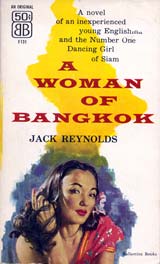
After that eerie moment I barely looked at the second book, but did see that the cover showed a lurid illustration of a vaguely Asian woman reclining on a divan wearing a low-cut gown slit up to her hip bone.  A Caucasian male figure leered at her through a bead-curtained doorway, and that was enough to make me put the book in my pocket and take it along.  Atlantic City no longer had a laundromat or hardware store, let alone a bookstore or public library, and I needed something to read.  I took the appopriate letters downstairs and wrote “Three Stooges Film Fest” on the Apollo’s marquee, the second unit shooting crew came and got their shot and I put the letters back in the attic without cleaning up the mess I had made.  For all I know, it remains that way to this day. 

And when I got back to the hotel that night I began to read the novel.  It was a first edition of Jack Reynolds’ classic Thailand romance A Woman Of Bangkok, and expecting as I was a tawdry bit of titillation, I was amazed to discover that it was a novel of extraordinary sensitivity and insight.  The glue of the book’s binding had long since crystallised in the dry heat of the attic, and as I read my way through the book each page came off the spine like a dead leaf.  When I finished the book I had a loose collection of three hundred yellowed, fragile pages held together with a rubber band, but I didn’t throw the book away. 

One year later I was on a plane bound for Thailand.  At thirty thousand feet over the north pole I re-read A Woman Of Bangkok in the brilliant white light of the stratosphere, and the man in the seat next to me must have thought I was crazy, to take such effort to read a thirty year old trashy novel that left a snow drift of crumbled paper in my lap with each page I read.  By the time we landed the book was confetti, but that was okay.  That book had laid in wait for my entire life, and after doing its job it disintegrated. 

Since making my home in Thailand I’ve tried to find out everything I can about Jack Reynolds, which hasn’t been much.  I’ve learned that he came here after running a fleet of ambulances for a Quaker mission in China through the 30’s and 40’s, and that he only produced one other book in his life: a collection of short stories about being a male midwife in rural China called Daughters of an Ancient Race.  He married a Thai woman, had nine children with her, and eventually died.  That’s all I know about the man who is responsible for my being here. 

Mr. Reynolds’ single serious contribution to English Literature is about a young Englishman who falls in love with a Thai “dancing girl” in Bangkok circa 1950.  She takes all his money, breaks his heart, costs him his job, and finally leaves him to a future of failure and bitterness.  But despite its turgid content, the book is brilliantly written.  It is a story full of wit, pathos and plain old human drama, and it’s one of my favourite books in the world. 

Of course, the Bangkok that Mr. Reynolds described, where Patpong Road was only known to the airline pilots, doesn’t exist any more.  It may never have existed outside of the author’s imagination.  But if I ever do anything of any worth at all in this country, it will be due to Jack Reynolds writing about Thailand in a way that made me want to come here. 

Books are more  powerful than bullets or missiles, but they are almost impossible to aim.  A book may not strike its target until decades after the author is dead, but it will rest on a shelf (or in a box) for years, always armed and ready to explode in someone’s head.  All it takes is for one unsuspecting reader to trip over a book, like a Cambodian farmer tripping over an old land mine, to change his life forever. 

Steve Rosse, formerly of The Nation and the Phuket Gazette newspapers, is a short story writer who evidences considerable depth of understanding of the Thai-Expat dynamic. His stories are alternately sweet and sardonic, lush with irony and, to use that old Portuguese word that doesn’t have an equivalent in English, saudade. Thai Vignettes (2005, ISBN 974-93439-2-1) is a collection of fiction and non-fiction stories, with a host of memorable characters and stories, most of which are fewer than six pages in length. Eight stories we found particularly compelling, none more so than the beautifully written and tragic Two for the Road. Don’t miss Rosse’s Expat Days: Making a Life in Thailand (2006, ISBN 974-94775-3-7), a non-fiction book reviewed on our History and Culture pages.
Lacquerware in Chiang Mai, Thailand

Written By: herbrunbridge - Jun• 08•10

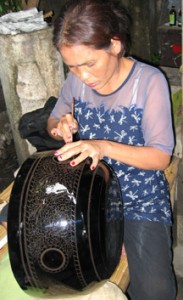
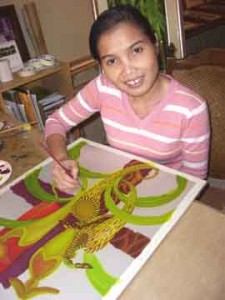
Exacting handwork at Praturng Lacquerware

There are still a few lacquerware shops operating in and around the Chiang Mai area.  Chiang Mai lacquerware was designed to provide a waterproof finish to bowls, trays, and cabinets, utilizing lacquer produced from a tree found in Burma and northern Thailand.  Today, lacquer, which is officially banned in Thailand due to its toxicity, is acquired through underground Burmese connections. 

Typically, the process begins with the original bamboo object, and three successive layers of lacquer-clay slip are applied to form a base.  Gold leaf is applied over an etched design, washed to remove excess gold (which is collected for further use), and 8 more layers are applied, with varying amounts of additional etching and color. 

Several lacquerware shops operate in the Chiang Mai area, with varying degrees of quality.  We especially enjoyed Ban-Khern on Chiangmai-Sankamphaeng Road for its outstanding quality, and Praturng Lacquerware, on Nantarum Road in the Old City,for its charm.

Doi Suthep-Pui National Park, outside of Chiang Mai, Thailand.

Written By: herbrunbridge - Jun• 08•10

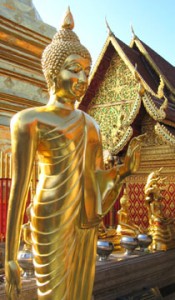
Wat Phra That Doi Suthep

At 1685 meters, the mountain of Doi Suthep overlooks Chiang Mai to the east, providing wonderful views, nature trails, and the spectacular Wat Phra That Doi Suthep.  The wat is worth a visit for its beauty even when views are marred due to weather or smoke from slash-and-burn farming.  The crowning feature of the wat is the 16 meter high gilded chedi sitting in the midst of a marbled courtyard, built in 1525.  There are dozens of remarkable Buddha images, including one of green glass which we found enchanting.  The courtyard is a bustle of activity for those making merit. 

To get there, take Huai Kaew Road from the northwestern part of Chiang Mai, then continue on Highway 1004 to the wat.  If you don’t have a car, you can take a songthaeo from the market on Maninopharat Road near the Chang Puak Gate.

James Ritchie on the religious basis for headhunting in Sarawak, Borneo

Written By: herbrunbridge - Jun• 07•10

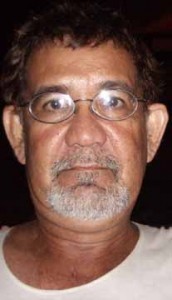
James Ritchie

WoWasis correspondent James Ritchie on the religious basis for headhunting. You may also want to read How Headhunting originated in Sarawak, Borneo  and An Iban veteran tells how heads are smoked in Sarawak, Borneo.

Headhunting was the result of serious religious beliefs among the Ibans of Sarawak.  It was a ritual filled with pomp and ceremony, performed down to the last minute detail. 

To the Ibans, the human head represents “vitality, supremacy and fertility” and according to timang (Iban folklore), the head contains padi (rice) grains.  Dr James Jemut Masing, in his essay ‘imang and its significance in Iban culture” (submitted for his Master of Arts degree at the Australian National University), says that “the soul, from which all life springs, resides in the head.” 

The timang is narrated like an epic by a lemambang (bard) during a gawai (festival) ambang invokes the spirits and gods to guide the Iban warriors and ives them magical protection while out on headhunting missions. Thus, the Iban custom of headhunting is believed to be part of a system of religious beliefs that dates back to ancient times. 

The Ibans still hold various religious ceremonies to appease the spirits, says Dr. Masing, who has studied Iban mythology. He says that in the old days the gawai amat ritual (also called gawai burong) was held to ask the spirits for success in warfare and headhunting. 

Gawai antu was held for the spirits of dead warriors who lost their heads in battle.  At this gawai, the spirits are invited from the mythical land of the dead called Sebayan to join the living longhouse folk for the last time.  The warriors in attendance, who take part in the drinking of the sacred rice wine called ai jalong, are Iban braves who have taken the life of an enemy, if not a head, at some time in their lives. Because the head represents supremacy, the comrades of Iban warriors who died in battle would lop off the heads of their friends so that they would not fall into enemy hands. 

Charles Hose in his book Natural Man says: “In the case of those who die fighting, their heads are hacked off at once, while the trunk is left lying where it fell. In the case of the Ibans, if any of the attackers are killed, their heads are taken away and buried by their friends.”

Dr. Masing says there are four types of gawai in Iban culture, starting with the gawai antu. The second type of gawai includes gawai batu (whetstone ritual), gawai benih (seedling ritual) which is held before clearing of farm land, and gawai nyimpan padi (storing of padi rites) which is held after harvesting. 

The third type is simply called gawai. It is held when something unusual takes place, for example, if a longhouse member has a dream or someone wants to thank the spirits after recovering from an illness.  he fourth is called gawai amat (named so by Ibans in Baleh district) or gawai burong (original name from the Saribas and Batang Lupar area). Under this category there are nine types of ritual starting with the biggest one called gawai kenyalang (hornbill rites).

James Ritchie worked with the New Straits Times for 25 years, before joining the Sarawak Civil Service as a Consultant Public Relations Officer in the Chief Minister’s Department in 1998.  He writes for the Sarawak Tribune, Borneo Post, and The Malaysian Today.  A prolific writer on Sarawak affairs, he has written hundreds of newspaper articles and authored or co-authored about 15 books, including Man-eating Crocodiles of Borneo, Bruno Manser: the Inside Story, Mystical Borneo, Changes and Challenges: Sarawak 1963-1998, and Tun Ahmad Zaidi, Son of Sarawak.  He has won numerous journalistic honors including the prestigious Shell-Kenyaland Award.

For more James Ritchie on headhunting, visit these two WoWasis posts:

 How Headhunting originated in Sarawak, Borneo 

An Iban veteran tells how heads are smoked in Sarawak, Borneo

James Ritchie: An Iban veteran tells how heads are smoked in Sarawak, Borneo

Written By: herbrunbridge - Jun• 07•10

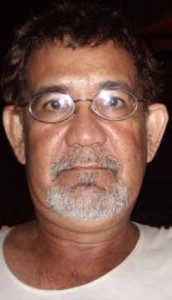
James Ritchie

WoWasis correspondent James Ritchie on how headhunters smoke heads. You may also want to read: How Headhunting originated in Sarawak, Borneo and The religious basis for headhunting in Sarawak, Borneo .

TEMENGGONG Jinggut anak Atari, who is in his early 60s and is the titular chief of the Ibans in Kapit, has seen heads being taken during his lifetime. He claims that Iban soldiers lopped off the heads of communist terrorists during the Emergency. 

Temenggong Jinggut, who was among the first Iban trackers recruited to fight the terrorists in Malaya, says: “During the initial months of the Emergency in 1948, some Ibans hacked off the heads of the enemy, not knowing that it was an offence. In one instance in Perak, members of my unit were caught cutting off the heads of some communist terrorists. 

“The British officer in charge reprimanded the offenders and ordered the heads to be stitched back to the corpses so that they could be photographed. “After the incident several Gurkhas who had helped the Ibans were court martialled. We were warned not to do this again or we would face the same consequences.” 

In 1965 during the Malaysian-Indonesian confrontation, Iban members of the  security forces also took many heads. In one incident at least 30 enemy heads were taken in gunny sacks back to Sri Aman (then called Simanggang). 

Temeoggong Jinggut says the only time he witnessed the smoking of a head was when he was a young man during the Japanese occupation. He says: “We had killed two Japanese soldiers. Their heads were taken to a longhouse just below Nanga Mujong (in the Baleh district) for the ceremony. Our heroes returned with the heads, walking the length of the longhouse ruai (the roofed verandah) past a long line of admiring spectators.  After various rituals the heads were taken to the stream by an elderly and experienced expert in preserving heads. 

“I noticed that the man first made a clean cut from under the chin and close to the jaw, right to the back of the head, removing the stump of the neck. He then proceeded to widen the occipital hole with the pointed end of his parang. He next sliced one end of a piece of rattan. 

“He then placed the splayed end of the rattan strip into the occipital hole and dug out a bit of the brains. He placed it in some glutinous rice and swallowed quickly. He did not vomit. (If he were to throw up, the Ibans believe that the man would fall ill and die because his semangat (spirit) was weak). 

“He then began cleaning out the hole with the rattan strip with a vigorous twisting and poking movement (Eike using a bottle brush) while holding the head in She water.  In this way the soft matter was -easily washed away by the water and removed.” 

After that the expert removed the eyes of the victims with his parang (sometimes the eyes are not removed, in which case leaves are placed to cover the eyes so that they will not bulge or pop out during smoking). The heads were then wrapped in several large scented leaves gathered from the river bank, and tied with rattan strips. The heads had to be tied properly so that the jaws would not fall off. The heads were hung on a bamboo rack, consisting of a horizontal pole with both ends attached to a pair of angled uprights tied together and smoked for three days until they were completely dried out. During the smoking of the heads more ceremonies were held. 

James Ritchie worked with the New Straits Times for 25 years, before joining the Sarawak Civil Service as a Consultant Public Relations Officer in the Chief Minister’s Department in 1998.  He writes for the Sarawak Tribune, Borneo Post, and The Malaysian Today.  A prolific writer on Sarawak affairs, he has written hundreds of newspaper articles and authored or co-authored about 15 books, including Man-eating Crocodiles of Borneo, Bruno Manser: the Inside Story, Mystical Borneo, Changes and Challenges: Sarawak 1963-1998, and Tun Ahmad Zaidi, Son of Sarawak.  He has won numerous journalistic honors including the prestigious Shell-Kenyaland Award.

For more James Ritchie on headhunting, visit these two WoWasis posts:

 How Headhunting originated in Sarawak, Borneo 

The religious basis for headhunting in Sarawak, Borneo

James Ritchie on How Headhunting originated in Sarawak, Borneo

Written By: herbrunbridge - Jun• 07•10

James Ritchie

WoWasiscorrespondent James Ritchie on how headhunting originated in Sarawak, Borneo, Malaysia. You may also want to read: An Iban veteran tells how heads are smoked in Sarawak, Borneo and The religious basis for headhunting in Sarawak, Borneo.

Are headhunters still alive in Sarawak today? The answer is yes and no. If you consider that Dayak members of the security forces were engaged in jungle warfare against the enemy not too long ago, then it is difficult to dismiss the possibility that headhunting was still practiced in the past decade or two.

Different strokes… 

Taking heads was like a hobby among the Ibans of Sarawak. Spenser St John, in his book Life in the Forests, quoted an Iban headhunter as saying “the white man read books, we hunt for heads instead.” 

According to Iban tradition, headhunting started as a religious rite several hundred years ago. At the turn of the 1800s, headhunting was rampant in Sarawak. 

It was considered “prestigious” to acquire heads in Iban society. The social status of a headhunter as a courageous man would be enhanced if he possessed heads, either taken by himself or acquired by other means. 

The weapon used in headhunting is often the parang ilang — a heavy steel blade with a convex cutting edge, about 55cm long, mounted on a handle made from deer horn or belian (hardwood). 

Heads were mainly taken in battle. Following any successful headhunting mission, the Ibans would hold a gawai enchabu arong (a thanksgiving ritual). 

Not the good smell 

The heads are taken back to the village wrapped in the plaited leaves of the nipah palm. They usually emitted an odor, which 19lh century naturalist Sir Hugh Low said  surpasses the odorous durian…” 

Most of the heads taken by the Ibans were smoked in a manner similar to that in which fish is smoked. In this way, the head (minus the eyes) is preserved, together with the flesh and hair.  Sometimes during the process the head is singed black.  

A typical headhunting scene is described in a battle which occurred in the mid-1800s between loyal government Ibans who killed several enemy Ibans in an attack in Saribas. The Illustrated London News (as cited in the book Rajah Brooke’sBorneo) describes the scene:  

“The dayaks, having killed their enemy, immediately cut his head off with a fiendish yell; they then scooped out the brains (from the occipital hole at the back of the head) with a rod of bamboo. 

“They then light a slow fire underneath so that the smoke ascends through the neck, and penetrates the head, thoroughly drying the interior (until all the juices are evaporated).” 

Headhunting picked up when the Arab “Sharifs” and some Malay leaders took advantage of the warlike nature of the Ibans — particularly those from Skrang and Saribas — to help them organize raids on longhouses as well pirate raids on vessels plying the coastal waters of Sarawak. 

Having convinced the Ibans that they could have all the glory by taking heads (leaving the booty to the others), combined raids against vessels began to take place.   

In his book Wanderings in the Great Forest, another 19th century naturalist, Odoardo Beccari, said: “It is said of the Sakarrang and Seribas Dayaks that within the memory of man they were peaceable and inoffensive, although they did take a few heads from inland tribes; but afterwards the Malays and Lanuns took advantage of their skills as warriors and joined them in piratical expeditions along the coast, for the Dayaks were content with the beads alone, and left the booty to their allies.”  

There were other means of acquiring heads apart from taking them in battle. These included killing innocent victims and stealing heads. Former Resident Charles Hose, in his book Natural Man, said: “So strong is the morbid desire that a war party sometimes has been known to rob tombs of villages of other tribes and, after smoking the stolen heads of the corpses, bring them home in triumph.”  

The girls can’t help it  

In the past Iban women played a leading part in encouraging headhunting, as in hunting for “trophies.”  Hose said: “… often a girl will taunt her suitor by saying that he has not  been brave enough to take a head…” 

This led Sarawak White Rajah Charles Brooke to say that the “principal inciters or instigators of these bloody exploits” were Iban women.  Thus it was not uncommon for some of the lesser warriors to sneak up and attack innocent women and children who were bathing at some isolated spot separated from the main tribe.  

It was also a custom that heads had to be acquired after the death of a member of the family in order to appease the spirits. This custom goes back to the belief that Iban warriors must secure a heads before the end of the burial ritual, failing which the burial would be incomplete and mourning would have to continue until a head was found.  

For example, in mourning a death, family members of the Kanowit tribe (a fierce headhunting group which existed before the arrival of James Brooke in 1839) were taught that it was their duty to kill the first-person they meet. Thus they would not hesitate to take the heads of “man, woman or child, even if they were members of their own tribe, and even, relatives.”  

After a head is taken it is given the greatest respect. Sir Hugh said: “The head, for months after its arrival, is treated with the greatest consideration, and all the terms of endearment… are abundantly lavished on it.  The most dainty morsels… are thrust into its mouth and it is instructed to hate its former friends and that having been adopted into the tribe of its captors, its spirit must be always with them.”

James Ritchie worked with the New Straits Times for 25 years, before joining the Sarawak Civil Service as a Consultant Public Relations Officer in the Chief Minister’s Department in 1998.  He writes for the Sarawak Tribune, Borneo Post, and The Malaysian Today.  A prolific writer on Sarawak affairs, he has written hundreds of newspaper articles and authored or co-authored about 15 books, including Man-eating Crocodiles of Borneo, Bruno Manser: the Inside Story, Mystical Borneo, Changes and Challenges: Sarawak 1963-1998, and Tun Ahmad Zaidi, Son of Sarawak.  He has won numerous journalistic honors including the prestigious Shell-Kenyaland Award.

For more James Ritchie on headhunting, visit these two WoWasis posts:

An Iban veteran tells how heads are smoked in Sarawak, Borneo

The religious basis for headhunting in Sarawak, Borneo  

James Ritchie’s Borneo headhunting “how-tos”

Written By: herbrunbridge - Jun• 07•10

James Ritchie is Sarawak’s chronicler, a near-legendary raconteur and bon-vivant who has spent a lifetime studying the customs of the State of Sarawak in Malaysian Borneo.  He has written a great deal on the practice of, and mythos surrounding the tradition of headhunting. The following three articles are available as posts on the WoWasis blog. 

1) How headhunting originated in Sarawak is an essential essay on the historical and cultural elements surrounding this ancient rite. 

2) An Iban veteran tells how heads are smoked describes the process by which heads are readied for display. 

3) The Religious basis for headhunting testifies to the philosophical structures behind the practice. 

James Ritchie worked with the New Straits Times for 25 years, before joining the Sarawak Civil Service as a Consultant Public Relations Officer in the Chief Minister’s Department in 1998.  He writes for the Sarawak Tribune, Borneo Post, and The Malaysian Today.  A prolific writer on Sarawak affairs, he has written hundreds of newspaper articles and authored or co-authored about 15 books, including Man-eating Crocodiles of Borneo, Bruno Manser: the Inside Story, Mystical Borneo, Changes and Challenges: Sarawak 1963-1998, and Tun Ahmad Zaidi, Son of Sarawak.  He has won numerous journalistic honors including the prestigious Shell-Kenyaland Award.