The sharper edge to traveling in Asia

WoWasis book review: Thailand (Siam) as it was in 1926

Written By: herbrunbridge - Sep• 04•12

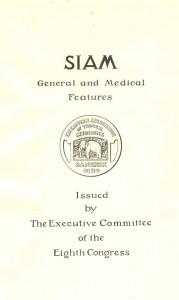
To scholars and historians, a romp through Thailand’s used bookstores is always fascinating, revealing a plethora of material not available in stores carrying new books. But there are treasures to be found in used bookstores in other countries as well, consisting of older books carried home by travelers, and sold to used stores by those clearing out the estates of the deceased. Here at WoWasis, we found a wonderful two-volume set in a used bookstore in the U.S., consisting of a “state of the country” review of Thailand as it was during the reign of King Prajadhipok (King Rama VII), who ruled from 1925-1934. These 300+ page volumes, named Siam: General and Medical features and Siam: Nature and Industry, consisted of monographs written in 1926 and bound in volumes to be distributed to attendees at the 1930 Eighth Congress of the Far Eastern Association of Tropical Medicine, held in Bangkok.

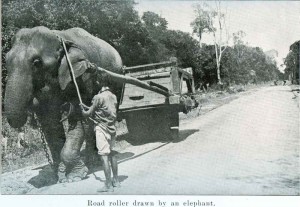
These volumes are replete with charts, maps, and period photos, and describe a country in transition from a rural to a modern state, juxtaposed by photos showing elephant-powered road rollers and biplane-powered air mail services.

The table of contents from the Medical volume  is illustrative of the breadth of these surveys:

  1. Government and Administration.
  2. History in Brief
  3. Religion
  4. Literature
  5. Archaeology
  6. Fine Arts
  7. The Siamese Theatre
  8. Structures of Note in Bangkok
  9. Bang Pa-In, Ayudhya and Lopburi
  10. Along the Railway Lines
  11. Education in Siam
  12. Medical Education
  13. Public Health and Medical Service
  14. Bangkok Waterworks
  15. School Health Service
  16. Army Medical Service
  17. Veterinary Service
  18. Saovabha Institute
  19. The Siamese Red Gross Society
  20. Protestant Medical Missions
  21. The Medical Association of Siam
  22. Nursing in Siam
  23. Leprosy in Siam
  24. King Chulalongkorn Memorial Hospital
  25. Other Institutions :
  26. Siriraj Hospital
  27. St. Louis General Hospital
  28. The Bangkok Nursing Home
  29. McCormick Hospital

ThailandPromoBanner Old books such as these are not only interesting for the scholar, but hold a special fascination for visitors to Thailand and lovers of its culture and people. They describe a country of nearly 100 years ago, and can be a wonderful replacement for coffee table books that have grown commonplace.

Bachelor in Bangkok: Khun Lee on how not and why not to overpay Thai women

Written By: herbrunbridge - Sep• 02•12

I am starting to think that those of us fortunate (or smart) enough to be living in Paradise are getting just a tad bit spoiled.  I went out to party at one of my favorite watering holes the other night and met up with my best mate from Sunderland, England.  We each ate well, consumed 7 or 8 beers and had pleasant conversation with the other patrons of the bar.  Then my friend dialed in a girl and went home to have a night of sex and debauchery.  When I bumped into him the next day, he proceeded to tell me that he had a quiet night the previous evening because he hadn’t been feeling like himself lately.  I guess we all have our definition of a “quiet night” but I am not sure that 5 hours of beer drinking and socializing followed by 3 more hours of sex is what most people would refer to as a “quiet night?” 

I must admit there is a slight possibility that I am also becoming a little spoiled.  Twice this past week gals called my mobile to request a session of hot sex and both times I told them I was busy because I really wasn’t in the mood.  It isn’t that I don’t like them or that I am bored with sex, but like many Thai gals these 2 sex kittens expect to shower first, make love for an hour or so and then shower again.  I already shower at least twice a day in this steam bath climate and I just wasn’t in the mood this week for all that work.  They are both lovely gals and they never ask me for any money or favors, but all that showering and toweling off is just too much work for the pleasure of having sex with them.  Perhaps I should have made an exception with gal number 2 as she is a flight attendant for an international carrier and just likes to have steamy sex on her way to the airport?  She is really, really hot. Ooohhhh, and the things she can do with her mouth and tongue.  Nah, it’s just too much work. 

If I have seen it once, I have seen it a thousand times.  I cannot state strongly enough that when dealing with Thai women, especially bar girls, one must spend money wisely and not try to act like the big shot. Twice more this week, I witnessed guys spending money foolishly and frivolously, just to become frustrated at the results.   Thai women are very basic and simple by nature.  If they had 15 customers this month including you, and 14 of these guys paid 1000 to 1500 baht and you paid 3000 baht, you are definitely the first one she will beg money from anytime she has a money problem, and trust me when I say their money problems are lifelong.  Giving money to a Thai bar girl is like pouring water into a pitcher that has a hole in the bottom, no matter how much you add the pitcher will always be empty.  I am not saying you should be cheap or that you shouldn’t pay a respectable amount for quality service.  Quite to the contrary.  Buy drinks, mess around with the ladies and have fun, but learn what is the “normal” amount for tips and service payments and pay just that amount, no more and no less.  If you give them twice as much as every other guy, I absolutely guarantee you that the service will be no better, but they will treat you like a walking ATM machine and whine and pout every time you don’t up the ante.  If you are only in town 1 or 2 nights then why not act like the stupid tourist who doesn’t understand the local customs, but if you plan on spending more than a few days here then do a little research before throwing yourself into the deep end of the pool. 

Many local guys, including myself, use the internet to chat up local office girls who want to meet a foreign guy for a bit of fun.  There are many websites and the action really gets hot and spicy.  It was even more entertaining than usual this week as I received an email from a gal’s personal email address that was not from her at all, but from some loser sponsor who is jealously guarding his stock.  It read something like this:

“My name is Steve and this girl is MY girlfriend.  I have bought her a house, car and business and we are talking about living together.  So she is NOT available mate, sorry to break the bad news.” 

I laughed so hard that I almost cried.  Can you imagine the pathetic loser who thinks he needs to monitor his plaything’s email in order to keep her from cheating on him?  Please friends, if I ever reach the point this fellow has and have squandered every ounce of dignity and self-esteem, do me a favor and throw me in the Chao Phraya River.  I didn’t know if I should respond to the email as it was not from his address bu from the gal’s, however this would have been my response: “Sorry mate, I didn’t want to buy her a house, or a car, or a business. I leave that up to you. I just wanted to have sex with her.”

Read Khun Lee’s other WoWasis columns for more advice on navigating the adult dating scene through the backstreets of Bangkok

Ao Dai Festival of Vietnamese fashion to be held in San Jose, California in September, 2012

Written By: herbrunbridge - Jul• 27•12

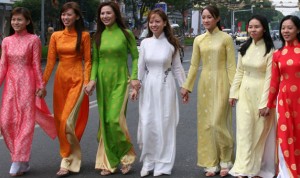
The Ao dai on parade in San Jose, California

San Jose, California, is essentially the largest Vietnamese city outside of Vietnam, with an estimated 100,000 residents of Vietnamese ethnicity. Each year, San Jose hosts the Ao Dai Festival, celebrating the garment that is the paragon of traditional Vietnamese feminine fashion, with a fascinating history, and from what has been evident in past festivals, an intriguing future as well.  In 2012, it will be held September 15.

Against a tapestry of five-element colored flags and red silks, one hundred dancers dressed in the Vietnamese Ao Dai will dance to the drumbeats of forty drummers and zither players in front of the Center for the Performing Arts in San Jose, California on September 15 at 3 pm, marking the opening of the 2012 Ao Dai Vietnamese Cultural Festival. The event is hosted by the Friends of Hue Foundation and the GreenRice Foundation Inc. All festival proceeds benefit the FHF Children Shelter located in Hue, Vietnam. Designers from Vietnam and the Greater Bay Area are invited to celebrate Vietnamese visual arts, language and culture. The event is designed to promote the beauty and grace of Vietnamese women. This family-friendly event will be a stunning visual feast appealing to everyone who appreciates beauty, fashion and cultural diversity. 

The Festival includes:

  • Fashion Show of exquisite Ao Dai – international designers dazzle with exquisite creations from traditional to modern
  • Music performed by Emmy Award Winner Vanessa Vo and other musicians
  • Fine Art Exhibition, curated by internationally renowned artist, Trinh Mai, including a diverse collection of California Vietnamese artists
  • Vietnamese food, silent auction, champagne reception and more

A Short History of the Vietnamese Ao Dai, by Dan Do

Written By: herbrunbridge - Jul• 27•12

WoWasis note: San Jose, California, is essentially the largest Vietnamese city outside of Vietnam, with an estimated 100,000 residents of Vietnamese ethnicity. Each year, San Jose hosts the Ao Dai Festival, celebrating the garment that is the paragon of traditional Vietnamese feminine fashion. San Jose’s Dan Do has written the following article on the history of the Ao Dai:
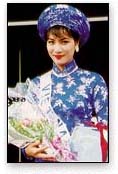
Truong Quynh Mai in her winning costume

The Vietnamese “Ao Dai”, the long gown worn with trousers by Vietnamese women, has become the symbol of the Vietnamese feminine beauty, and the pride of the Vietnamese people.  This national pride culminated in 1995 when Miss International Pageant in Tokyo gave its Best National Costume award to the Vietnamese representative Truong Quynh Mai.  Even before such international recognition, the Ao Dai had long been the source of inspiration of artists and poets, and thus had become an institution in Vietnamese arts and literature. 
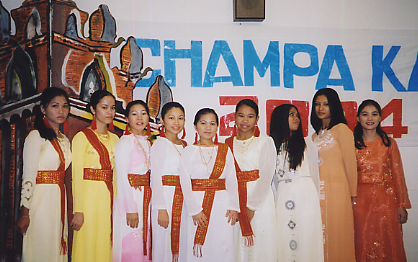
Ao Dai of the Cham people

The Ao Dai was born as the costume required to be worn by the southern courtiers under the reign of the southern lord Nguyen Phuc Khoat.  Eager to establish a separate identity from his northern rivals, the Trinh lords, who enjoyed the status of regents to the puppet kings of the declining Le dynasty, Lord Nguyen decreed that men and women of his court wore trousers covered by a long gown.  Thus was born the Ao Dai.  The garment borrowed the style of clothing worn by the Cham, the original inhabitants of the land to the south of the dividing Gianh river, whose country of Champa (now Central Vietnam) had been invaded and conquered by the Vietnamese.  The Ao Dai was Lord Nguyen’s way to show his respect of the culture of the Cham and to win over their support.
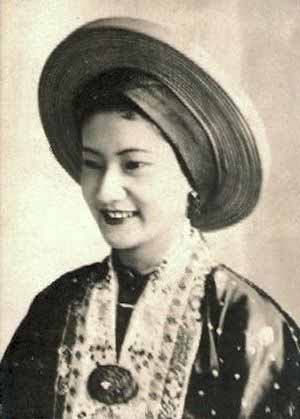
Empress Nam Phuong

Although many Vietnamese identify the Ao Dai as a variation of the Ao Tu Than (four-panel tunic), the two have separate and distinct origins.  The Ao Tu Than is generally worn by peasant women in the North.  It consists of four panels, two in the back and two in front.  The back panels are sewn together while the front panels are left open or tied by a belt.  Inside the Ao Tu Than, the woman wore a bodice (known as “Yem”) to cover the chest and a long skirt (known as “Vay”) to cover the legs.  The fabric of the Ao Tu Than was weaved in small width, necessitating the four-panel structure.

The original Ao Dai was by no means the symbol of aesthetics.  The garment was plain and loosely fitted, unflattering to the female body.  It was not until 1930 when a group of French-trained artists, beginning with the
Hanoian Cat Tuong (also known as Le Mur, the French translation of a homonym of the artist’s first name), combined the design of the Ao Ngu Than (five-panel gown), a variation of the Ao Dai with features borrowed from the Ao Tu Than, and French fashion dresses, that the Ao Dai morphed from plainness to beauty and sensuality.  The image of the last empress of Vietnam, Hoang Hau Nam Phuong, wearing the Ao Dai with exceptional elegance, has left a great impression on artists. Painters and sculptors began to model their subjects in Ao Dai, and artworks depicting historical female personages, including the Virgin Mary, became increasingly popular.
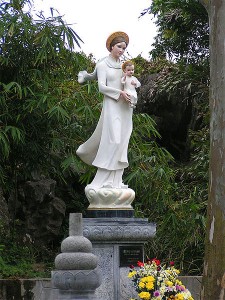
Madonna and Child in Ao Dai

The Ao Dai stepped onto the political stage when Tran Le Xuan, wife of Ngo Dinh Nhu, Chief Political Adviser of Ngo Dinh Diem, President of South Vietnam’s First Republic, donned its first décolleté version to promote her New Woman Movement.  Nguyen Thi Binh, negotiator for the Vietcong at the Paris Peace Conference, wore the Ao Dai to demonstrate her patriotism.  Ironically, the Communist government of Vietnam had banned the Ao Dai as a symbol of “capitalist decadence.”  It was not until the late 1980’s that the Ao Dai regained its stature which culminated with Truong Quynh Mai. 
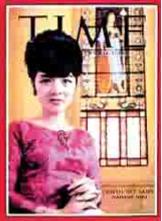
Mme Tran Le Xuan

Today, the Ao Dai has become the Vietnamese woman’s choice of fashion for special occasions.  Fashion designers such as Thiet Lap of the 60s and Sy Hoang of today have continued to conceive new designs.  The introduction of the raglan sleeve (sleeve that continues to the neck), the raising of the opening of the panels to a higher level exposing the skin on both sides of the waist, and other features borrowed from Western fashion add sexiness and sensuality to the Ao Dai.  Yet the garment moves delicately with the body giving the wearer an appearance of modesty combined with self-confidence.

And so the Ao Dai becomes a cause for celebration.  In Vietnam as well as among the Vietnamese emigrant communities around the globe, the Ao Dai Beauty Pageant has become a staple in the Vietnamese entertainment industry.  Many well-known Vietnamese fashion designers devote their entire careers to develop new looks for the Ao Dai.
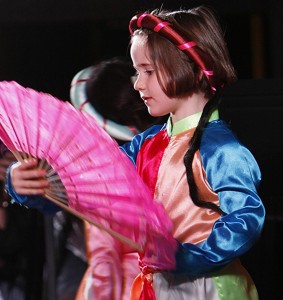
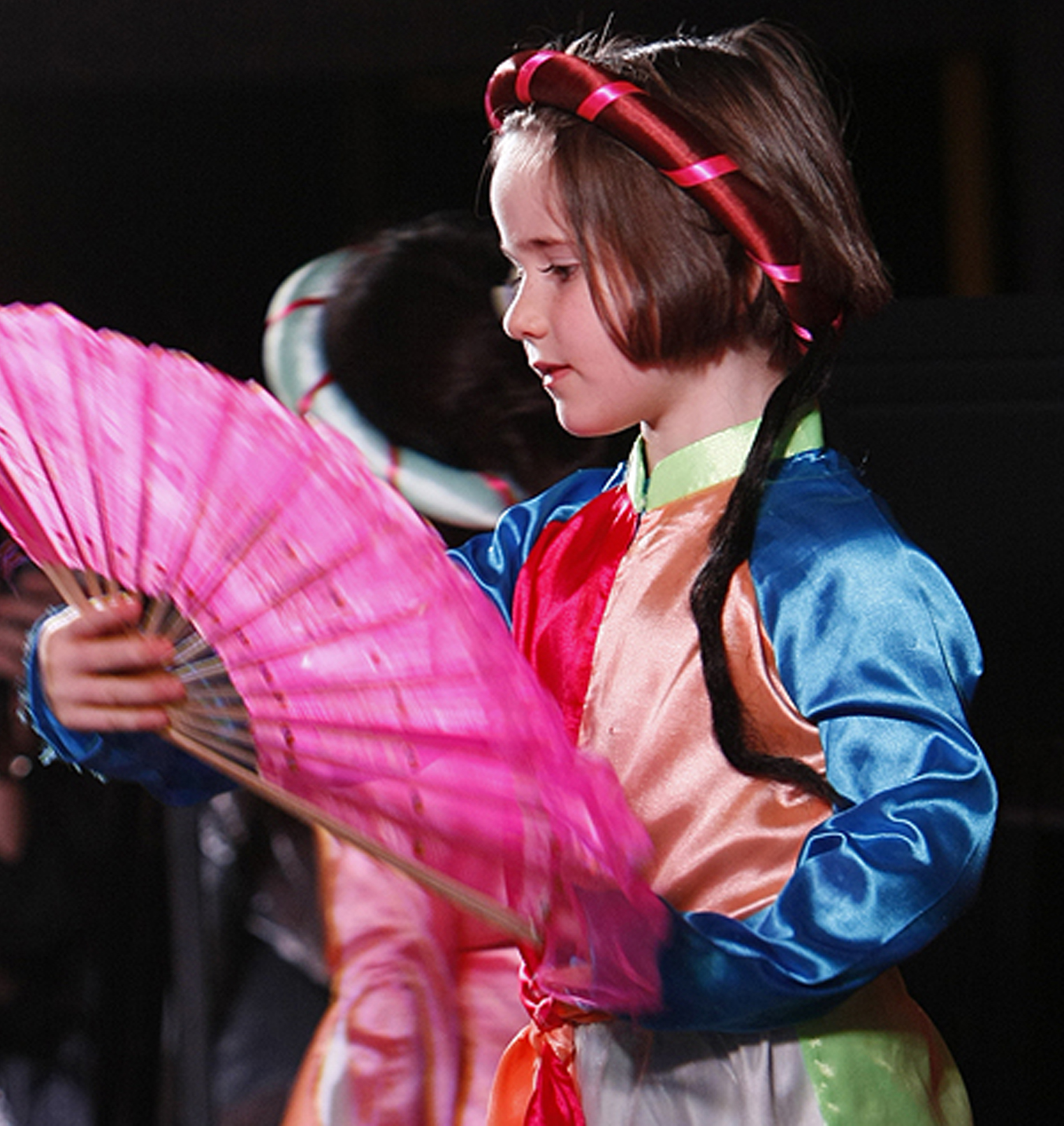
Little Fiona at FHF 2010 Ao Dai Show

The Ao Dai for men, on the other hand, did not undergo much change.  It is now worn only during traditional ceremonies and mostly by men of older generations.  The masculinity and practicality of Western men’s clothing has been eagerly embraced by Vietnamese men, and the return to the traditional Ao Dai is simply impractical, if not unthinkable.  The Ao Dai for men has become an item of purely nostalgic value for today’s and future generations.

The history of the Ao dai reflects the adaptability of the Vietnamese.  As people who constantly had to defend themselves against foreigners, they adopted products of foreign cultures which they valued and transformed them into their own.  Thus, the women’s Ao Dai is a cultural metamorphosis that is typically Vietnamese:  a design adopted from the Cham that combines with Western elements of fashion and aesthetics to become a product that is uniquely Vietnamese.
WoWasis Book review: Susan Conway’s ‘Thai Textiles’

Written By: herbrunbridge - Jul• 22•12

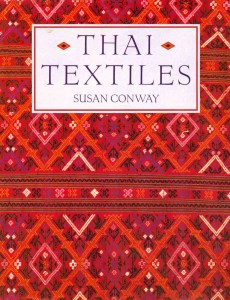
Here at WoWasis, we consider it a tribute to author Susan Conway that her book Thai Textiles (1992, ISBN 974-8225-798) continues to be a primary source on the subject some 20 years after its initial publishing date. This 192 page paperback retails for $140 USD on the internet, although used copies may be found for under $10 USD. Conway’s exacting scholarship is the keynote here. She’s knowledgeable on the craft, and weaves historical and cultural elements into the story as well, accompanied by more than 150 photos, 105 of them in color. 

Her chapter entitled ‘Textiles, Religion and Society’ is indicative of the detail imbued in virtually every page. She describes the four main Buddhist festivals, when monks are presented with woven textiles, Khaw Phansa, Org Phansa, Bhun Kathin, and Bun Phraawes, and discusses the colors sacred to Thais, keyed to each day of the week. In her chapter on ‘Silk and Cotton Production, she discusses the home-based silk industry, and mentions a fascinating element of the production of robes for monks: 

Before the advent of aniline dyes, monks’ cotton robes were dyed according to the rules laid down in religious texts. Bright colours were forbidden, and a dull yellow-brown was considered correct. This colour was achieved with dye from the Jackfruit tree, khanun (Artocarpus iniegrifolius). Before the robes were dyed they were mordanted in a preparation made from cow dung, fine mud from the river bed and plant extracts. The dye was prepared by slicing core-wood of the breadfruit tree into fragments and boiling them in water to extract the dye. The mordanted robes were immersed in the dye bath until they reached the required shade of dull yellow-brown (Suvatabandhu 1964). 

Many customs and superstitions surround the use of vegetable dyes. Dye vats were prepared in a special corner of the compound away from the house, dyes were not used on Buddhist holy days, and monks were not allowed near as they were believed to weaken the strength of the dyes. Pregnant or menstruating women were also believed to affect the dye baths (Peetathawatchai 1973). Restrictions surrounding the use of mordants include not talking while preparing the ingredients. 

In the past a vast range of trees, plants and shrubs were used for dyes and mordants, but today only the elderly women can identify them. With the pressure on land for cash-crops, many woodland and scrub areas have been cleared and the habitat for dye plants has been lost. It is likely that the elderly women in the villages may be the last generation to know all the ingredients. 

Conway’s bibliography cites dozens of works, and as such, represents an important research tool that is as viable today as it was when the book was written. This book is a fascinating and faced-paced reading into the historical, social, and production processes partial to Thai textiles, and is recommended to any reader desirous of discovering the basics and minutiae of this important element of Thai life.

WoWasis book review: ‘Sex at the Margins’ by Laura María Agustín

Written By: herbrunbridge - Jul• 18•12

The author of this book on the prostitution “rescue industry” caught our eye here on a WoWasis blog post earlier this year, when we reported this comment in her own blog, quoted from a Thai women’s organization: We have now reached a point in history where there are more women in the Thai sex industry being abused by anti-trafficking practices than there are women exploited by traffickers.” Strong words and opinions, so we read the book to see what it was all about.

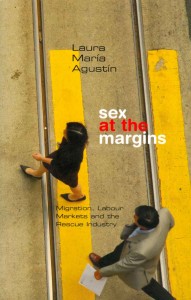
Laura María Augustín’s Sex at the Margins: Migration, Labor Markets, and the Rescue Industry (2007, ISBN 978-1-84277-860-9) explores the professional sex industry from several historical and social perspectives.  One fascinating chapter addresses the historical concepts of “work” and “travel,” suggesting migration patterns of today’s international sex workers are no different than any other itinerate trade.  While acknowledging that trafficking of women against their wills does exist, it is, in fact, a minuscule drop in the vast sea of male, female, and transsexual sex workers, yet fuels the fire of NGO outrage to the extent that it has radically changed the discourse over the international sex trade.

Augustín here is emphatic that the vast majority of sex workers don’t see themselves as victims, but rather consider their work to be a choice, primarily to better themselves financially. Her own travels investigating the business occur primarily in Spain, but her findings would not be out of place in Asia. And increasingly, she views NGO-based “rescue operations” as neo-colonialist in nature in attempting to impart a western, quasi-religious  world view to those they would attempt to “save.”

There’s lots to consider in this 248 page book, including interesting pages on the differing ways 18th century France and England handled the prostitution industry.  From denunciation of hedonism to the Evangelical protestant movement, she posits that centuries-old western beliefs color the world of those attempting to regulate or abolish prostitution today, contrary to the desires of individuals that have chosen the selling of sexual favors as their preferred method of deriving money.

Among our favorite passages were those on the subject of a conference the author attended, run by radical feminists, who brooked no dissention or contrary discussion with regard to audience members. Prostitution, for them, was a crime against women, regardless of what the women engaged in the trade thought. Here is a thought-provoking element, voiced by the author:

The many research projects referred to in Note 60 of this chapter show that many women do achieve the goal of earning a large amount of money in a short time and are glad of it. The Coalition Against Trafficking in Women (CATW), an international NGO, agitates for a discursive change that would make ‘prostitution’ by definition a form of violence against women, eliminating any notion that women who sell sex can consent. CATW also proposes that the word ‘prostitution’ be made to mean the same thing as the word ‘trafficking,’ so that

‘all children and the majority of women in the sex trade would be considered victims of trafficking … Unless compelled by poverty, past trauma, or substance addictions, few women will voluntarily engage in prostitution. Where the demand for prostitution is high, insufficient numbers of local women can be recruited. Therefore, brothel owners and pimps place orders with traffickers for the number of women and children they need.’

The movement against ‘trafficking’ (and ‘prostitution’) uses the theory of violence against women, conceived as a ‘manifestation of historically unequal power relations between men and women, which have led to domination over and discrimination against women by men and to the prevention of the full advancement of women’.  The feminist project to reveal the routine nature of violence against women has led to widespread understanding of the insidious workings of patriarchy; the problem comes about when the roles of ‘perpetrator’ and ‘victim’ are Created as identities rather than temporary conditions. But services that want victims to become ‘survivors’ sometimes reinforce passivity, particularly in therapeutic contexts, diagnosing syndromes and disorders and emphasising damage over coping. Ratna Kapur explains that in the legal context

‘it is invariably the abject victim subject who seeks rights, primarily because she is the one who has had the worst happen to her. The victim subject has allowed women to speak out about abuses that have remained hidden or invisible in human rights discourse.’

Victims become passive receptacles and mute sufferers who must be saved, and helpers become saviours, a colonialist operation warned against in discussions of western feminism’s treatment of third-world women and now common in discussions of migrant women who sell sex.

The ‘trafficking’ discourse relies on the notion that poorer women »re better off slaying at home than leaving and possibly getting into trouble; men are routinely expected to encounter and overcome trouble, but women may be irreparably damaged by it. The lack of a coherent definition of the term ‘trafficking’ has inspired an avalanche of meetings, conferences and reports all over the world.

As the author suggests, it’s clearly time for rethinking. And Agustín is most assuredly a thinking person’s writer. The book is highly recommended for all persons interested in international commerce, the business of commercial sex, and the often questionable veracity of NGOs involved in “saving” allegedly fallen women. Buy the book here at the WoWasis eStore.

Man jailed in Thailand for turning dead foetuses into Goomarn Thong icons

Written By: herbrunbridge - Jul• 11•12

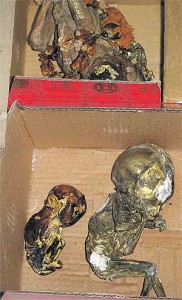
Foetus gold-leafed and made into a Goomarn Thong icon (courtesy Bangkok Post)

Here at WoWasis, we’ve always been fascinated by the statues and images found on the ‘hing,’ or altar, found in many Thai houses and businesses. Goomarn Thong is one of these, representing a dead baby.

On May 28, the Bangkok Post reported that a man has been jailed for gold-leafing six dead foetuses, transforming them into Goomarn Thong icons that he was intending to sell for a considerable amount of money. Here’s the story:

There appeared to be nothing out of the ordinary when police questioned Briton Choe Hok Kuen, 28, in Bangkok in his hotel room after guests on the same floor had complained about babies crying in his room. Six human foetuses, roasted and wrapped in gold leaf, were seized from the room of suspect Choe Hok Kuen in Yaowarat. The foetuses were intended for sale online as talismans.

But after they opened his luggage they knew this was no ordinary case. Inside they found six foetuses wrapped in gold leaf and tied with religious threads. According to police investigators, Mr Choe, a British passport holder of Taiwanese descent, had flown into Thailand to pick up the foetuses. The discovery opened the doors to a world of black magic that police officers found hard to fathom.  “I believe it’s the world’s first body snatcher bust involving the commercial trade in foetuses,” said Pol Col Wiwat Kamchamnan, inspector with the Children and Women Protection Sub-division of the Royal Thai Police.

Some believe the foetuses can boost their fortunes in business and commerce. Demand for foetuses in China has soared in recent years, according to the sub-division. Before the suspect was arrested on May 18, guests at a hotel in the Yaowarat area alerted Plabpachai police claiming they had heard ghostly sounds of babies crying from Room 301. Police went into the room and found no babies and the hotel guest was out. Pol Col Wiwat said his team from the sub-division visited the room some hours later and met Mr Choe. A thorough search of the room turned up no babies. The investigators searched his shoulder bag and found a hotel room key from a nearby hotel.

Police went to the room and discovered foetueses which had been ‘immortalized’ into kumarn thong (baby charms) stuffed inside a suitcase. “The corpses were confiscated and forensic examinations confirmed they were human bodies,” he said. They arrested Mr Choe. Investigators with the sub-division said the foetuses had been obtained from abortion clinics, put over fire to dehydrate them, embalmed and scribbled with what appear to be ancient Khmer script. They were also covered in gold leaf. The inscribed corpses were then acquired by a middleman who sold them to Mr Choe.

Pol Col Wiwat said Mr Choe is the self-professed leading master of witchcraft in East Asia, with his own website that advertises his services of black magic and divination. Mr Choe also wears amulets of Mae Nak Phra Khanong and Khun Paen around his neck. Mae Nak Phra Khanong is a legendary ghost from folklore in which the central character died in labour. Khun Phaen is a romancer in a popular Thai literary work, Khun Chang Khun Phaen. The amulets are believed to provide their wearers with supernatural prowess to succeed in business and love.  Mr Choe allegedly practices black magic and uses the foetuses in performing his rituals. He also sells some of the foetuses, police said. Police said Mr Choe has traveled to Thailand 16 times since 2007 and he may have bought many more kumarn thong on earlier trips. Police said Mr Choe admitted he planned to sell the kumarn thong to Chinese businessmen. He sold one for 30 million baht once. Perfectly shaped and well-preserved foetuses would fetch the highest prices, said Pol Col Wiwat. Mr Choe was charged with concealing human corpses, punishable by up to a year in jail and a 2,000 baht fine. Pol Col Wiwat expanded the investigation and nabbed another Taiwanese man, Kun Ye Chen, 32, who had allegedly supplied the kumarn thong to Mr Choe. Police say Mr Choe told them he had bought the kumarn thong from Kun for 200,000 baht. He knew Mr Kun from a go-between who lives overseas. Police have not charged Mr Kun as they consider him a mere courier in the racket.  Pol Col Wiwat said the corpses were probably obtained from abortion clinics. Police and the Public Health Ministry are trying to identify the clinics thought to have provided the foetuses.

The tuk-tuk driver took me on a wild goose chase in Bangkok

Written By: herbrunbridge - Jul• 10•12

The Good Manner: Advice on Thailand from WoWasis’ Pa Farang
This week’s dilemma: The tuk-tuk driver took me on a wild goose chase 

Dear Pa Farang,
I agreed to pay a tuk-tuk driver 50 baht to go to a temple. Instead, he drove us around to two different gem shops.you to gem shops, and finally we had to get a taxi to take us to our destination. What was this all about, and are these guys licensed?
–  A visitor to Bangkok 

Dear visitor,
You got taken by a common tuk-tuk scam.  The classic scam involves telling you that the wat (temple) is closed today, and the government has given him a special “tourist promotion” to give you a free tour for 50 baht (this scam is also perpetrated at museums).  Why not, you think, the temple is closed anyway?  He’ll then take you to every shop he can, each of which pays him a commission for everything you buy.  He’s a nice guy, the driver, best friend you ever had.  And, if you manage to go through with everything and burn your day up making prurchases at the shops, he’ll gladly drive you back to your hotel free, then offer to pick you up the next day for another “tour.” Of course, the temple wasn’t really closed, but he got you in the tuk-tuk and sped you away before you could get to the front door.

About the best thing I can say about tuk-tuk drivers is that they’re colorful.  If you really need to get somewhere, take a taxi-meter instead (and ensure that he turns the meter on as you start your trip).  Avoid all scams, show the Good Manner, and have a great time in Thailand!

 – Pa Farang 

Read Pa Farang’s other columns in WoWasis for more advice on relationships and cultural matters in Asia

Shakespeare film banned in Thailand

Written By: herbrunbridge - Jul• 03•12

In April, Thailand’s culture ministry banned a film based on Shakespeare’s Macbeth. citing “content that causes divisiveness among the people of the nation”.  On July 5, 2012, Bangkok’s Foreign Correspondents’ Club of Thailand (FCCT)  is hosting a discussion pertaining to that event. Censorship is always an issue in Thailand, and the discussion will no doubt be pointed, and lively. The FCCT’s description of the issue provides a background for the discussion:

In April, Thailand’s culture ministry banned the film Shakespeare Tong Tai (Shakespeare Must Die), based on Macbeth, citing “content that causes divisiveness among the people of the nation”.

It transpired that a slender majority – four out of seven – of the censorship committee had objected to, among others, a scene in the film reminiscent of the infamous 1976 massacre of left wing students at Bangkok’s Thammasat University.
The committee also objected to alleged anti-monarchy overtones in the film, as well as the bright red cloak of a murderer in the film – the same colour worn by the “red shirt” movement which helped sweep former premier Thaksin Shinawatra’s sister, Prime Minister Yingluck Shinawatra, to office last year.

In an interview at the time, director Ing Kanjanavanit said “I feel like we are heading to a very dark, dark place right now, a place full of fears and everyone has to be extra careful about what they say.”

Thailand’s ministry of culture has accumulated a recent track record of rulings that have provoked both righteous approval by supporters and indignation from detractors.

Ing Kanjanavanit will be joined at the FCCT by the outspoken president of the Thai Directors’ Guild, Tanwarin ‘Golf’ Sukhappisit, whose film Insects in the Backyard was banned for obscenity two years ago – prompting her to file petitions in court to have the ban lifted. At a recent meeting the Guild agreed to campaign against a clause in the law allowing films to be banned.

They will be joined by Kong Rithdee, a deputy editor at the Bangkok Post, who in the wake of the banning of Shakespeare Must Die, wrote “Film censorship is medieval in an age when you can watch a film while riding in an elevator or on your phone while stuck in traffic.”

Join us on July 5 at 8 pm for a riveting discussion on who has the power to decide what can and cannot be seen by the Thai public – and whether censorship has any place at all in a modern Thailand.

The FCCT is located at the Maneeya Building, BTS Skytrain Chit Lom station. Tel: 02-652-0580-1

WoWasis book review: ‘Ho Chi Minh: A Life’ by William J. Duiker

Written By: herbrunbridge - Jun• 17•12

Author William J. Duiker worked in Saigon’s U.S. embassy during the Vietnam war years, and has penned an exhaustive review of the life of Ho Chi Minh in Ho Chi Minh: A Life (2001, ISBN 978-0786887019). The text is 577 pages long, and what really emerges is essentially the story of a conciliator who played off a dizzying array of individuals, countries, and political dogmas in his struggle to obtain independence for Vietnam. Ho was a master in “working the room” of 20th century politics. He was seen as an ally of Stalin’s Russia and Mao’s China and an enemy to France and the U.S., and yet his attempted alliances with western powers were most often promoted with a sense of anti-colonialism and liberty that he felt would somehow, ultimately, strike a chord. 

Undoubtedly, many U.S. readers of this book will second-guess their country’s entrance into the war. The South Vietnamese government was never viable, in its several iterations. Ho was a communist, but a moderate, whose essential philosophy was focused on chasing colonial forces away from his country. He understood certain elements of the American political system better than more than a few Americans: 

Lieutenant [Dan] Phelan of AGAS himself had initially been reluctant to take part in the operation because he felt that Ho Chi Minh probably had Communist leanings, but Ho soon put to rest the young American officer’s suspicions. On one occasion he asked Phelan if he knew the opening words in the U.S. Declaration of Independence, which Ho intended to incorporate into the declaration for his own country. “But he actually seemed to know more about it than I did,” Phelan reported. In one cable sent from Pac Bo to Kunming, Phelan described the Vietminh in telegraphese as “not anti-French merely patriots deserve full trust and support.” Phelan apparently never changed his mind. Many years later he described Ho to the journalist Robert Shaplen as “an awfully sweet guy. If I had to pick out the one quality about that little old man sitting on his hill in the jungle, it was his gentleness.”

And in his Declaration of Independence speech in 1945, Ho began his talk with a reference: 

“All men are created equal. They are endowed by their creator with certain unalienable rights; among these are life, liberty, and the pursuit of happiness.”
This immortal statement appeared in the Declaration of Independence of the United States of America in 1776. In a broader sense, it means: All the peoples on the earth are equal from birth, all the peoples have a right to live and to be happy and free. The Declaration of the Rights of Man and the citizen, made at the rime of the French Revolution, in 1791, also states: “All men are born free and with equal rights, and must always remain free and have equal rights.” 

Today’s reader of this book is faced with these sobering facts: more than 1 million Vietnamese died, more than 55,000 U.S. personnel were killed in the Vietnam war, and Vietnam is a unified, non-colonial country. This perplexing thought remains, and underlies every chapter of the book: how many opportunities did the U.S. mis-identify or ignore that if taken, would have changed the course of history for the better? Buy this book now at the WoWasis eStore.