The sharper edge to traveling in Asia

5 tips to using a computer on the road while in Korea

Written By: herbrunbridge - Oct• 09•12

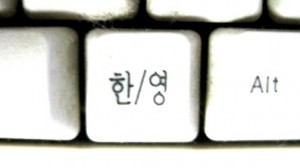
Toggle this English/Hangeul key to the right of the space bar in order to type English script on Korean keyboards

Note: Plan on using your computer in Korea? Print this page before you go, and take it with you.

As we discussed in our post on using telephones in Korea, this technologically advanced country is unlike other Asian countries with which you may be familiar. In the case of personal computers, there are relatively few wifi spots, as the younger generation of Korea has completely embraced mobile devices. If you intend to use your notebook or laptop computer, you’ll probably have to do it from your hotel room, provided it has a LAN connection or an available network. In all probability, though, for internet access, you’ll be stuck using the computer in your hotel room.

What we at WoWasis do in Korea is compose our content on our notebook, save it to a USB device, plug it into the room’s computer, then upload it all. It’s not always seamless, so here are some tips on using hotel computers in Korea.

  1. The key with the Hangeul characters between the space bar and the alt key is the language key that toggles between Hangeul and English.
  2. Finding your USB device on the Korean computer may not be all that easy. On the desktop, look for a logo that represents a computer and drive and click on it. Another method is to look for a logo that looks like a USB device.
  3. Your screen will be full of Korean characters, even though you have the English toggle key on. Hangeul character strings attached to (C) and (P) still indicate “copy” and “paste.”
  4. It’s pretty common for Korean hotel computers to have outdated browsers and a lack of programs commonly used in the western world, such as MS Word. A Word doc double-clicked from your USB device should bring up a word-processing program that can read your Word doc.
  5. It’s also quite common for room computers to be affected with pop-ups that you can’t delete. If you can’t get help from the hotel’s tech go-to-person, change rooms/computers.

To sum up, using your own computer or hotel computer has its challenges, but using these tips, combined with a little intuition, can make them useable for westerners.
Antiquities and crafts shopping in Seoul, South Korea

Written By: herbrunbridge - Oct• 09•12

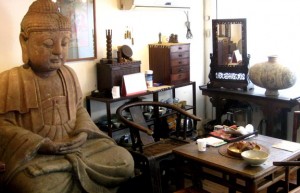
shops in Insadong offer a wide array of Asian antiquities

Seoul offers some splendid opportunities for picking up antiquities and crafts. We here at WoWasis visited three distinct areas, and each of them have their own character, Insadong, the Janganpyeong Antiques Market, and the Bogwang-ro and Noksapyeong-daero 26-gil area just south of Itaewon. Let’s start with the best, and work our way down.

Insadong has the finest antiquities and crafts shops, hands down. For high-end Asian furniture and pottery, we recommend Insadong 10-gil. Two shops in particular stood out, although a number of them were exceptional. Koryeobang featured wonderful pieces and a friendly shopkeeper. Just east of Koreyobang (turn left out the front door, cross the street, then turn right down the next alley (if you reach Samilro, you’ve gone too far), you’ll find Hong Sun Ho’s Gwan Go Jae gallery. Sun Ho is a third-generation dealer in antiquities, speaks very good English, and has wonderful pieces in his small shop. There are a number of other shops worth looking into on Insadong 10-gil and Insadong 9-gil.

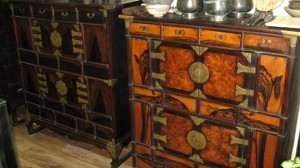
Library cabinets, such as these at Gwan Go Jae, are found in several shops in the Insadong and Janganpyeong areas

There are remarkable crafts shops all up and down Insadong, too, selling everything from Hahoe masks to formidable examples of ceramic arts. For the former, we recommend the Talbang Traditional Mask shop, which features the masks of master carver Jung Sung Am. You can either buy his decorative pieces or authentic performance masks, which are differentiated by the green back cloth, among other things (which include holes for hair, different pigmentation, and mouth strings). For ceramics, we liked the Yeha shop on Insadong 12-gil.

Once a year, the entire Insadong art community holds a mammoth exhibition involving virtually all galleries, crafts shops, and antiquities stores, and publishes a world class catalogue, including maps to the shops, photographs, and descriptions. For more on next year’s exhibit, visit www.hiinsa.com

The second area worth investigating consists of three buildings near the Dapsimni metro station on Line 5. Collectively called Janganpyeong, two buildings can be found across the street from each other. At exit 2, cross the parking lot and you’ll see two large orange buildings. Few of the proprietors speak English, the shops are disheveled, but there are interesting items there. After you’ve seen what’s in those two buildings, return to exit 2, turn left (east), and walk down the street for 10 minutes to the third Jaganpyeong building, which can be identified by all the stone statuary outside. Here, you’ll be rewarded by visiting the shop of Mrs. Hwang In Sun called Jangan Antique. She has a host of magnificent pieces, Korean and Chinese, as well as reproductions, so do ask about authenticity while you’re there.

The third area consists of the Bogwang-ro and Noksapyeong-daero 26-gil streets, in the area just south of Itaewon metro station. The area is, frankly, disappointing. Virtually all shops carry European and North American pieces that wouldn’t be considered top class in their own countries. It appears that these dealers bought a lot of minor-to-mediocre pieces, shipped them to Korea in large containers, then threw them in shops. Clearly, these shops are meant for Korean shoppers, as savvy European and North American buyers of antiquities can find better goods in their own countries. Our recommendation is to stay away from the Itaewon area if you’re interested in quality Asian older pieces, and instead, start your search in Insadong.

WoWasis book review: Hank Kim’s ‘Ask a Korean Dude’

Written By: herbrunbridge - Oct• 09•12

Veteran Korean journalist Kim Hyung-geun, who goes by the name Hank Kim, has written an informative guide to Korean customs and culture that worth reading before the visitor makes his or her first trip to Korea, Ask a Korean Dude: An Authoritative and Irreverent Guide to the Korea Experience (2012, ISBN 978-89-97639-00-7 03040). The book is not without its flaws, but overall stands as a pretty good introduction to Korea.

The most fascinating aspects to the book had to do with emotional issues. The discussion of jeong — a Korean social concept — as it relates to love and marriage was informative, and somewhat poignant. So was the comment regarding why some Korean women are reluctant to marry oldest sons (too much responsibility for family matters). There’s a lot of material on everyday things one sees on the street, like the proliferation of double barber pole establishments. Domestic matters are addressed as well, from metal chopsticks to the lack of flat sheets for bedding. The chapters devoted to Korean work and family responsibilities are fascinating.

There’s a lot packed into this 339 page book. The reader could quibble about occasional grammatical faux pas involving subject-pronoun disagreement (“when a patient wants… they must”), or about the antiques section on page 96. A little honesty regarding the overall quality of the antiquities shops in the Itaewon area would have been of value (most of those shops sell second-rate antiques from Europe and North America — not Asian goods). As an introduction to Korea, though, Hank Kim has done a pretty good job. We’d recommend buying a copy before your trip to Korea and taking it on the plane with you. It’s handsomely produced, with a plasticized cover that will wear well as you slip it in and out of your hand-bag or tote. You’ll finish it before the ride is over, and be sure to take notes in the blank pages at the end about items you’ll want to investigate on your own. Buy it now at the WoWasis eStore.

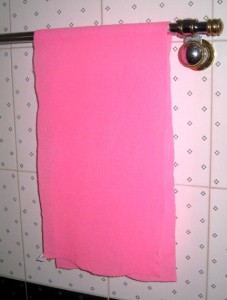
The ‘Italy Towel’ is that funny piece of cloth handing from your Korean hotel’s towel rack

Written By: herbrunbridge - Oct• 08•12

Most of our Korean hotels favored hot pink Italy Towels

It’s funny how sometimes the most common items are never discussed in travel guides. The Korean “Italy towel” is one of them. Every hotel in Korea, it seems, has one of these rough-toothed cloths handing from the towel rack or sitting rolled up in a basket. What’s it for? It’s there to help defoliate dead cells from your skin. Here’s the story:

Italy towels” are actually mittens that are worn, generally after showers, and to exfoliate skin cells by vigorously scrubbing the skin. Generally, a body cleanser is rubbed on them first, but not always. Sometimes, it’s just water. And with a good hard scrub, dead skin really does come off! The first place we saw this technique used was at the legendary Sazanka massage parlor in Bangkok, and we’ve been believers ever since.

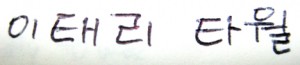
“Italy Towels” in Korean Hangeul script

Back to Korea. You won’t get mitts in your hotel. Instead, you get what’s known as the “long Italy towel.” So go ahead and try it: first shower yourself clean. Then put some liquid body cleansing gel on the Italy towel, and start with something like your forerams. You’ll be impressed with what comes off.

Hahoe Folk Village outside of Andong: a Korean “Can’t Miss”

Written By: herbrunbridge - Oct• 06•12

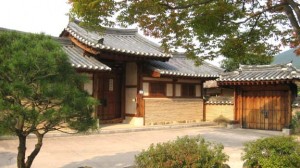
a traditional house in Hahoe Village

South Korea does a pretty good job of making an institution out of preserving old houses and indigenous cultures. They make it financially viable, for example, for people to maintain their houses in cultural neighborhood zones, and keep them as much as possible in the traditional style of architecture. 

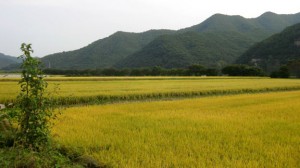
autumn harvest time produces magnificent colors in Hahoe Village

One such neighborhood is the Hahoe Folk Village, a few kilometers outside of the eastern Korean city of Andong. Originated by the Ryu family more than 600 years ago, the village consists of an estimated 230 residents here today, living in 63 straw-roofed houses, 50 tile-roofed houses, and 29 “other types.” It’s worth a walk through town, which will take you a couple of hours maximum. Some of the highlights include a family mask totem park as you enter, a significant number of beautiful old houses, and wonderful views of the countryside especially a harvest time. You’ll see other fascinating things as well. On the day we at WoWasis were there, we witnessed a storyteller regaling an audience, and saw a Hahoe funeral procession (watch the video) a little while later. 

There are a couple of things you shouldn’t miss while you’re here. The Hahoe Mask Museum (open daily) is located 2 km from here, and has wonderful exhibits of local and international mask craft and culture. Every weekend at 3pm from May to October, a local  mask troupe gives a performance in a small area just across from the Mask Museum. 

The annual Andong Maskdance Festival takes place from the last Friday of September through the first Sunday in October, held jointly at the village and at the Festival Site in Andong). Maps and information are available at the tourist kiosk at the train station. Before you go, we recommend reading blogger Jon Dunbar’s excellent write-up describing the various mask types and their meanings.

To get to the Hahoe Folk Village, take the #46 bus, from the bus stop across the street from the train station. It takes 50 minutes to get there, and eight of them run daily, in each direction.

Visit South Korea’s historic city of Gyeongju in 2 days… by city bus!

Written By: herbrunbridge - Oct• 05•12

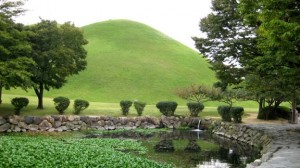
massive royal tombs in Gyeongju

The southeastern Korean city of Gyeongju is a historical treasure, with old tombs, temples, and a not-to-be-missed archaeological museum. Despite what the guide books say, you can see just about all the highlights in 2 days, and you don’t have to book a city tour to do it (those tours are all delivered in Korean language, anyway). You can see Gyeongju by city bus, and it’s really easy. Before we get started, try to book yourself a room at an inexpensive, nicely appointed hotel near the bus station. You’ll pay $30-$60 USD per night for a clean room, you’ll be a couple of blocks maximum from the tourist information kiosk, where you can get a neat map of the city, and that’s right across the street from the bus stop you’ll be using, heading east. 


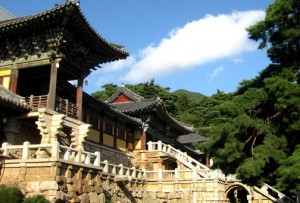
Bulguk-sa temple

The 3 top places to see in the Gyeongju area are: 

1)      The pagodas at Bulguksa and the grotto at Seokguram
2)      The Gyeongju National Museum
3)      Tumuli Park and Cheonmachong 

Here’s how we here at WoWasis did it in 2 days, and so can you. Let’s say you arrive in town and are checked into your hotel around noon. Go to the bus stop heading east right across from the tourist info kiosk. Take bus 10, 11, or 700 (fare is 1,500 won) right to Bulguksa, about 15 minutes away. After Bulguksa, take bus # 12 from the Bulguksa parking lot, and it will take you right up to Seokguram. The last bus coming down the hill from Seokguram leaves at 17:40, so you’ll want to take the #12 bus by no later than 16:40, to ensure you see the grotto. 

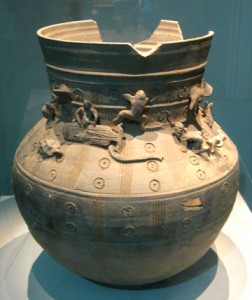
Silla-era pottery at the Gyeongju National Museum

On day 2, take the #11 or #600 bus to the Gyeongju National Museum. After the museum, walk north to the nearby Anapji Pond about 200 meters away. Then walk west to see the Cheomseongdae Observatory, a structure that is considered the oldest observatory in east Asia. 

From the observatory, take the streets in a northerly direction for about a kilometer, turn left at the main street, walk a few meters, and you’ll be at the entrance to the Daereungwon Royal Tombs, known as Tumuli Park. This is one of the most enchanting corners of Korea. There are an estimated 22 tombs of Silla rulers and court officials here, and one (Cheonmachong) is open to the public. The tombs began as wooden structures and were buried under a series of stones and earth, many of which are significantly large. The biggest, Hwangnamdaechong, is 23 meters high, 120 meters long, and 80 meters wide. When you finish with Tumuli Park, cross the street, make a right (north) at the intersection, and you’ll see several more tombs, those in the Noseo-dong group. From there, it’s a 10 minute walk west back to the tourist info kiosk from where you started your day. 

As is the case with any archaeological area, you could spend more time here, going to interesting out of the way spots. But then you’d probably want to rent a car. And you wouldn’t get one with an English GPS unit (we checked with 5 agencies). And it would cost you $60 USD per day. 

So we recommend seeing the best of Gyeongju by local bus at 1,500 won a ride. You’ll see tons, and save yourself $120 plus petrol, which should cover 2 nights’ stay at a nicely appointed motel near the bus station.

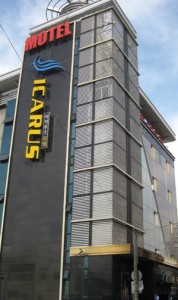
WoWasis hotel review: why we’re raving about the Icarus Motel in Gyeongju, Korea

Written By: herbrunbridge - Oct• 05•12

To put it frankly, we here at WoWasis, make our money on people who book tours and hotels on our site (please continue to do it, as we’re always really objective about what we discuss and review, and the revenue keeps us traveling and posting). And that’s why today’s post is so wild: we’re raving about a hotel that we can’t even book!

We’ve just gotten out of a Jacuzzi bubble bath in our motel room, put on the robe that was supplied, connected our notebook computer to the LAN in the room and uploaded two WoWasis blog posts. Earlier, we sat on the toilet that was equipped with one of those automatic butt-washing gizmos. And all of this is costing us just $60 USD a night!

It’s all happening at the Icarus Motel, which abuts the Gyeongju’s intercity bus terminal on the northern side. We tried two other nearby hotels when we got into town. We need an internet connection, but after trying four rooms at two hotels that advertised internet connectivity, we were not pleased. One hotel’s computers had a virus. They didn’t know, and didn’t care when we told them. At the other hotel, they were using version 6.0 of Internet Explorer, so nothing would load. They hadn’t loaded Mozilla, either. Scratch them off, as well. Both of them, incidentally, were recommended by the latest  Lonely Planet Guide (Hotel Cherbourg, and Show Motel).

All these hotels/motels can be classified as “love hotels.” Sometimes they’re booked by the hour, and the parking spaces have curtains, so prying eyes can’t see who’s parked there. But these hotels are also clean, neat, and inexpensive. They’re high value for a good price (we really don’t care what’s happening next door, we’re too busy taking Jacuzzis and uploading WoWasis posts).

What differentiates Icarus is the staff. Yes, we had an internet problem, but the woman at the desk checked it out and made a call. Someone arrived who tried to fix it. The LAN cable worked just fine. At the other hotels, frankly, no one gave a crap. The room is well-appointed, too (we’ve stayed in 4 star hotels that were barely this good).

The Icarus is the nicest hotel we’ve stayed at in our entire 3 weeks in Korea. We wish we could replicate this bit of paradise right into Seoul, or Jeju-si, but it ain’t gonna happen. What we’ll say is this. Occasionally, you find a small hotel that’s unbelievably amazing. You know it’s probably not going to stay that way forever. So you stay and enjoy it, take a bunch of pictures for the memories, and realize you got real lucky.  

Again, we always want you to book hotels with WoWasis. Except when you’re in Gyeongju, Korea. This nice lady that took care of us deserves your business, and you’ll never beat the value at this price point. We’ve copied the name card below to you can call and make a reservation (sorry, not much English spoken here, so ask a Korean friend to make the call) and print it out so you can give it to a taxi driver if you need to. For WoWasis in Gyeongju, it’s the Icarus Motel or bust!

Print this and carry it with you when you’re going to Gyeongju

WoWasis transportation review: Korea’s ultra-fast KTX bullet train

Written By: herbrunbridge - Oct• 04•12

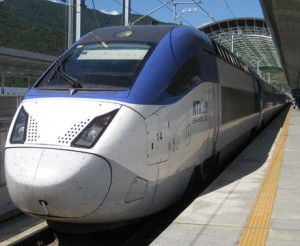
Our first fast luxury train was Spain’s Talgo, back in the day. It was fast for its time, but it didn’t go 300 kmh, like Korea’s KTX (Korea Train eXpress) does. We took the KTX from Seoul to Gyeongju today, and loved every minute (we even put up a YouTube video showing how fast it is). Our fare was $45 USD and the trip took just less than two hours. We got to the historical city of Gyeongju in time to get a hotel and see a couple of important ancient sites before 5pm. 

Here at WoWasis, we’re always playing with transportation variables. Is an airplane more cost-effective, if it saves us time (yes, considering Jeju island). Should we rent a car? (not if it’s Gyeongju, where the rental company can’t get us an English-language GPS… might as well take the bus). Should we fly to Gyeongju? (not when there’s a $45 two hour train… and we don’t think there’s an airport in Gyeongju anyway). 

We like the KTX. It’s fast, reliable, and avoiding security checks and waiting times at Korea’s domestic Gimpo airport makes the train a real alternative. This morning, we left our Seoul hotel room at 8:15. Got a taxi to take us to Seoul Station by 8:30. Stood in the ticket line for 3 minutes, booked the 9 am train for Gyeongju, and arrived there at 10:57 am, right on the dot. That’s 2:45, door to door. And that’s why KTX will be our first choice for inter-Korea travel. You can book tickets and view train routes at Korail’s KTX English-language webpages.

Walk the ancient stone rampart walls at Suwon, South Korea’s walled city, just outside of Seoul

Written By: herbrunbridge - Oct• 04•12

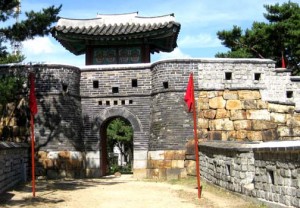
Walk the walls of suwon…

The city of Suwon, just south of Seoul, was formerly enclosed in stone walls. It retains  its walls and gates, and you can walk them. Suwon is only an hour outside of Seoul, an easy excursion by subway or train. It makes for a great half-day break from Seoul, too.

Here at WoWasis, we decided to take the Seoul Metro to get there. 1000 won, and it took an hour. It’s on the Number One line, which you can catch from Seoul Station, or anywhere on the line. You have to transfer off the metro at Guro, then change to another train, destination Sinchang. Suwon is 14 stops later after you board. When you arrive at Suwon’s train station, take exit 5, then walk a few meters to the tourist information office. There, they’ll give you a slip f paper with taxi directions in Hangeul (Korean) to the Hwaseong Palace on one side, then back to the train station on the other side.

… and visit Suwon’s majestic palace

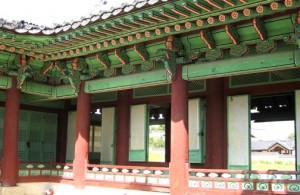
Start by visiting the palace. Built in 1789, the Hwaseong Haenggung palace was the home of King Jeongio, and much of it has been restored, after suffering extensive damage during Japanese occupation.  Still being restored, the nicest elements are at the rear, toward the mountain (don’t miss the Naknamheon and the Unhangak).  At 11 am every Tuesday through Sunday, march through Novemeber, there’s a wonderful show depicting how arms of the day were used to fight enemies. It’s well worth seeing, and 20 or so costumed individuals participate.

After seeing the palace, take the trail behind it uphill to the Mirohanjeong lookout tower, which abuts the walls. It’s roughly 300 meters, and the toughest part of the walk. Once you get to the top, there’s very little climbing at the wall level. From the lookout tower, you can take the wall trail east, which eventually gets you to the eastern gate (Janganmun), or west, which will return you to the Paldalmun gate, adjacent to the palace. The walls are scenic, have wonderful explanations in English, and are listed as a UNESCO World Heritage site.

To return to Seoul, either take the metro or take the train. The train is 5,000 won ($5 USD), but takes only a half-hour to get to Seoul station, as opposed to an hour by Metro.

WoWasis product review: a wristwatch compass that’s efficient and inexpensive

Written By: herbrunbridge - Oct• 04•12

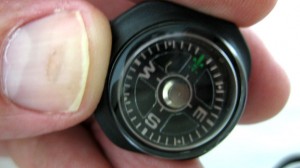
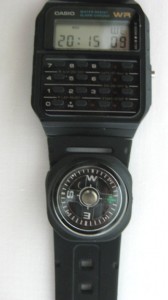
It’s small as a thumbnail, but readable…

Here at WoWasis, we’ve been traveling with a cheap compass that slides over a watchband ever since we’ve been traveling. They’re indispensable when you’re trying to find directions while using walking maps, and we even use them to check out our GPS to ensure we’re getting good readings. And because they slide over your watchband, you never forget to bring your compass with you.

… and slides over your wristwatch band you you never forget it

We’ve been through a few of these. One cheap one just busted apart at the seams. An expensive Swiss one became demagnetized after it went through an airport scanner. Now this Chinese compass with a fleur-de-lys pointing north is our favorite. It cost $2.50 USD. That’s a little over two dollars. We bought it at an army-navy surplus store, and $2-3 USD is about right. Sometimes they break, sometimes they get demagnetized. Sunto sells one for $25 USD, too much! Buy cheap, and if it fails, you buy another cheap one. As we learned from our Swiss episode, expensive isn’t always better. But we’ll guarantee this, if you buy one of these, you’ll use it more when you’re traveling than you’d ever believe. Buy one in your own country before you get on the plane. You should be able to find one wherever inexpensive camping supplies are sold.