The sharper edge to traveling in Asia

Korea’s Jeju Love Land: the Sexiest museum in Asia?

Written By: herbrunbridge - Oct• 01•12

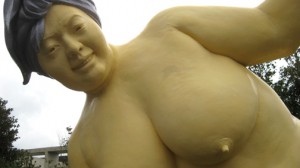
One of the “big woman” sculptures at Love Land

Here at WoWasis, we’d guess that the number of museums we’ve visited in our lifetimes to certainly number in the hundreds, and maybe even the thousands. But none of them were as fun as South Korea’s Jeju Love Land, located a few kms south of the city of Jeju-si, on the island of Jeju. Yes, the museum is about sex, and it’s ribald. Nothing in this museum is taken seriously, from the déclassé sex toys in the museum shop (our favorite was a pen holder in which, when a pen is inserted into a couching man’s behind, he moans in pain, a favorite with the Japanese tourists who were visiting that day). 
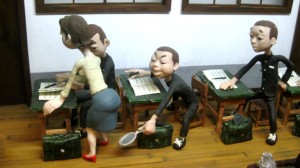
A diorama showing male student’s creative use of a mirror in the classroom

The museum is clearly about sex as fun and sex as funny. There’s nothing sacred or politically correct here. But what surprised us was that much of the sculpture an art works are pretty damn good. The reason has a lot to do with the premise upon which it was founded. In 2002, 20 artists, graduates of Hongik University in Seoul, began creating sculptures for this museum, which eventually totaled 140 works of art. The museum opened in 2004. 

In terms of the work we liked best, we found the sex dioramas to be creative, funny, and well-done. The sculptural series involving the insatiable Big Woman and her thin and reluctant paramour were essentially giant comic strips in 3D. Throughout the museum, there are sculptural gags: a woman’s behind turned into a chair (one female visitor sat on it, and loved it when we snapped her photo), vagina-licking bicycle wheels, pedaled by the user, giant penises, penis doorhandles. 

 The visitors, male and female, think the museum is a riot, and essentially a great reason for the museum in the first place is to demystify sex and take some of the seriousness out of the discourse. How serious can you be with a man’s butt penholder on your desk, anyway? But as we said, there’s a lot of compelling art here, too. We took the museum seriously enough that we wished the artists’ names had been given in English (a bane of many a Korean museum). We also would have loved a book to take home, but there is none. Too bad. Jeju Love Land is one of the 4 or 5 major highlights of your trip to the island of Jeju, which may drive the tourism authorities bonkers. You shouldn’t miss it. It’s a classic, and truly unique. 

Jeju Love Land
20 km south of the city of Jeju-si
Open daily, 9 am – midnight (must be 18 or over)
www.jejuloveland.com
Tel: +82 (64) 712-6988
Help, My SIM phone doesn’t work in Korea! How do I make calls?

Written By: herbrunbridge - Sep• 30•12

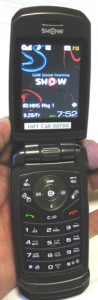
RoamingStar’s entry-level Samsung rental mobile phone

Here at WoWasis, we carry a SIM phone with us to virtually all Asian countries, buy a new SIM card when we arrive, and start calling in-country and back home immediately. But that doesn’t work in Korea. Korean mobile phones work on the CDMA system, a different communications technology, so your SIM phone may be worthless in Korea. Instead, your best bet is to rent a phone. You can rent a phone at Incheon Airport from companies such as KT (www.kt.com) or SK Telecom (www.sk.com).

But what if you’ve already left the airport? You do have rental options in large cities. In Seoul, it’s Roaming Star, located a couple of blocks from the Jonggak metro station. Roaming Star’s cheapest phone is 2,000 won ($2 USD) per day for phone rental. Charges to make calls are 6.5 won per second for calls to Korea, and 360 won per minute to foreign countries (1 minute minimum). You are charged the daily rental fee upfront, and pay for minutes used when you return the phone.

International call charges add up quickly, but having a phone is indispensable when you’re making hotel bookings to another city. The trick is to find Roaming Star’s office, but your hotel will be able to help you get there, with the following information:

Roaming Star (www.roamingstar.com )
Room 302, Kukmin Bank building
71 Cheonggyecheon-ro, Seoul
Tel: 02-775-9999
Metro Line 1, Jonggak Station, exit 10

Instructions: leave the Jonggak station at exit 10. Turn right at the next corner onto Jong-ro 12-gil (there’s a Missha store on that corner, and Jong-ro 12-gil is a pedestrian-only street). On the right side of the street, two blocks ahead, look for the Kukmin Bank highrise building. Turn right at the Kukmin building, now you’re on Cheonggyecheon-ro. Enter the lobby of the Kukmin building and take the elevator to the third floor. Roaming Star is at room 302.

Bring your phone with you, depending on its frequency, Roaming Star might be able to fit it with a SIM. Otherwise, they’ll give you various rental options, depending on the phone and requirements you choose.

Visiting for a few hours on beautiful U-Do Island, Korea

Written By: herbrunbridge - Sep• 30•12

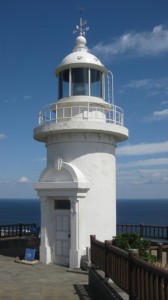
Just 3.5 lm east of Jeju Island, U-Do, or Cow Island, makes for a fascinating several hour stop. Car ferries run constantly between 9 am and 5:30 pm between the islands. If you don’t bring an auto, you can rent motorbikes, bicycles, or ATVs on U-Do, or even take the tourist buses, which drop off virtually everywhere. The two must-sees on U-Do are the 20 minute hike up to the two lighthouses on U-Do’s highest point, and the circumnavigation of the island to experience the sea views. When you visit the eastern part of Jeju island, climbing the Ilchulbong crater will be on your itinerary. We here at WoWasis recommend taking the 15 minute ferry to U-Do in the morning.  

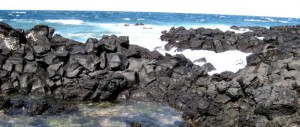
black lava forms the rock that covers much of U-Do’s shoreline

The older white lighthouse commands a view of virtually the entire island, and is an architectural gem. U-Do’s seascapes are punctuated by waves crashing against ebony lava rock against the sky, utilizing a palette of black, blue, and white. It’s 17 km to circumnavigate U-Do, and we found endless numbers of stopping points worth attention. These change, depending on time of day, and light conditions. It takes roughly ½ day to see the island, so we’d recommend seeing it in the morning, then heading back to Ilchulbong to catch the Haenyeo diving show at Haenyeo House at 1:30 or 3 pm, then climbing Ilchulbong crater to finish your afternoon.

Korean Comfort Woman confronts Japan at her Korean embassy in Seoul, 24 x 7, 365 days a year

Written By: herbrunbridge - Sep• 30•12

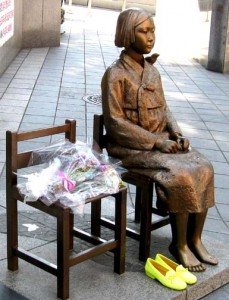
That quiet lady with the bronze tan and the steely gaze is sure causing a lot of trouble for Japan. She’s got the time to sit across the street from Japan’s embassy in Seoul all day and all night, and no one’s going to remove her, either. She’s bolted to the sidewalk. 

She’s a sculpture, and she, the bird on her shoulder, and the empty chair next to her have been sitting across from the Japanese embassy since December, 2011, facing each and every individual who comes and goes through the embassy’s front door. As we write this, 5 buses of Korean riot police are in close proximity, as rumor has it that yet another group of Koreans will protest in favor of a sincere apology from Japan, for kidnapping, buying, or cajoling an estimated 140,000 Korean women to serve as sex slaves for Japanese troops in WWII. They are called halmoni, by the Koreans (meaning ‘grandmothers’), and ‘comfort women’ by the Japanese military. Most were between 13 and 16 years of age, and serviced 30-40 men per day. 

The story’s a good one to know, as you won’t find many Koreans — even those of the younger generation — who profess a lot of love for the Japanese. In World War II, the Japanese military enforced this policy of institutionalized rape of Korean girls. The Japanese have made a habit of trouncing Korean culture, which began before that war. In 1911, under Japanese occupation, the Japanese tore down 90% of Seoul’s historical Gyeongbokgung Palace, just to remind the Koreans that there wasn’t really a Korea anymore. Today, the Koreans are still in the long and expensive process of rebuilding it. Ultimately, Korea couldn’t do much to turn back the clock on these two events which, among many others, have colored Korean national opinion on Japan in general. But we imagine there wasn’t much hand-wringing in Korea when the bombs dropped on Hiroshima and Nagasaki (might as well add Nanking to that list as well). 

The government of Japan has formally protested that the placement of the statue facing its embassy breaches the Vienna Convention on Diplomatic Relations, and a Japanese politician, Nobuyuki Suzuki, tied his own “protest pole” to another such sculpture in Seoul. The issue is hot, and that’s why there’s police presence of one sort or another at the Japanese Embassy in Seoul these days. Regardless of claims by the Japanese that they’ve made reparations, a lot of Koreans just aren’t buying it. “Rape and kill our women,” they seem to be saying, “and decades later, we’ll still have the issue in front of the eyes of the world.” Great injustices don’t fade away easily. Especially when that bronze lady with the empty chair just sits outside your embassy and stares… and stares… and stares…

Visit a hanok, the traditional Korean house in Seoul’s Bukchon neighborhood

Written By: herbrunbridge - Sep• 30•12

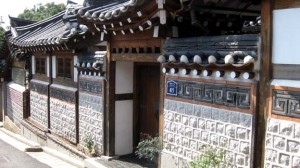
The Bukchon area is located a few meters north of the Anguk subway stop. Take exit 3, then make an almost immediate left (north) onto Gyedong-gil street. A few more meters up, just before you reach 4-gil, Bukchon-ro street, you’ll see the Bukchon Culture Center on your left. Go inside, view the exhibit showing how the houses are constructed, grab a walking map, and you’re off the see one of Asia’s most charming neighborhoods.

Korea’s traditional Haenyeo female freedivers pass into history: see them while you can

Written By: herbrunbridge - Sep• 30•12

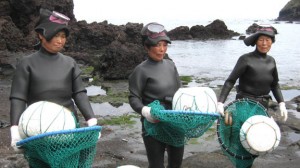
Haenyeo divers on Jeju island, South Korea, prepare to enter the water in search of seafood

On Jeju island, in southern Korea, you have an opportunity to witness an artifact of tradition, the female haenyeo divers that still, utilizing little more than a mask and a wetsuit, ply local waters in search of edible sea life. They learned their craft from their mothers and grandmothers, but no young girl today aspires to be a haenyeo diver. Today’s youngest divers are in their late 40s, and no one will take their places. From roughly 30,000 of them 50 years ago, today their number is estimated to be fewer than 3,000.

Twice a day, at 1:30 and 3:00 pm, several of these women gather to sing (see the WoWasis video), suit up, and demonstrate their craft in a lagoon just to the eastern side of the well-known Ilchulbong crater in eastern Jeju. They bear a kinship with Japan’s Ama divers, but they are Korea’s unique cultural treasure.

Here at WoWasis, we first became aware of these divers, who go as deep as 50 feet and hold their breaths for up to 2 minutes, from an academic classroom film distributed in 1975. It showed a 12 year old girl learning to dive from her mother. It is now 2012. That girl would now be 49 years old, if she were still diving. It’s common for haenyeo divers to work until their 70s, hard, tough work. They are not being replaced by younger divers, so the generation now diving is the end of the line.

AsiaPromoBannerAt Ilchulbong, 1:30 arrives. One woman begins singing her plaintive call to the sea. Three other divers engage in call-and-response. After a few moments, they throw their floats and bags in the water and move further out into the lagoon. Within a few moments, one diver has found an octopus, the first catch of the day. She’s elated, and waves her catch for all to see. Roughly 50 people are there to see the show. Most appear to be from Japan. They applaud everything, as they know that they are seeing history pass them by. Remarkably, there is no charge for the show, the divers hope that viewers will buy some of the seafood they’ve caught, and eat it right there.

Technology marches quickly. Young village girls see on TV that there are easier ways to make a living than free-diving in the cold waters.  There is a phenomenally interesting museum a few km northwest of Ilchulbong, the Haenyeo Museum, dedicated to the story of these divers, and there’s a wonderful book on the subject that you can buy there. But do see the real thing while you still can, at Ilchulbong. In 10 years, it will simply be a memory, preserved only in the photos and artifacts in the museum. You’ll tell your kids or grandkids that you saw real haenyeo divers, once. Hopefully, that 16mm film we mentioned earlier might emerge, digitized, and it will have a story to tell. If you saw them live, so will you.

Haenyo Museum
Near Sehwa, Jeju
Tel: (064) 782-9898
www.haenyeo.go.kr

WoWasis product review: a Korean world class GPS unit, the AVOL HN90R8

Written By: herbrunbridge - Sep• 29•12

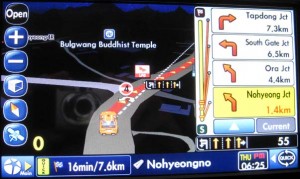
A nightime screen shot from this outstanding GPS unit

Here at WoWasis, we’ve driven in a couple of dozen different countries. Used maps, compasses, and GPS units. But far and away the best GPS unit we’ve even used came with our rental car on Jeju Island, Korea. It’s made by AVOL, and it’s model # HN90R8. It’s English language capabilities are terrific, but it easily converts to Korean language if you need that option.

You begin by typing your destination onto the touch screen. You can do it by name, by address, or by phone number (after a while, we always used the phone number, as it had better coverage). Then touch the “Guide” button, and it leads you the way, both by map arrows and by voice. We programmed some out of the way places, and the AVOL found them all, giving  turn directions with plenty of warning, and recalculating the directions immediately if we made a wrong turn. For example, we had thirty or so destinations planned for Jeju island, and we got in the habit of keying in each one before we drove there. It got us to every spot. Jeju’s not that easy if you just use a map, lots of roads aren’t marked. But this trusty GPS never let us down, and we depended on it.

The makers of this unit have made a nifty video of it on YouTube, and it really is as simple to use as they portray it. We’ll go so far as to say that you should insist that your rental car company provide you with one (ours, KT Rental/Hertz one Jeju, provided it free.). You may never use a map again to navigate on your trip through Korea.

The worlds’ wackiest torture museum, in Seoul South Korea

Written By: herbrunbridge - Sep• 23•12

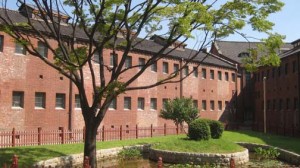
Seodaemun Prison today

Wacky Seodaemun Prison History Hall in Seoul, South Korea takes the blue ribbon has being the craziest torture museum in the world, a tribute to both its exhibits and its patrons. The truth is sobering. This prison, opened in 1908, was eventually used as a torture and execution venue by both the Japanese and by right-wing Korean political factions. Thousands were tortured or murdered there. Now for the crazy stuff. 

This museum is an example of multimedia gone mad. Pre-recorded torturous shrieks can be head just about everywhere, amidst the tinkling piano accompanying a film about tortured political prisoners. The visitor can imagine him or herself in a torture lounge, of sorts. The Big Event occurs when the visitor gets to put him or herself in a live-action video, and in 44 seconds, sees his or her body being tortured, and screaming for dear life (check out your WoWasis correspondent’s video of this on YouTube). This is accomplished by the visitor standing on a metal disk, having his or her image scanned to a silhouette, then inserted in the movie. Now that’s cinéma-vérité! “See yourself being tortured” or “Don’t try this at home” are two possible headliners for this brutally weird exhibit.  

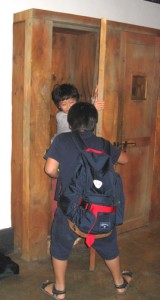
Training for future employment? One kid locks up another in a wooden torture box.

The visitors add to the fun as well. You’d think Korean parents might bring their kids to this Prison to teach them about repression, politics, and human rights. That’s not what we witnessed. Screaming, out of control kids took over torture devices, and gleefully used them on each other. Don’t believe us, see the accompanying photo. Here, one kid sadistically locks his friend into a torture box, and laughs uproariously, while his parent watches! Looks like we’re raising another generation of torturers! 

Ironically, taking pictures isn’t allowed in the execution building, and who knows why, since torture play and multimedia entertainment seems to be the rule of the day. The playful, wacky multimedia and unsupervised kiddy torture play is at odds with other Asian museums on similar themes. Phnom Penh’s Tuol Sleng comes to mind. It’s reverent there, and quiet. And sobering. And the attendees get it. It’s a place of reflection. On what caused it, and how it can potentially be prevented from happening again. 

Based on our experience at Tuol Sleng, we don’t think Cambodian kids are being brought up to thinking that torture is fun. After our experience in Korea, we just don’t know what to think about those kids, or their parents. Or the people who designed multimedia exhibits where you can see yourself (or a friend, if you trick him or her to stand on the circle) get water-tortured, scream bloody murder, then  get carried away.

WoWasis book review: ‘The Bridge at No Gun Ri’ massacre in Korea

Written By: herbrunbridge - Sep• 11•12

As it becomes increasingly apparent during the reading of the book, the miracle of the book The Bridge at No Gun Ri: a Hidden Nightmare from the Korean War (2001, ISBN 0-8050-6658-6) is that it got published at all. Authors Charles J. Hanley, Sang-Hun Choe, and Martha Mendoza won a Pulitzer Prize for their investigative work associated with this book, and were assisted by investigative  reporter Randy Herschaft.

The book unfolds the sad and compelling tale of the murder of an estimated 400 South Korean civilians by the U.S. 7th Cavalry in July, 1950. The story, along with another describing the dynamiting of another bridge, and killing a number of other civilians in the process, had been buried for decades, but was doggedly pursued by Chung Eun-yong, who lost a number of friends and family members at No Gun Ri. Starting with Chung’s voluminous notes, the authors not only interviewed survivors, but also were able to track down a number of U.S. war veterans who were involved in the shooting, many of whom had suffered from Post-war Stress Disorder ever since the event. They fix the blame not on the soldiers that carried out the order, but rather on the military command that forced the refugees from their homes on a march to their doom, then issued orders to kill them, fearing that North Korean infiltrators were in their midst.

Ultimately, the book suggests that such military massacres of civilians are more common than we’d like to think, and events such as Wounded Knee and My Lai are perhaps rare in the sense that they were reported at all. The book is a fascinating read, especially considering the life stories of some of the survivors and soldiers, which bring a human element to a cultural tragedy that encompasses one of the more moving books we here at WoWasis have ever read.

WoWasis product review: a bamboo computer keyboard that looks & performs great

Written By: herbrunbridge - Sep• 10•12

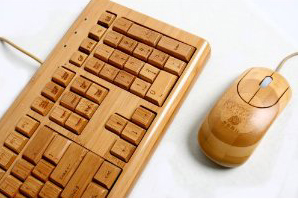
If you’re like us here at WoWasis, you love tricking out your living quarters in Asian décor. But that doesn’t usually include computer accessories. At least until now. We’ve been using the Impecca bamboo PC keyboard and mouse for a few weeks now, and pass it with flying colors. If your keyboard is giving up the ghost or if you’re fascinated with the idea of a bamboo keyboard, this is the one to get. 

Impecca’s’ KBB500C keyboard and mouse are made from bamboo. Its keys are wood-burned with inset characters, and the mouse is designed beautifully. We first saw this keyboard at a friend’s house, and it had been heavily used. Our friend smokes a pipe and spends hours a day at the computer. What amazed us was that the keyboard had developed a lovely patina, and all that tobacco junk hadn’t affected the performance of the keyboard. We wanted one right away, and looked it up online. The mouse had gotten less than stellar reviews, but we ordered one anyway for our test. It passed with flying colors, so we’d recommend getting the mouse along with the keyboard (it’s only $5 USD extra). 

Hand-carved from bamboo, it doesn’t come with the extended flaps on the reverse that would assist the keyboard in titling forward, but no problem, we just put a couple of rubber feet under it, and we’re in business (Impecca also makes a wireless bamboo keyboard and mouse, KBB600C, which does have those riser flaps installed underneath). We can tell you this: on the KBB500C, the keys feel terrific, the mouse works great, and it really dolls up our computer space. It connects via USB port and is compatible with Windows 2000/Windows XP/Windows Vista/Windows 7 and MAC. Highly recommended, and you can buy it online from Impecca.