The sharper edge to traveling in Asia

Korean Hahoe Masks and Theatrical Performances

Written By: herbrunbridge - Oct• 15•12

Mask carver Jung Sung Am uses a multi-step process, beginning with a rough block of wood

Hahoe (pronounced “HOW-hey” in English) is the name of a particular variety of play in South Korea and is also a term used for the genre of masks used in the performances, as well as the village in eastern Korea from which the masks and plays originate. Hahoe Folk Village is located just outside the city of Andong, and each year the Andong Maskdance Festival  is held in September and October in which one or more Hahoe plays are performed. To date, there are no books in English dedicated to the plays or the masks. Hahoe masks as decorative items can be purchased at numerous places in the Andong area as well as in Seoul, on Insadong-gil street. Authentic performance masks made by master carver Jung Sung Am can be purchased at his Talbang shop on Insadong street (contact information below).

The following information has been derived from the Talbang shop as well as a number of other resources:

Hahoe Tal (masks) were originally made in the middle of the Koryo Dynasty Period (11-12 century ACE, according to legend, by Mr. Huh, from the village of Hahoe-dong, Poong chun-myun, Andong-gun, Kyungsangbuk-do. Today, they make up Korean National Treasure No. 121, as catalogued by the Korean government’s National Museum Collection. Hahoe Tal is used in the Hahoe-Pyolsinkut Korean folk drama. Hahoe Tal includes nine Tals (Yangban Tal, Sonbi Tal, Chung Tal, Baekjung Tal, Gaksi Tal, Bune Tal, Choraengi Tal, Imae Tal, Halmi Tal, and two Chuji Tals (lion or monster mask). Each Tal expresses its own unique expression and deep inner world. Hahoe Tal encompasses the legend that the maker, Mr. Huh died under the curse of a deity before completing the jaw of Imae Tal because of the blunder of a young woman who had been deeply attached to him.

Characteristics of Hahoe Tal masks

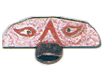
The technique applied to Hahoe Tal is realistic and exaggerated, expressing the symbolic look describing a momentary expression of a specific person.  A notable characteristic of Hahoe Tal is that the jaw of four of the masks is separated from its face, connected by a hinge. The actor then can change the expression vividly by changing the angle of the jaw by using his mouth to work a string that is attached to the moveable jaw. In the case of Tals from which the jaw is not separated, the expression is changed by the tilting of the head. The masks are described as follows:

1) Gaksi Tal (Bride mask): It appears at the wedding ceremony and is used to depict the role of a tutelary deity. It is said to have a typical Korean woman’s features, having broad cheekbones and shows a sorrowful expression with its closed mouth.
2) Yangban Tal (Nobleman mask): It shows the vanity of a nobleman, with a chuckling expression, with a hooked nose and large nostrils.
3) Sonbai Tal (Scholar mask): It plays the role of the scholar and and has a conceite and haughty expression.
4) Bune Tal (Young Widow mask): It appears in the role of young widow and is said to have the shy expression of a Korean woman.
5) Baekjung Tal (Butcher mask): It appears in the role of a butcher who slaughters cows  and shows a sinister look.
6) Chung Tal (Buddhist Monk mask): It symbolizes an apostate Buddhist monk and shows a crafty and tricky expression, smiling and with narrow eyes.
7) Choraengi-Tal'(Hasty Servant mask): It appears in the role as a nobleman’s servant and expresses a hasty and flippant, characterized by an imbalanced facial expression.
8) Imae Tal (Foolish Servant mask): It appears in the role as a scholar’s servant and expresses foolishness by drooping outer corners of the eyes.
9) Halmi Tal (Granny mask): It appears in the role of an old woman and expressing the grudging look of a vain life, marked by old age and distress.
10) Chuji Tal (Lion or Monster mask): This mask symbolizes a lion or monster which captures and eats tigers. There are male and female forms of the mask, which represents the faces of animals. Theses masks are not worn, but are held in front of the body, and are activated by an open-and-shut jaw mechanism.

Examples of Hahoe masks, in order: Young Widow, Buddhist Monk, Nobleman, Bride, Butcher, Foolish Servant, Granny, Scholar, Hasty Servant, Lion or Monster

To buy authentic Hahoe masks by master carver Jung Sung Am, visit:

Talbang (Traditional Masks)
Insadong-gil street
Seoul, South Korea
Tel: (02) 734-9289
Directions: Go to the Anguk Metro station on Line 3, and take exit 6. Walk west on the main street, past the police station, then turn left at the third street, which is Insadong (there’s a Tourist Information Kiosk there if you need further help finding the shop). Walk down Insadong, pass three streets on your left, and on the block betweenInsadong 14-gil and Insadong 12-gil you’ll see an awning that says “Traditional Mask,” which is the shop.
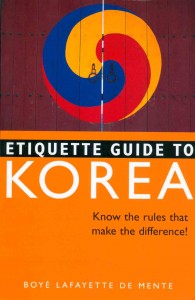
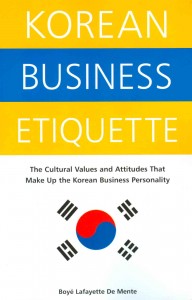
WoWasis book review: Boye de Mente’s ‘Etiquette Guide to Korea’ and ‘Korean Business Etiquette’

Written By: herbrunbridge - Oct• 15•12

Boyé Lafayette De Mente has been writing books on Asian themes for decades. And not just books on Asian etiquette, either. He’s written on Asian women, Hawaiian culture, and Japanese Geisha. He certainly qualifies as an old Asia Hand. So it shouldn’t have surprised us here at WoWasis that Korea’s been on the Korea beat, as well, with two books that, while offering some crossover material, are really for two different audiences, Etiquette Guide to Korea, and Korean Business Etiquette. They both offer information about Korean culture that is both timeless and timely, and the information is as pertinent today as when the books were written.

Etiquette Guide to Korea: Know the Rules that Make the Difference! is a 128 page book that was published in 2008 (ISBN 978-0-8048-3948-8). There’s a lot in here that relates to the Confucian aspect of Korea, so simple concepts like politeness, respect for elders, emphasis on education, and avoiding bragging, could be applied to just about every Asian country.  As usual, though, de Mente has his zingers. In hot, humid SE Asian countries (Korea’s not one of these, but bear us out), westerners are known among the local population for smelling badly. To put it plainly, lots of western travelers have a BO problem. De Mente here mentions that roughly half of Koreans don’t have apocrine glands, which produce BO. It turns out that he’s right, statistics bear this out (that’s why deodorant can be hard to find in Korea).

Where the author really shines, though, is in his assessment of what types of things drive Koreans crazy about some westerners. He discusses the concept of ‘han,’ or unrequited resentment (don’t just “let it go” if you make a Korean angry). He emphasizes the drive for education, often resulting in students spending 5 hours a day in special schools “after school.” Koreans are self-sufficient, and the slogan “Yolshimhi hapsida,!” or “Let’s do our best” has served as a keynote for the last 50 years, in evolving Korea from a developing nation to a technology and economic leader.

As with any Asian country, there’s a lot of “Golden Rule” philosophy here. Treat others as you wish to be treated. But even westerners who are quite good at that still need to understand why they need to remove their shoes before they enter a Korean’s home.

On the other hand, Korean Business Etiquette: The Cultural Values and Attitudes that Make Up the Korean Business Personality (2004, ISBN 0-8048-3582-9) is a riveting 192 page book that is indispensable for any westerner doing — or wishing to do – business in Korea. The book is replete with mistakes that have made by westerners and the means of correcting them, or better yet, not making them in the first place. Some of just many of the terrific comments in this book concern the fact that Koreans don’t like westerners that brag, that western hiring managers should take class structure and schools into consideration, and that “calling high” doesn’t always work, due to the strict structure of Korean business protocol. The value of hiring a local consultant to guide western managers through the seemingly bottomless pit of Korean regulations and business practices is emphasized throughout, as is the value of personal business relationships as a means of helping to ensure that contractual elements are adhered to (as the author states, Koreans have a different view of the value of the western contract). There is also quite a bit here about some critical do’s and don’ts revolving around Korea’s business drinking culture. This book is especially valuable to western businesspeople who are going to Korea for an extended length of time, and should be read well before they get on the flight to Seoul.

Visit Korea’s Demilitarized Zone (DMZ) for a Cold War historical experience that remains alive today

Written By: herbrunbridge - Oct• 12•12

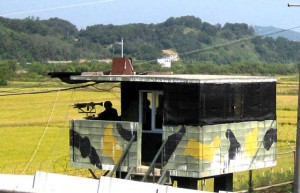
DMZ troops guarding the border remain on high alert status 24/7

This no-man’s land, 4 km wide by 240km long, separates North Korea from South Korea, and can be visited on a 6 hour tour from Seoul. Following regulations is paramount, and the tour includes, along with the DMZ, the Joint Security Area (JSA) and Panmunjon. A number of other sites are included in the tour, such as the Dora Observatory, and the Third Infiltration Tunnel. Tours book up really fast, so we’d recommend a 2 weeks advance notice. Expect to pay between $80-$120 USD, which includes a 6 hour tour and lunch.

The tour begins 60 km north of Seoul, and security rules are enforced for visitors. As “guests” of the United Nations, you’ll be continually asked to show your passport, to avoid taking pictures in most areas, to adhere to a dress code, and to not make gestures toward North Korean troops you’ll see over the border at the JSA. You’ll be surrounded by an area comprising lookout towers, tank traps, electrical fences, and anti-personnel mines. North and South Korean troops are combat-ready, and take a no-nonsense approach. Be on your best behavior. Military operation of one kind or another still occur. A week after our trip, a North Korean soldier killed two North Korean officers and defected to the south, just a few km from where the tour occurred.

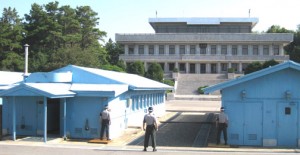
Only a few meters separate troops on alert in South Korea from the North Korean soldier patrolling under the arcade of the Panmun-Gak building in the background

In spite of the high-alert status, it’s not all that scary on the surface. All visitors’ points along the way sell ice cream and DMV souvenirs. The area is fascinating. The Third Infiltration Tunnel, 1,635 meters long was surreptitiously dug by North Korea as an entry point for a potential invasion of Seoul, and it’s big enough to move one division per hour, along with its weapons. It was only discovered through the revelations of a defector from the North. On the tour, you’ll walk through a large portion of it. From the Dora Observatory, you can get a wonderful view of North Korea (pay binoculars are there, or bring your own), and the factory city of Kaesong, as well as the empty “propaganda village” of Kijondong.

There are sobering elements to the tour, including a drive-by to The Bridge of No Return, the spot where two U.S. troops were killed by North Korean soldiers in in 1976 when attempting to trim a tree that was concealing the view of a North Korean checkpoint.

The tour is pricey, but unique, in the sense that this is the only place in the world where you’ll see a country divided in half, separated by a thin strip of neutral ground. A cease-fire has existed since 1953, but the Korean War was never formally ended. The tours are booked in advance, so we’d suggest booking yours before you get to Seoul. Two organizations that book tours include the USO www.uso.org/korea and Gyeonggi Tourism www.tourdmz.com


Seoul’s Royal Donggureung Tombs are a historical treasure and a break from the noise of the city

Written By: herbrunbridge - Oct• 11•12

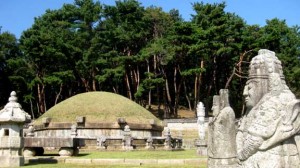
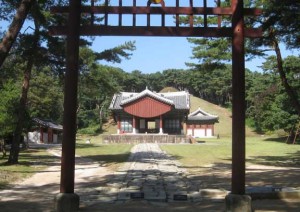
King Mungjong’s tomb

If you’re like us here at WoWasis, and love museums, you probably get quickly fed up with the general noise level at Seoul’s major museums. Forget about the concept of reflecting on art. Seoul’s museums are deluged with busloads of screaming schoolchildren during the week, and carloads of screaming family kids during the weekend. Essentially, there’s no difference in Korea between a museum and a children’s theme park, in terms of kiddie noise and behavior, including playing tag, hide-and-seek, tantrums, etc.

Getting away from this racket is just one reason you should visit the Royal Donggureung tombs, just outside of Seoul. The tombs themselves are spectacular, and one or two are always available to climb, in order to view the tombs and the statuary close-up. Signs are posted all over the place “Be Quiet.” So no school buses. There are 42 tombs from the 519-year era of Joseon rule on the site, and nine are easily accessible, at this UNESCO World Heritage site. Walking from tomb to tomb presents a leisurely stroll through this historical park, which you can fully tour in just under two hours. We suggest coming here before noon, when the light’s at a good angle. To get here, Seoul Metro and a city bus can do it in less than an hour from the center of the city. The site has a wonderful map that leads you on a well-planned path through the nine tombs.

Gateway to the tomb of King Taejo

Royal Donggureung Tombs
217-14 Donggureung-gil, Guri-si, Gyeongg-do 471-010
Tel: 02-31-564-2909
Open 6:30 am – 5:30 pm
Closed Mondays

To get here, take the #2 Metro line to the Gangbyeon station, and take exit 4. Cross the street, then turn right, cross another street, and you’ll see a bus stop. Take either the #1, the 1-1, or the 9-2 bus, and ask the driver to let you off at Donggureung. Donggureung will be across the street from where the driver lets you off.

Jeju island’s spectacular ‘Spririted Garden’ of bonsai (bunjae) trees

Written By: herbrunbridge - Oct• 11•12

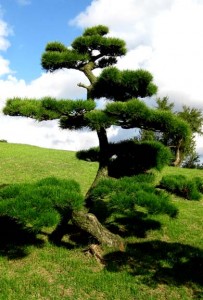
We here at WoWasis don’t know much about the art of bonsai. We love landscape architecture, though, so made it a point of visiting Mr. Sung Bum-young’s Spirited Garden while we were on the South Korean island of Jeju. And are we happy that we did.  In 1992, Mr. Sung began creating this garden out of a wasteland. Sung was a farmer who had a vision of what he considered beauty, and who managed, through hard work and determination, to bring it to fruition. He calls it the Bunjae Artpia, and through terraces, walkways, sunken vistas, and water features, he displays hundreds of meticulously bonsaied trees. There’s a tremendous amount of documentation throughout the park, both botanical and philosophical. The park is particularly well-regarded in China, and many of that country’s leaders have visited the park.

In a tiny pavilion, Sung’s story is told in print, the tale of a man who had a dream, who many had considered something of a lunatic, but who never dropped the shovel or stopped tying the wire. In that sense, his inspiration as a simple person with a dream that he worked hard to fulfill is the real story behind the “spirit” you’ll discover in this remarkable garden.

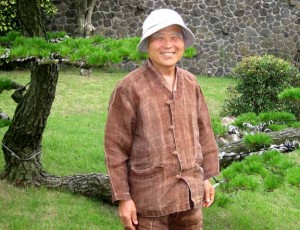
Sung Bum-young

Sung’s usually here, too, quietly sipping a tea with a friend or two in the pavilion near the exit gate. His biography, The Spirited Garden, is sold on a table just outside the pavilion. After we saw this place, we had to buy a copy, and an assistant popped out and asked if we like Mr. Sung to sign it for us.

The garden isn’t cheap to enter. It’s 9,000 won (about $9 USD) to get in. But it’s well worth it, on several levels. It’s beautiful, for one. If you don’t know anything about bonsai, it’s educational (that’s two). But perhaps more importantly, it gives the visitor a reflection point. All of us are capable of having a passion that runs so deeply that we want to share it with the world. It’s not so easy to share, on such a grand level. But Mr. Sung did it. And that’s the most significant thing, possibly that most visitors come away with. With a great vision, a plan, and a positive attitude, a legacy can be left for future generations. That’s the real story of the importance of Jeju island’s Spirited Garden.

Spirited Garden
1534 Jeoji-ri, Hankyeong-myeon
Jeju-si, Jeju 690-947
Tel: (064) 772-3701
open 8:30 – sunset
www.spiritedgarden.com (includes a map)

Visit South Korea’s information kiosks and they’ll help with just about everything

Written By: herbrunbridge - Oct• 10•12

Friendly, informative, and helpful, Tourist Information specialists, like these experts at the Insadong Info Centre, are available at hundreds of kiosks all over Korea

 The modern, industrialized nation of South Korea is a wonderful place to visit for the westerner, with loads of historical places, museums, and geographical treasures. One challenge for the traveler is that many Koreans don’t speak English. This can present problems for westerners ranging from trying to find a particular business, to renting hotels and cars. The solution is the Tourist Information kiosk, and one or more are located in tourist areas in just about every city. The folks working there always speak English, and are happy to answer all questions, provide maps, make hotel bookings, you name it. They can tell you train and bus schedules, and will make telephone calls to find out everything they don’t have at their fingertips.

You will also see Tourist Information folks walking around in tandem, wearing red shirts and red cowboy hats with the “I” Tourist Information logo. They carry maps and phones, and speak English. More and more in Korea, we at WoWasis have used the Tourist Information service, and have grown to reply on them for even the most mundane questions. This week, for example, we’re in the city of Gyeongju, but want to go to Andong, a few dozen km north, because we’ve heard there’s a mask festival going on there. The Gyeongju kiosk folks called to confirm festival dates, booked our hotel in Andong, told us how to take Andong city transportation to the festival, and gave us train and bus schedules from Andong back to Seoul. And the team at the Insadong Info Centre booked us a reservation at the Korea Furniture Museum that had proved to be impossible to get any other way. That’s service!

As a westerner traveling on your own itinerary, you will be in situations where you’ll need basic answers. The government also provides a “1330” general translation telephone number you can call, but in our experience, it’s all too easy to get involved in a “he said-she said” situation. We recommend using the Tourist Information folks instead. They can make everything regarding travel, bookings, and translations in Korea a whole lot easier.

Seoul’s Metro subway… easier than it appears at first, but requires practice

Written By: herbrunbridge - Oct• 10•12

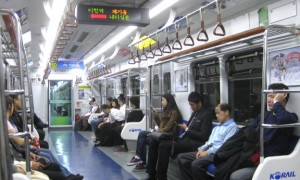
You’ll find Seoul’s subway is clean, fast, and inexpensive, once you learn how to navigate it

From the perspective of ease-of-use for the western visitor, has Seoul, South Korea the most challenging subway in Asia? We certainly hope so. One element is its size. It serves a metropolitan area of 25 million people, and the subway’s map is so detailed that it looks like the schematic for a printed circuit board. There are nine separate lines, each supporting dozens of stations (Line 1, for example has 75 stations). Signage is sketchy in English, and station location maps, denoting stations up and down each line, are either missing or located away from turnstiles. Hand-out subway maps are not available in subway stations. The ticketing system is almost difficult to figure out if you don’t know Korean, and the English on the ticket machines doesn’t help much (contrast this with Bangkok, whose ticket machines are extremely simple for non-Thai speakers).

The good news is, once you’ve taken a day or so to figure it out, it becomes very serviceable, a great way to get around, and inexpensive. But user-friendly for the westerner? Nope. Don’t be in a hurry, the first time you use it. Your first day using the subway will be all about taking wrong paths through subway stations as you try to figure out signage.

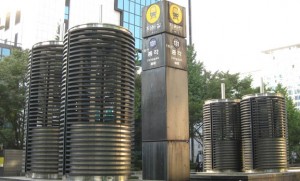
Stylized architectural elements highlight this entrance to Jonggak’s metro station

To travel on the Seoul subway, you begin by buying a ticket from a machine for 1000 won per ride, or buy a charge chard for 3,000 won and add more won as you need it by placing the card in the machine and adding money. You’ll probably want to ask a friendly Korean for help. You do save 100 won or so a ride by using the card.

The three biggest problems for foreigners riding Seoul’s subway are the difficulty of buying a ticket, the lack of easily located route maps in stations, and being charged for crossing over a line at the same station to travel in the opposite direction. In addition, changing from one line to another in a connecting station can be tough, both because the relative distances can be long, and because the signage is terrible (try crossing over from line 3 to line 5 at the Jongno 3-ga station and you’ll see what we mean).

They’re all interrelated, as one newly arrived westerner’s story attests:

A nice station manager took 5 minutes to show us how to buy a ticket at the Anguk station, so we bought a charge card in order to add more fare money when we need to. We arrived at our destination at the Sports Complex station, then attempted to return to Anguk. From the moment we walked into the station, we couldn’t find a route map telling us which platform was for east or west travel. When we entered a platform, we finally found a map. We were headed in the wrong direction. To cross to the other side, we had to use our subway charge card to go through the turnstiles again, which charged our card for a ride we never took! When we got to Anguk, our pass no longer worked, and we ended up crawling under a turnstile like a juvenile delinquent. We’d paid our fare, but the system didn’t work for us.”

Here at WoWasis, we’ve used subway systems all over Europe and Asia, and this is by far the trickiest. When you use this system, we’d recommend that you begin by finding a Korean who can tell you how the ticket machine works. Within a day, you’ll begin liking the Seoul Metro, but you’ll probably never love it, primarily, we think, because of the hard to find and the more-than-occasionally ambiguous signage. Happy travels!

Seoul: a Riot of color and design on the streets of Korea

Written By: herbrunbridge - Oct• 10•12

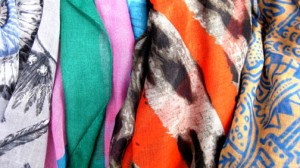
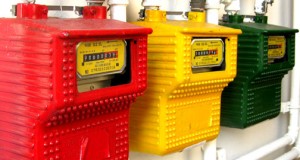
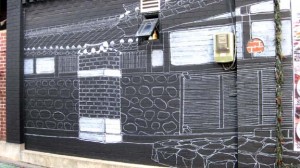
Seoul was heavily devastated by military action in the 20th century, and perhaps that’s why her citizens made opportunity out of adversity, and used color and design to doll-up everything. Mundane electric meters become industrial art with a dash of color. An ordinary drab concrete black wall becomes a traditional Korean hanok house, utilizing negative space to hide an electrical meter, in a three-dimensional sketch of white on black. An old bicycle, placed above a doorway, uses the sun to cast a third dimension against the wall. A scarf display is never just a clothing rack, it’s an art piece. In Seoul, the art of presentation is on view in her streets, alleys, and buildings as an ever-enchanting walking museum, 24/7.

Andong Maskdance Festival, held annually, showcases Korean and International mask culture

Written By: herbrunbridge - Oct• 10•12

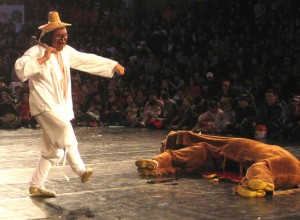
The butcher and the cow, from a popular Hahoe mask performance

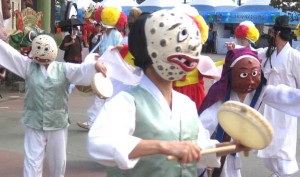
Andong, a city in eastern South Korea, hosts the annual Andong Maskdance Festival of mask and dance, with a heavy musical component as well. It’s held beginning the last Friday of September and lasts through Sunday of the following week.  The festival offers a wonderful opportunity to see the Hahoe Maskdance in Hahoe Village, a few km outside of town. Hahoe masks, in particular, represent wonderful expressions of the art of maksmaking. When no performance is scheduled, visitors can walk around and enjoy viewing the traditional houses in the village. In addition to performances held in Hahoe Village, a number of other performances are held at the Festival Site right inside the city of Andong itself. There are 5 stages at the festival site, but we recommend sticking with what’s going on at the Maskdance Theatre.

At the Maskdance Theatre, we here at WoWasis saw a magnificent performance of the Dongrae Maskdance as well as a number of other performances by international performing groups, most of which utilize masks as elements in their dance programs. In the 2012 fetsival, countries represented included Uzbekistan, Mexico, Croatia, and Indonesia.

One of the main characters in the Dongrae maskdance

If you go, it’s essential to pick up a Festival program, which you can buy at one of the tourist information tables located at the Festival site. It’s bilingual-English, so you can read about every group that’s performing, then pick your venue and date to plan it all out. This festival is inexpensive (all-day tickets to the Maskdance theatre were $7 USD), hotel rooms are cheap and plentiful in Andong, and the city is only 3.5 hours away from Seoul by train or bus.


How to avoid car rental snafus on Korea’s Jeju Island

Written By: herbrunbridge - Oct• 09•12

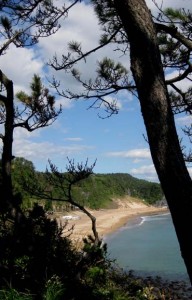
Jeju’s coast is one of the reasons renting a car on the island

Here at WoWasis, the worst car rental snafu we ever had was in Manila. We booked a car from a well-known rental car company, and when we got to Manila, there was no desk and no representative. It turns out that there hadn’t been one for months.

On Korea’s Jeju Island, we nearly had a similar problem. It got resolved, and this post is a must read for westerners that intend to rent a car to see this remarkable island. Two tips are essential, upon arrival at the Jeju-ci airport:

Tip #1: Do NOT go to the building marked “Rental Cars” directly across from the terminal. Yes, all signs point to that building. Inside you’ll find 10 or so rental companies. None of the representatives speak much English. Instead, they rely on a telephone – based translation service. Not efficient. We chose one, got a quote for 149,000 won for 4 days, pulled our our passport, international driver’s license, and a credit card. “Nope,” said the rep, “you also need an immigration certificate,” which could only be obtained from Korean immigration. No office at the airport, but they gave us a phone number. Thanks. This made it virtually impossible for any westerner to rent a car. Just plain stupid. So we cancelled the 149,000 transaction, and went back to the information counter at the airport to complain. At the information counter, we found out about tip #2, which saved the day.

Tip #2: Only rent from the Avis or Hertz counters INSIDE the terminal, adjacent to Gate 2. What a difference! The Hertz rep told us we didn’t need the stupid “immigration certificate.” The car was 132, 000 won and came with a free English-speaking GPS. That’s 18,000 won less (about $18, USD), a free AVOL GPS (the best we’ve ever used, read our review), and no hassles. Hertz is actually repped by a company called KT Rental, who took us to our car, showed us how the GPS device would help us to return the car, and got us on our way.

Overall, we can’t blame the first company for not speaking English. This is Korea. But we can blame them for not knowing the law. And also for not thinking logically. And they lost $150 USD because of that. If such certificates were needed, no westerner would ever rent a car. If we were 20 years old, we might have actually taken the bait and gone all over hell looking for an immigration office, and then sat there while the immigration officer called the rental agency to interpret the regulation correctly. It would have taken at least a day. Thank goodness we’re not twenty.

At any rate, Jeju’s a lovely island. We damn well hope you read this post before you rent a car at the Jeju-si airport, though.