The sharper edge to traveling in Asia

American woman gets financially fleeced by male Asian lover

Written By: herbrunbridge - Nov• 24•12

The Good Manner: Advice on Asia from WoWasis’ Pa Farang
Today’s question: Do women ever get financially robbed by male Asian lovers? 

Dear Pa Farang, 

We’ve all heard dozens/hundreds/thousands of stories about western guys getting cheated out of their money by Asian gals. I’m curious, does the opposite ever happen? Do western women ever get scammed during Asian love affairs?

– Robert in BKK

Dear Robert, 

Yes they do, and I have a story that illustrates that quite well. I also want to point you to Cleo Odzer’s book Patpong Sisters, in which she candidly discusses how a Thai guy took advantage of her. It’s a good read. Now, I’m going to tell you a story that happened quite recently. If you’re a woman reading this, listen up.

The story I’m about to tell happened to a female acquaintance of mine last year. Every word is true, but I’m changing her name. Let’s call her Nguyen. Nguyen was born in Vietnam, came over to California as an infant, and opened a successful small business in the U.S. when she was 20 years old. She’s roughly 40 now.

Three years ago, she met a man in Vietnam on her annual trip there. He was ten years younger, and she fell in love. She came back to the U.S., sold her business (her friends tried to stop her, but that train was already too far down the tracks), returned to Vietnam, and bought a large plot of land. On that land, she built a beautiful new three-story house, put her boyfriend’s name on the deed along with hers, and intended to live in Vietnam forever.

Six months after the house had been occupied, she came home one day to find a moving van in front of the house. All the furniture was being moved out, and her boyfriend was watching the proceedings. “Big problem,” he told her, “I gamble with the house deed, and now the mafia own the house. Sorry.” So everything that Nguyen had worked for was gone. Within a week, the boyfriend was gone too. She was flat broke.

Nguyen’s back in the U.S. now. She’s taken out a loan to start a new business. She has nothing, lost everything in Vietnam. Analyzing the story, I’m not even sure there was a mafia involved. Maybe the boyfriend signed over the house in return for a large sum of money.

But there’s a classic example of how a woman got taken to the cleaners in much the same way a man would have. In this case, Nguyen knew the culture and the language. But that didn’t save her. She fell in love, and “my boyfriend’s different than all the rest” was her litany for quite a few months. Where have we heard that before?

When in Asia, keep a wide gulf between your pocketbook and your love affairs. Rent, don’t buy: that goes for relationships as well as houses.

Above all, remember to avoid all scams, show the Good Manner, and have a great time in Asia. 

– Pa Farang 

Read Pa Farang’s other columns for more advice on relationships and scams in Southeast Asia
A magnificent stroll through Jeju Art Park on Korea’s Jeju Island

Written By: herbrunbridge - Nov• 24•12

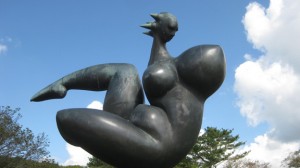
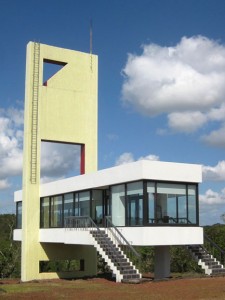
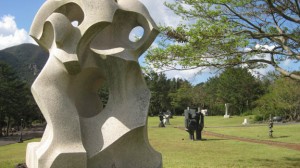
Korea’s Jeju Island has a wealth of outdoor experiences, so many, in fact that it’s easy to miss several good ones. Here at WoWasis, we feel that the Jeju Art Park is something you shouldn’t miss. The Art Park has more than 160 art works by Korean sculptors, laid out over a large 430,000 square meter surface. The trail system is sophisticated yet easy to navigate, and the plethora of different styles means that the visitor will be exposed to visually stimulating views at virtually every turn.

The park is big enough that you can easily escape the presence of other visitors and seemingly will have the place to yourself.  On the day we were there, the other visitors had the same idea we did, and we all scattered to different points of the compass to enjoy the sculptures on our own.

Jeju’s not a big island, so the Art Park is an easy drive from just about everywhere, 20 km west of Seoguipo City near the southern coast road, and 40 km south of Jeju City. It’s a wonderful place to spend a couple of leisurely hours, away from tour buses and crowds.

Jeju Art Park
Tel: (064) 794-9680

Walk Korea’s spectacular Yongmeori Coast on Jeju Island

Written By: herbrunbridge - Nov• 24•12

There’s lots of magnificent coastline in Korea, but for us here at WoWasis, the Yongmeori Coast in southwestern Jeju Island is hard to beat. Its rock formations are vivid and particularly colorful with the afternoon sun. To get here, you cross the highway from Sanbangsan mountain and walk a few meters to the ticket booth. The Youngmeori Coast can only be seen by walking, and the two entrance gates are closed during high tide, as the walking paths are all underwater then.

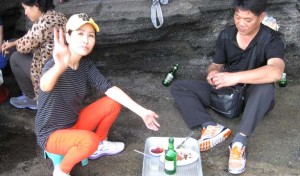
When the tide lowers enough to visit, you’ll be astounded by a wonderland of colorful sandstone rocks carved by wind and water. You will walk around the promontory (there are two gates, and you’ll either be walking essentially west or east), joined by fishermen and Korean families, who will hunker down and have a lunch of freshly caught seafood and rice wine. Westerners are not all that common here, so don’t be surprised if a friendly family invites you to a drink and a seafood hors d’oeuvre (a great opportunity to experience Korean hospitality).

Friendly Koreans will often ask you to try some of their lunch, a great time for you to meet new friends…

The Yongmeori Coast isn’t that long, but rocks can get slippery. So wear shoes with gripping soles. This is one of the most spectacular walks in Korea, so give it at least one hour of your time.

WoWasis book review: Sung Bum-Young’s ‘The Spirited Garden’ (Korean Bonsai Culture)

Written By: herbrunbridge - Nov• 12•12

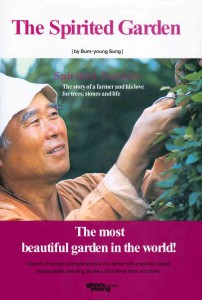
Sung Bum-Young founded ‘The Spirited Garden’ on Korea’s Jeju island, in 1968. The garden is a world-renowned bonsai venue, and is in Jeju’s Top Ten attractions. You simply can’t miss seeing it when you’re there. 

What every visitor yearns to discover is how this garden was built. This book, The Spirited Garden: The Story of a Farmer and his Love for Trees, Stones, and Life (2005, ISBN 89-349-1966-3) explains it, and the story gets more astonishing with every page. Sung bought the property on a dream. It was a volcanic wasteland, and everyone, it seemed, thought he was a lunatic. The property, full of rocks and scree, simply was not garden material. And Sung did it pretty much on his own, with a small group of volunteers, then employees. He dug out rocks without the benefit of machinery, cleared the land, and severely injured his back in doing so. His wife nearly left him, his creditors tried to put the property up for auction, you name it. But he finally opened his garden in 1992, and it’s been successful ever since. 

There’s a lot to think about in this 315 page book. Bonsai fans will find plenty of information on planting, trimming, and watering. But the real power in this book is the compelling evidence that if one has a dream and sticks with it, he or she can make it happen. Sung Bum-Young encountered hurdles that frankly, would have discouraged most people. Trying to build his dream wasn’t fun, for him or his family. But now the garden is thriving, and is one of Korea’s most interesting spots. 

And Sung’s dream evolves. He envisions a museum, and much of it is already built, on the other side of a wall most visitors don’t see. He loves watching people enjoying the garden, and often sits drinking tea in a small indoor room adjacent to a table where this book is sold. 

The book is highly recommended on several levels: human perseverance, creating an art experience, and a metaphor for the struggles of Korea are just three that come to mind. But no one reading this book can ever come away without thinking of something that was attempted in one’s past, and was left unfulfilled. As readers, we celebrate Sung’s triumphs; as humans, they belong to all of us who have dreamed.

WoWasis book review: Brenda Sunoo’s ‘Moon Tides: Jeju Island Grannies of the Sea’

Written By: herbrunbridge - Nov• 07•12

One of the most compelling cultural elements of Korea are the haenyeo, women who free-dive in the sea to catch food and capture seaweed. There are two books currently available on the haenyeo. One of them, Mother of the Sea: the Jeju Haenyeo, is also the subject of a WoWasis book review.

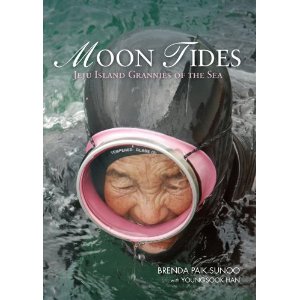
Brenda Paik Sunoo’s Moon Tides: Jeju Island Grannies of the Sea (2011, ISBN 978-89-91913-78-3) is the more recent of the two, and comes from a personal, rather than a documentary perspective. Sunoo makes it clear that she’s got a personal stake in telling the tale. A Korea-American, she views the haenyeo as spiritual sisters, underscored by their similarity in ages. Her quest takes her to Korea’s Jeju island, to write, interview, and photograph. Her photos are more than straight documentary shots, taking in a breadth of material, including diving, family, shamanistic ritual, and market scenes. She includes shots of ageing haenyeo who can no longer care for themselves.

The best parts of the book are the interviews with the divers, shamans, and related individuals. There are 21 of these, 18 or so of which are with the divers themselves. They relate family and marriage histories, how they began as haenyeo divers, and how they sum up their lives, philosophically, at their advanced ages. This is the core of the book, oral histories etched in print, which will form an important part of the haenyeo cultural narrative for the future. Very little is left out. There is an interview with a woman, for example, who specializes in haenyeo songs (“rowing songs,” as she calls them), a rich yet relatively unknown song form from Korea. In including it, the author clearly understands her responsibility in attempting to tell as much of the story as possible.

AsiaPromoBannerBeyond being a book of interest to those interested primarily in haenyeo, the book is an important Korea cultural marker for its revelations regarding working women, island culture, aging, and historical aspects of Jeju’s rebellion against Japanese and Korean conservative social forces in the immediate post-Korean War era. Highly receommended. Buy it here at the WoWasis eStore.

WoWasis book review: ‘Mother of the Sea: the Jeju Haenyeo’

Written By: herbrunbridge - Oct• 29•12

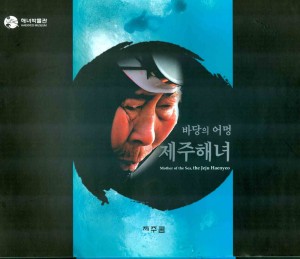
The haenyeo are female Korean divers, who for centuries have been going underwater without breathing apparatus, in search seafood and seaweed. They stay under for a period of up to 2 1/2 minutes. It’s a tough job and a tough life. There are few books written in English about the haenyeo, and one of them is a photo compilation, ‘Mother of the Sea: the Jeju Haenyeo’ (2007, ISBN 978-89-6003-069-5).  

Each of the sixty or so photos is accompanied by a small essay, describing their songs, diving objectives, laws, rules and social milieu. An entire chapter is dedicated to their rituals. The aspect of danger is never far: sharp rocks, sea snakes, and freezing conditions have killed hanyeo. The economics are rough: when an area is overfished by trawlers, they leave the island to dive elsewhere. The book tells of the falling numbers of haenyeo, from 15,000 in the 1970s, to 5,000 today. Produced by the Haenyeo Museum on the island of Jeju, the book is available in the bookshop, and well worth picking up.

WoWasis book review: ‘The Two Koreas: a Contemporary History,’ by Don Oberdorfer

Written By: herbrunbridge - Oct• 28•12

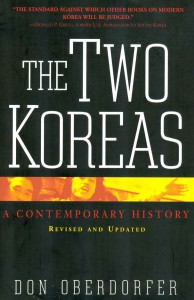
Veteran journalist and Korea-watcher Don Oberdorfer’s revised edition of his classic   The Two Koreas: a Contemporary History (2002, ISBN 0-465-05162-6) remains an essential text on 20th century Korean history. Revised shortly after Kim Jong Il took power, the book traces the histories of North and South Korea, focusing on the Korean War and post-war years. Kim Jong Il’s third son, Kim Jong-un, now heads the North Korean (Democratic Peoples’ Republic of Korea, or DPRK), and Kim Dae Jung who was the president of South Korea (Republic of Korea, or ROK) when the book was revised, has been dead since 2009. 

Although a decade has passed since its last revision, the underlying philosophies of North and South that are described in the book still have some degree of currency. At 445 pages of text, the book is exhaustive, much of it surrounding the endless push-pull of diplomatic attempts to stave of skirmishes and wars, with the goal of peaceful co-existence. The end-game, as established by the author, has been an underlying desire by both sides to reunite the country, while allowing each side to retain its political philosophy. In addition to the two Koreas, major players in this book are the United States, China, Russia, and Japan. The U.S., in particular, was heavily involved in talks with North Korea during the nuclear crisis, treading a thin line between North Korean brinkmanship and the South Korean desire to save face. 

What emerges for the reader is a greater understanding of the North Korean position as well as an appreciation for the intricacies of negotiation in a Korean environment. Over and over again, throughout history, agreements are stalled or killed by real or perceived cultural slights. At other times rapprochement is damaged at inopportune times by North Korean incursions into South Korea (for example, the grounding of a North Korean submarine on North Korean shores in autumn, 2006). As the writer suggests, whether North Korean leadership knew of this mission or whether it had been approved by military factions wishing to subvert the peace talks will probably remain a mystery. 

Oberdorfer’s a good writer, and the book begins reading like a novel, where the reader becomes involved in each Korea’s quest to live in harmony with the other. There are some fascinating behind-the scenes looks into North Korea, and Oberdorfer relies heavily on U.S. government documents and press reports to underscore the historical data. The book remains an essential one to anyone wishing to understand North Korea in particular, and the Korean dynamic in general. Buy it now at the WoWasis eStore.

WoWasis book review: ‘The Korean War: a History,’ by Bruce Cumings

Written By: herbrunbridge - Oct• 27•12

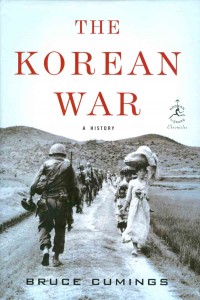
There are an awful lot of books on the history of the Korean War. So many, in fact, that it’s confusing determining which one to pick. The best we here at WoWasis have read, as well the shortest (at 243 pages of text), is Bruce Cumings’ The Korean War: a History (2010, ISBN 978-0-679-64357-9). The author’s perspective is defined early in the book, underscored by this excerpt from the introduction: 

This is a book about the Korean War, written for Americans and by an American about a conflict that is fundamentally Korean, but one construed in the United States to have been a discrete, encapsulated story beginning in June 1950 and ending in July 1953, in which Americans are the major actors. They intervene on the side of the good, they appear to win quickly only to lose suddenly, finally they eke out a stalemated ending that was prelude to a forgetting. Forgotten, never known, abandoned: Americans sought to grab hold of this war and win it, only to see victory slip from their hands and the war sink into oblivion. A primary reason is that they never knew their enemy—and they still don’t. So this is also a book seeking to uncover truths that most Americans do not know and perhaps don’t want to know, truths sometimes as shocking as they are unpalatable to American self-esteem. But today they have become commonplace knowledge in a democratized and historically aware South Korea… Least known to Americans is how appallingly dirty this war was, with a sordid history of civilian slaughters amid which our ostensibly democratic ally was the worst offender, contrary to the American image of the North Koreans as fiendish terrorists. The British author Max Hastings wrote that Communist atrocities gave to the United Nations cause in Korea “a moral legitimacy that has survived to this day.'” What then of South Korean atrocities, which historians now know were far more common?

 The book is far more than a hack job on early South Korean military figures and leaders, as it points out American atrocities (No Gun Ri, for example) and Northern ones as well. The Southern leadership, however, made it a point of assuming large elements of its population were Communists, forcing them to dig their grave trenches, then lining them up and shooting them. Many in the South Korean leadership cadre were trained in Japan, one reason Kim Il Sung in North Korea never trusted them. So the basis of the Korean War is an essential part of the Korean story that continues to unfold today. Among the most fascinating elements of the book are the passages involving the U.S. use of napalm, the origin of the word “gooks,” and the Northwest Youth Corps death squads that, as an unofficial arm of the U.S. Military, allowed teenaged thugs to massacre thousands of Korean, perhaps most notably on the island of Jeju (Cheju). 

From the perspective of the U.S. reader, Cumings’ passages on Korea being the foundation for the U.S. military-industrial complex and the springboard into Vietnam are sobering. The book is highly recommended for a number of readers on various subjects, including those interested in modern Korean history, Kim Il Sung, Syngman Rhee, the Vietnam War, and the buildup of the U.S. into a military-industrial behemoth. Buy it now at the WoWasis eStore.

Bachelor in Bangkok: Khun Lee on great-looking Thai women and bad-smelling foreigners

Written By: herbrunbridge - Oct• 16•12

One of the things I really enjoy about living in Paradise is the lack of the political correctness that is so pervasive in the west.  It really is refreshing to be able to make an observation about others without having to become the victim of the PC brigade.  I can remember being on the sky train with an old flame when 4 or 5 people from a particular Middle Eastern country came aboard.  Nearly every person on the train, regardless of what nationality they happened to be, all in unison moved as far away as possible from the new group of passengers.  These people smelled so bad that my date actually vomited in her hand.  I can recall the German guy next to me saying “man do these people smell terrible.”  I nodded my head in agreement and also felt such freedom to be able to express opinions like that without any recrimination.  The point being that I have nothing against this group of people, I don’t have a problem with their race, religion or choice of lifestyle, they just smelled really bad.  I would hope that if I ever left the house smelling that way someone would have the grace and honesty to tell me. 

I was drinking in one of my favorite haunts the other night, and as usual the music was a bit too loud, and I had been indulging in the libations just a bit too much, when the stranger next to me barked out that I must be American as I was speaking very loudly.  I wasn’t really offended but merely curious, so I asked my English and Canadian mates at the bar if they had ever noticed that Americans talked louder than most other groups of people and every one of them agreed with that observation.  Well then, I guess we are a loud bunch!  I really don’t know why that is the case, I can only venture to guess that since it is so quiet everywhere in my country and so loud everywhere in Thailand that we just aren’t very good at adjusting our voice levels to the current situation. 

More and more lately I have noticed my friends and acquaintances choosing the worst kind of women imaginable to be their lovers.  I wrote an earlier column about how nobody here wants to be James Bond.  Guys can have a million beautiful girlfriends and live the life of an international playboy, but the vast majority choose to settle down with one woman, and it seems to me that in most cases the women they choose are the least attractive, least educated and in many cases the extreme bottom of the barrel in every way.  

I have tried in vain to figure out why this happens to be the case.  Are guys just lazy, therefore choosing the women who are the easiest to access, thus always getting the worst of the lot?  Do guys have such low self esteem that deep inside they think that this is all they can get or even deserve?  Are they so lacking in social skills and confidence that it’s just not possible for them to approach a lady who actually has something to offer?  Worse yet, do they actually enjoy the abuse?  I became so frustrated at one of my friend’s consistently poor choices in women that I had to sit down with him and teach him step by step how to meet nice gals here.  Subsequently he met a plethora of hot, lovely and personable women, but ended up choosing another pathetic loser to be his live-in girlfriend.  The last time I saw him he had a black eye from another fight with her, and was living in a hotel despite the fact that he owns a condo here!  I have come to the conclusion that giving advice to my friends only makes me feel better, therefore relieving me of the guilty feeling I would naturally have as I watch them jump off another cliff into the abyss below.  Regardless of how much knowledge people have, they are going to do whatever it is that they were going to do anyway.  The best sales trainer I ever had the privilege of studying with once told me “knowledge isn’t power. Action is power. Knowledge alone is worth nothing if you don’t use it.”  I now know that I can help my friends with their options, but not with their priorities. 

It is so wonderful to live inThailand, where women are proud to be women and absolutely adore men.  Here women go on a diet if they are 3 pounds overweight.  If someone happens to compliment them on their beauty, they light up like a Christmas tree and it absolutely makes their entire day.  Last week I was eating in a small Thai restaurant and admiring the 2 super hot waitresses while pretending to study the menu.  One of the gals brought my drink order and it was served in a really cute glass.  I said something like “wow that’s really cute.”  This little hottie looked down at me, gave me her best bedroom smile and asked “are you talking about the glass or me?”  Giving her my most sexy smile I quipped “the glass is cute. You on the other hand, are absolutely beautiful.”  Now in my home country ofAmericaI would certainly get a very nasty look for having given this compliment, and might even be asked to leave the premises by the manager.  However this isParadise.  She shrieked with glee, turned to the other waitress and they gave each other a high five!

Read Khun Lee’s other WoWasis columns for more advice on navigating the adult dating scene through the backstreets of Bangkok

The Korea Furniture Museum: a world-class museum in Seoul that for westerners, is nearly impossible to visit (but worth the try)

Written By: herbrunbridge - Oct• 16•12

KoreaFurnitureMuseum1cThere’s something about the Korean spirit that challenges its business tycoons to leave a public legacy, and it often results in museums — and we swear, Korea must have more museums per capita than any country in the world. Even people who aren’t tycoons have founded world-class museums, such as Jeju’s Sung Bum-young, a gardener whose Spirited Garden of bunjae (bonsai) trees is breathtaking, memorable, and somewhat awe-inspiring.

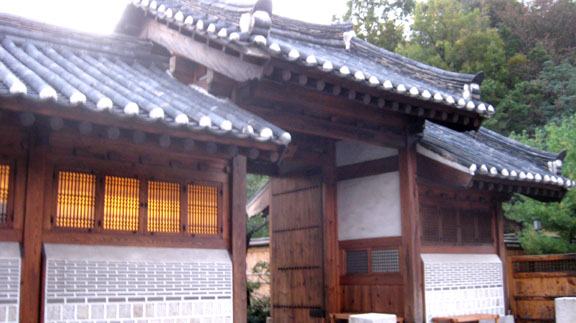
And that’s the case with founder Chyung Mi-sook’s Korea Furniture Museum. This museum sits on the home site of the last Joseon emperor (Emperor Gojong?), and incorporates his house along with nine others (some of which were brought to the site, others were built there). The collection comprises some 2500 pieces of Korean furniture, most of from the Joseon era, and 100-250 years old. Some 500 pieces are on display. The woods from which many of the pieces in the collection were crafted may be unfamiliar to westerners, including Paulownia and Zelkova, which have stunning grain patterns.

The site itself is breathtaking, and reminds us here at WoWasis of the Getty Museum, when it was located in Malibu. It commands a magnificent view of Seoul, and the outer walls of the old fortress, which are magnificent when lit at night. The architecture of the ten houses and their integration is stunning. But no pictures allowed. And this leads to the secretive aspect of the museum that it somewhat disconcerting, yet serves the purpose of keeping the environs serene. Easy access museums in Korea can be challenging to enjoy peacefully, given busloads of ever-present screaming schoolkids, and one guesses that Mrs. Chyung wants to keep the museum’s aura of stateliness. So we’ll give her credit for keeping away school buses and tour buses.

The museum is only open Wednesday through Saturday, by guided tour only. There are 6 daily guided tours, only the last of which (6 pm) is given in English. No photographs whatsoever are allowed once inside the gates, and there are neither brochures, guidebooks, nor books of any kind that describe the collection. You have to do it on memory. While on tour, questions are answered, but not exactly welcomed. And no questions are answered regarding the founder, who was formerly a professor at Yonsei University.

Which is a shame, especially for a furniture museum. Furniture collectors are a rare breed, collecting moveable art. Unlike paintings which are meant to be looked at, furniture is meant to be used. Except for museum furniture. From a three-dimensional perspective, high-design furniture is home sculpture. Those who have a big enough passion for furniture that they make it a point of visting furniture museums always have questions, it seems. When we visited the Wallace Collection in London, we wanted to know about Wallace. How did he make his money, what drove him to collect? How did he build his collection? All private museums built by private entrepreneurs beg these questions. How did Isabella Stewart Gardner utilize Bernard Berenson to build her collection? Did they ever disagree?

Those conducting the tours at the Korea museum have to ask permission before they answer any questions regarding the founder, so Mrs. Chyung will remain elusive for now. Perhaps she’ll write a book, and reveal all. And BTW, a scholarly book on this formidable collection, with good color pictures, does need to be written.

The museum is tough to get into. The museum’s website is essentially a one page reservation form. We called, and the person answering the phone told us to send an email requesting a tour time. That email was never answered. Finally, we went to a Tourist Information kiosk, and they made a reservation for us. It still wasn’t easy, combining a subway trip with a cab ride (navigating through the labyrinthian Jongno 3-ga metro station to change lines caused us to be few several minutes late). So let’s just say that since a westerner can neither book by phone nor email, it’s not exactly westerner-friendly.

There are some great museums in Korea, and this is in the top tier. We suggest asking the Tourist Info kiosk folks to help you. Your tour guide at the museum won’t give you the warm fuzzies, but the museum is an experience that’s unique in Korea, and one of the world’s treasures.

Korea Furniture Museum
330-577 Seongbuk-dong
Seongbuk-gu, Seoul
Tel: (02) 745-0181
Open Wed-Sat, by reservation only
www.kofum.com