The sharper edge to traveling in Asia

WoWasis visits the Todai-Ji Temple complex in Nara, Japan

Written By: herbrunbridge - Jul• 18•13

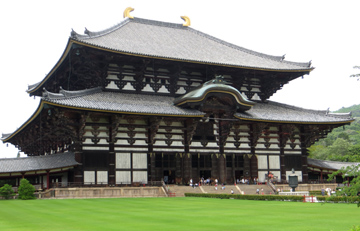
Daibatsu-den Hall

Daibatsu-den Hall

The Todai-Ji Temple complex is considered to be the top tourism attraction in Nara. There is much to see here, and the complex is large, including some uphill walks to fascinating shrines and temples. You begin at the Nandai-mon gate, which leads to the main temple area. Encased in huge chicken-wire boxes are two wooden sculptures that aren’t to be missed. Carved in the 13th century, they depict mammoth wooden Nio-guardians. The carved images are magnificent but carry an enormous layer of dust. Because of the dust and the chicken wire, they’ll be best preserved in your mind, rather than your camera.
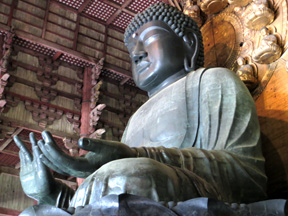
Dainichi Buddha image

Dainichi Buddha image

The Daibatsu-den Hall is said to be the largest wooden building in the world, a claim made about at least one other Japanese building. Make no mistake, it’s huge, and houses the Daibatsu Buddha image, one of the most famous in Japan. It represents the Dainichi Buddha, and is 45 feet tall, crafted from 437 tons or bronze and 130 kilograms of gold. There are two other stunning golden images that flank Daibatsu, and several other notable wooden sculptures, among them the Koumoko-ten, to the left of the main altar.
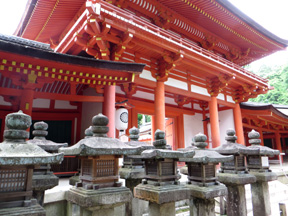
Stone laanterns at Saigatsu Hall

Stone laanterns at Saigatsu Hall

After departing Daibatsu-den, a short walk up the hill behind the lake brings you to two important sub-halls, part of the Todai-Ji complex. Sangatsu-do Hall is also known as Hokke-Do Hall, and is the oldest structure at Todai-Ji. Ten enormous carved wooden statues are the reason you’ll want to visit. The focal point is the Fukukensaku Kannon. protexcted by Shukongo-jin, Kongo-rikishi warriors. A short walk from Sangatsu-do is Nigatsu-do Hall, its veranda commanding a wonderful view of Nara. Both of these halls are surrounded by lanterns. Stone pedestal lanterns are everywhere, cared for by a team of attendants constantly at work repairing and replacing paper windows. On the verandas, don’t fail to notice the fine metalwork of the hanging lanterns.

Banner_Asia00The Todai-Ji complex is at the easternmost point of the municipal walk that’s well-marked in Nara. Most of the atmosphere that you’ll remember, though, is up on the hill, at the Nigatsu-do and Sangatsu-do Halls.

Todai-Ji GPS: N34°41’19’’  E135°50’23’’
Nigatsu-do Hall  GPS: N34°59’14’’  E135°44’36’’
Sangatsu-do Hall GPS: N34°40’53’’  E135°50’53’’

“Big girl” brothel busted in Tokyo: WoWasis asks why?

Written By: herbrunbridge - Jul• 17•13

NoFuckingLogobWe needed to put “big girl” in quotes (rather than putting “big girl brothel” in the title), because word has come from Tokyo that the Makkasu Bodi (Max Body) brothel-to-go has been busted by Japanese police. The business catered to gentlemen that like their women big, or “like explosive boobs and asses,” said a police spokesperson.
If the women were big, so were the profits. The weight of the women ranged from 220 to 330 pounds (100 to 150 kilos). The woman who allegedly ran the business, Keiko Saito, apparently had thirty women working for her, and earned more than $3 million USD over three years.  Here at WoWasis, we really wonder whether there are too many police in Japan…

WoWasis Medical Tourism review: a low-cost but effective Medical Check Up at Bangkok’s Bumrungrad Hospital

Written By: herbrunbridge - Jul• 17•13

bumrungrad2Note: this is a product and service review reflecting the opinion of WoWasis. It is not to be construed as a medical recommendation. For all medical recommendations, consult your own trusted physician.
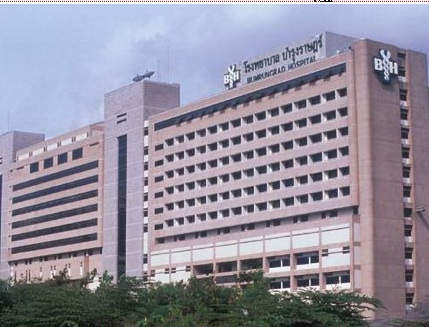
Whew! Now that the disclaimer’s out of the way, let’s tell you about the medical checkup we got at Bangkok’s Bumrungrad Hospital. We’d noticed a few aches and pains, and chose to get a checkup at Bumrungrad, not because it’s the cheapest in Bangkok (it isn’t), but because of the good care we’d gotten there in the past. As of this date, Bumrungrad offers six different Health Screening Programs. We weren’t sure which was the right one for us, so we asked to discuss them with a doctor there first.

Based on what we were dealing with, the doctor recommended the Executive Examination, which includes, among other things, Complete Blood Count (CBC), Blood Sugar, Cholesterol, Gout, Creatinine, ALT and ALP Liver Function Panels, EKG, Abdomen Ultrasound, and Chest X-Ray. That program cost 7,770 baht ($250 USD) for men, 9,140 baht ($294 USD) for women.

Pay the fee upfront, and your tests begin 5 minutes later. Yes, we said five minutes, no waiting. You are taken by a friendly attendant to one test station after another, until you’re finished two hours or so later. Before you leave, you consult with your first doctor one more time, who tells you if he or she sees anything initially important, after having seem most of the test results. You are asked to come by the next day to pick up the full report.

Our medical report came in a handsome 10 page tabbed and plastic-covered folder. It included all test results, something we could easily use as a baseline when we return to our home country. Included in the report was the EKG graph.  Bumrungrad keeps good records. We’d done a similar checkup in 2008, and the new report (2013) made the comment that the findings had not significantly changed in five years.

In our opinion, $250 USD is a pretty decent price to pay for this kind of workup, and the fact that you can walk in off the street and get it done in two hours makes it a lot easier than it would have been in our own country. And having it all nicely laid out in a take-home folder is great, too. We can keep it as a record and have documentation for our own medical personnel at home, too.

As we mentioned, Bumrungrad is not the only hospital in Bangkok that does this, and you should always seek more than one opinion on any medical choice. We were happy with our own results, and do recognize that the process of getting this kind of checkup would have cost us far more, and taken far longer to complete, in our own country.

WoWasis’ visits Kyoto’s amazing Sanjusangen-Do temple

Written By: herbrunbridge - Jul• 16•13

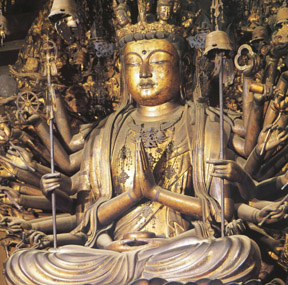
Main Kannon Bothisativa statue

Main Kannon Bothisativa statue

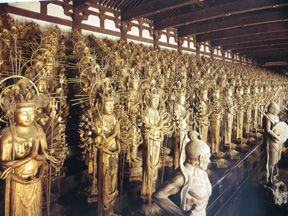
We here at WoWasis have seen a lot of Buddhist structures, but we weren’t prepared for what we saw at Kyoto’s amazing Sanjusangen-Do temple. Here is a hall, rebuilt in 1266, replete with 1001 statues of the 100-armed Buddhist goddess of mercy, Kannon. The statues are laid out in a grid consisting of 500 statues flanking the largest of all of them. The hall itself is formidable, 390 feet long by 54 feet wide. Think for a 40 story building laid on its side.

The statues are amazing, no two exactly alike, and each is a magnificent work in its own. Made of Japanese Cypress, 124 were made when the hall was founded in the 12th century, the remainder a century later when Sanjusangen-do was renovated. The hall is relatively dark and the gilded statues seem not to have been dusted in centuries, adding to the mystique of the experience.

The 1000 flanking statues of Kannon

The 1000 flanking statues of Kannon

In addition to the Kannon statues, there are an additional 28 deities lined up in front of them, the wind god and the thunder god flanking them all. They are there to protect the Kannon statues, and bear a different method of construction. Rather than carved out of one piece of wood, they are assembled, head, arms, and torso, covered with lacquer, and covered. The names of the sculptors of each work are documented. The first great sculptor was Kojyo, and he and several family members created the first statues. A fire occurred in 1249 ACE, at which point Kojyo’s grandson Tankei led a team that finished the remaining statues. The detail is amazing, the facial features remarkable.

Sanjusangen is one of the more remarkable places we’ve seen in any country, and we would have liked to have taken a photo. Not only is this banned, but a bunch of roving monks enforce it.  As we are wont to ask, is this the job for which they took their vows?  Japan is the only country we’ve been to where the chief duty of many monks seems to be enforcers of no-photo rules. As is the norm for “no photo” venues, an informative 16 page color book can be bought at the gift shop, the only way you’ll be adequately able to remember the wonders you saw here.

Banner_Asia00Sanjusangen-do Temple
657 Sajusangendomawari-cho
Higashiyama-ku, Kyoto, Japan
Tel: 525-0033
Open 9:00-3:30 (8:30-4:30 in summer)
Located 1 km east of Kyoto station. Take bus 206 or 208, to Sanjusangen-do mae stop

WoWasis’ Top 6 picks in Takayama, Japan

Written By: herbrunbridge - Jul• 16•13

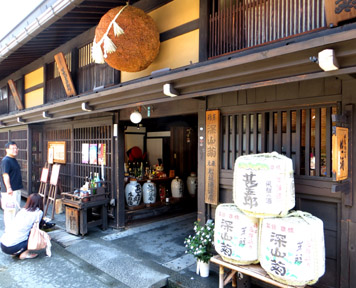
Takayama's San-Machi neighborhood is full of beauty at every corner

Takayama’s San-Machi neighborhood is full of beauty at every corner

Takayama is a small jewel of a city located to the north of Kyoto, and makes a refreshing two day stop. It’s unrushed, and a terrific walking town. To get here, you’ll probably take the train from Nagoya. If you do, get a window seat, as the scenery around the Hida river is at times spectacular. Here are WoWasis’ Top 6 picks for Takayama:

1)      The Takayama Showa Museum is not only one of the best things in Takayama, in our opinion here at WoWasis, it’s most of the most remarkable museums in the world. Showa refers to the period of Japanese history (1926-1987) following the Taisho era (1912-1925), and preceding the Heisei era (1988-today).   The museum showcases consumer technology of the era, and is divided up into twenty period rooms

2)      The hillside and lake-situated Hida Folk Village historical park in the city of Takayama, Japan, isn’t to be missed, and is worth a visit if you’re anywhere close to Takayama. Opened in 1971, the site consists of more than thirty buildings from the Hida area, moved here to preserve them from destruction. Architectural styles include Gassho-style thatched , and shingle-roofs. There are a number of displays of traditional Hida crafts in several of the houses, including our favorite, the wood-carrying sleds found in Hozumi’s house.  Also on the site are artisans working on traditional crafts such as wood carving and lacquerware.

Old shops are everywhere in San-Machi, Takayama

Old shops are everywhere in San-Machi, Takayama

3)      No visit to Takayama, Japan, would be complete without a visit to the Takayama Matsuri Yatai Kaikan Float Exhibition Hall. The floats are massive wooden two or three-wheeled structures, brought out twice a year for the Takayama Matsuri (festival). Four of these floats are always on a rotating visit to the museum, where you can view them from a distance of several meters, behind glass.

4)      Puppet- making has been a tradition in Japan for centuries, but we here at WoWasis admit that we were unprepared for the technical wizardry inherent in Karakuri puppets, the centerpieces of Takayama’s Karakuri Museum. Every 20 minutes or so, a puppet show is begun at the museum. Several puppets perform, as an aerialist, a walker on piers, and as a tea server, just to name three.

5)      Takayama Jinya is a large old government office that was a branch office of the Edo government from 1692 to1868, and is the only existing building of its kind in Japan today. Here are greeting halls, and garden, a conference room, and yes, an interrogation room with some nasty torture devices, including triangular sticks, used by Japanese police as late as the 20th century.
Takayama Jinya
1-5 Hackiken-machi, Takayama
Tel (0577) 32-0643
Open 8:45-5:00

Banner_Asia006)      Walk through the old Sanmachi-Suji neighborhood. There are three main streets full of old shops and buildings, quite scenic.  They are Ichi-no-machi, Ni-no-machi, and San-no-machi. There are two historical houses you can visit within the neighborhood, the Kusakabe House, which also houses a collection of folk arts, and the Yoshijima House, with its impressive red pine timbers. With the exception of the Hida Folk Village, each venue on this page is with a ten-minute walk of one-another.

Japan’s bullet train-air fare wars a bad portent to California’s high speed rail success?

Written By: herbrunbridge - Jul• 16•13

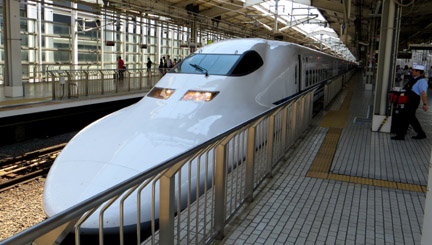
Shinkansen1cAlthough California voters recently approved a high speed rail system from San Francisco to Los Angeles, it appears to be slowly unhinging as a result of mounting labor costs as well as the inability to predict how many people will actually use the system. Japan, who produced the first national bullet train system (Shinkansen) is today facing a competitive situation that may be a precursor to similar controversies in California, if that rail system is ever built. Low cost airlines in Japan are eating away at the bullet trains’ profits.


AsiaPromoBannerThree new low-cost airlines, Peach, JetStar Japan, and AirAsia Japan are all flying domestic routes that somewhat parallel those of the bullet trains. As a result, two of the companies offering high speed train service have dropped their prices by more than 30 percent. We here at WoWasis took the Shinjuku/Tokyo to Kyoto route recently, and paid 13,520 yen, or roughly $135 USD. Low cost air carriers are flying the Tokyo to Kyoto route for far less, although the rub is getting to the airport in Tokyo and taking the time to go through airport security. If one is close to a train station in Tokyo, there could be a significant time savings in reaching the destination, although Shinkansen would cost more.

Which brings us back to California. The original $50 billion cost estimate to build the California line was a pipedream. Labor costs have soared, lawsuits from property owners disputing the right-of-way are cropping up, and potential riders are questioning what the fare structure will be,  just to name several of the obstacles.

Unknown variables include the time it takes to get to an airport and go through security, as opposed to jumping on a train at a station. Every community’s answers to these questions will be different. Japan’s system was established in 1964, before low-cost air was dreamed of. The competitive situation that Shinkansen, the innovator in high speed intercity rail, is facing should be studied by Californians on both sides of the rail controversy. It wouldn’t hurt to work up some real numbers scenarios that might be critical in determining if such a rail system could ever pay for itself.

Thai Air Asia flies new low-cost route to Siem Reap-Ankor Wat, Cambodia

Written By: herbrunbridge - Jul• 16•13

AirAsia1b-300x176Bangkok Airways no longer has an exclusive air route flying from Bangkok to Siem Reap, Cambodia, gateway city to the historical Angkor Wat complex. With an agreement that took five years to forge, Thai Air Asia, beginning October 1, 2013, will now fly to Siem Reap, opening with a promotional fare that essentially amounts to roughly 1,000 baht (approximately $30 USD). After the promotional period, the fare is expected to stabilze at something like 3,000 baht ($100 USD). Bangkok Airways, never known as a low-cost airline, covered the route for approximately 14,000 baht round trip approx. $450 USD).
CambodiaWe here at WoWasis have always liked AirAsia, but there are the usual caveats. You must book online, and if you’re booking multiple flights to a given destination, you’d better buy their flight insurance. If you miss a leg because one of their planes is late, you lose out on airfare for your missed flight, even if it’s their fault. The insurance (last time we checked, it was $6 USD) is essential for multiple legs, but still a nuisance.

ThailandWe love Bangkok Airways as well, a very good full-service airline, but they’re expensive. The lower-cost Thai Air Asia (TAA) initiative will undoubtedly increase tourism numbers dramatically (last year Siem Reap had 1.5 million foreign visitors). With this new move, Cambodia is really gearing up for the tourist trade, and we fear that Angkor Wat, like so many other wonderful sites, will soon be inundated by visitors. We’d suggest visiting Angkor Wat sooner than later. Today, you can have much of the sprawling site to yourself, an opportunity you may not have again in the very near future.

WoWasis visits the beautiful Isui-en Garden in Nara, Japan

Written By: herbrunbridge - Jul• 15•13

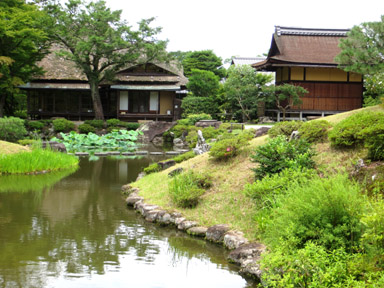
IsuienGardenNara1cOn your day walk through the old Japanese capital city of Nara, it’s easy to miss one of Japan’s most outstanding gardens. It’s a must-see, though, and it will take you less than an hour to complete the magnificent walking loop.
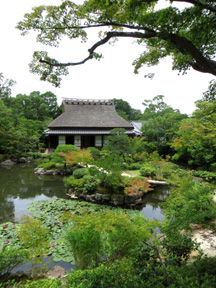
IsuienGardenNara2cLocated to the west of Todaiji Temple’s Nandaimon Gate, the Isui-en Garden sits astride the Yoshiki River. The garden’s beginnings are ancient, dating back to the 1670s. It was enlarged and developed by a number of others in the ensuing centuries, who completed the thatched-roof structures, paths, and waterways, which includes three ponds.
The garden isn’t the easiest place to find, but there are plenty of signs in English along the way. For starters, walk east on Nobori-Oji from the Kentetsu Nara train station. After passing the Kofuko-ji temple complex on your right, make a left on the very next street, and signs will direct you to Isui-en. Every local person knows the garden, and you will not get lost.

Isui-en Garden
Tel: 0742-25-0781
Open Wed-Sun, 9:30-4:00
www.isuien.or.jp
GPS: N34°41’07’’  E135°50’15’’

WoWasis visits the Yatai Kaikan Float Museum in Takayama, Japan

Written By: herbrunbridge - Jul• 15•13

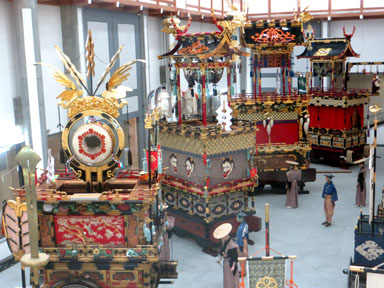
YataiKaikanMuseum1cNo visit to Takayama, Japan, would be complete without a visit to the Takayama Matsuri Yatai Kaikan Float Exhibition Hall. The floats are massive wooden two or three-wheeled structures, brought out twice a year for the Takayama Matsuri (festival). Four of these floats are always on a rotating visit to the museum, where you can view them from a distance of several meters, behind glass. They’re something to behold.
The floats are made of elaborate carved, gilded wood and detailed metalwork, and many date from the 17th century. Several of them have attached marionettes, and one of these, the Hotei Tai float, has 36 strings, requiring 8 puppet masters. They’re magnificent works of art, and this is as close as many visitors will ever get to any of them. Highly recommended by those of us here at WoWasis!

Banner_Asia00Yatai Kaikan Float Exhibition Hall
178 Sakura-Machi, Takayama City
Phone: +81-(0)577-32-5100
Open daily: 9:00-4:30

Fastest way from Narita Airport to Tokyo: Narita Express train N’EX and Suica card

Written By: herbrunbridge - Jul• 15•13

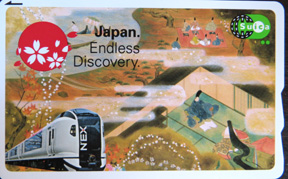
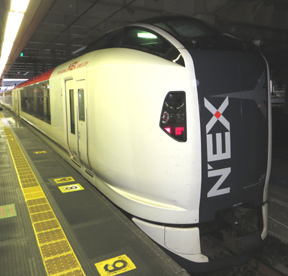
NEXNaritaExpress1cHere at WoWasis, we like to get out of airports and into the city as quickly and inexpensively as we can, and Narita Airport has a solution that’s pretty much seamless. You simply take Japan Rail (JR-East’s) fast N’EX train (Narita Express) from either terminal at the airport, and you’ll get off at either the Shibuya, Shinjuku, or Tokyo station in the city. As a foreign visitor, you’re also eligible to get a package deal for a N’EX ticket and a Suica card, an IC card that you can use for Tokyo subways, most trains, and also trains and subways throughout Kansai (central Honshu island, which includes Kyoto). You can even use it to buy food at some shops, mostly at railway stations.

SuicaCard1cWe just loved the Suica card, and used it daily. It solved the mess of having to buy a subway or train ticket every time. The Suica card comes pre-loaded with 2,000 yen. When you run out, you put more money into it at a top-off machine near a subway or train gate. Suica always lets you on the train or metro. When your card doesn’t have full fare, the gate won’t let you exit, and friendly gate attendants will walk you through the charge-up procedure the first time. All machine instructions are in English as well as Japanese, so it’s really the easiest way to take transportation in the Tokyo-Kyoto metro areas.

When you leave Japan, you can either keep your Suica card or cash it in. You paid a 500 yen deposit when you originally bought the card, which you’ll get returned along with any unpaid balance. There’s a small service fee deducted, too. As of this writing, a one-way N’EX train and Suica combo ticket costs $3,500 yen, a great value (round trip is 5,500 yen, an even better value). To buy the package, just go to any tourist info kiosk in the arrivals lounge at Narita, and they’ll tell you how to do it. The card comes with a nifty 20 page booklet in English that tells you how the card works, too.