The sharper edge to traveling in Asia

WoWasis wordsmith: Where does the word “punter” come from?

Written By: herbrunbridge - Sep• 14•10

Here at WoWasis, we’re fond of using the word punter to describe men that favor the company of female entertainment providers. Those women could be dancers, freelancers on the street, gals working in beer gardens, or massage parlors. They all share one thing in common, their jobs entail meeting men for temporary or permanent financial gain.

We first saw the word used in the newspaper columns of Bernard Trink, whose ‘Nite Owl’ column last graced the pages of the Bangkok Post several years ago. Trink, however, had been writing newspaper columns since 1965, where his column debuted in the newspaper Bangkok World. Some veteran punters today, however, don’t use the word, or even know what it means. That sent us scrambling to the venerable OED, the Oxford English Dictionary, which not only lists definitions, but indicates where the word was first used in print, as far as the OED can determine.

The OED informs us that the word punter has 5 meanings, included one who bets at racetracks, and one who kicks footballs. Definition #5 is the one that concerns us:  “A customer or client; a member of an audience or spectator; specifically, the client of a prostitute.” The OED cites its first use in the Sunday Times,  March 15, 1960:  “I always make the punter wear a rubber.”

The word is used by farang all over Thailand, and we’ve used it ourselves in adjective form, particularly when describing the “punterly” clothing habits of some foreigners, the best example of which was an overweight foreigner wearing a tank top, shorts, Playboy bunny socks, and sandals, that we once saw walking down Sukhumvit.  The word is a valuable one, but we have a feeling that it was used prior to 1970. Are any of our readers aware of its use in this sense, in print, prior to then?
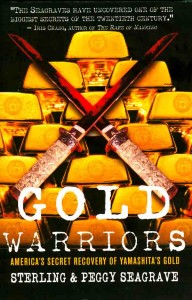
WoWasis book review: ‘Gold Warriors’ by Sterling & Peggy Seagrave

Written By: herbrunbridge - Sep• 12•10

Sterling and Peggy Seagrave continue to amaze your WoWasis review staff. We’re veteran SE Asia travelers, and like many travelers revisiting the region, have more and more questions about the political and cultural factors that drive decisions and events in these countries. In the past couple of years, we’ve been hearing anecdotal stories from associates about a large hoard of gold stockpiled in SE Asia, which drove us to the books written by the Seagraves. Gold Warriors (2005 ISBN 1-85984-542-8) wraps up much of the puzzle, in an exhaustively researched and documented book that includes links to CDs that are publicly available and include support documentation. 

Gold Warriors is a follow-on to two of the Seagraves’ previous books, The Yamato Dynasty and The Marcos Dynasty, which make for informative background reading as well. Their lives were threatened as they researched Gold Warriors, and they took a hiatus from public view, and retreated to a secure environment to finish the book. 

The book tells a story that begins with Japan, facilitated by its Kempei Tai intelligence network, wantonly looting Asian countries of gold and valuables in the years prior and during WWII and hoarding it in secret underground facilities in the Philippines. In many cases, POWs were forced to dig out the caverns, and were intentionally buried alive to keep the secret secret. As the Pacific war came to a close, a number of factions were involved in unearthing it and clandestinely storing it in various places. Among the players were Gen. Douglas MacArthur, the Japanese Yakuza, the CIA, the KMT (Chiang Kai-shek’s Kuomintang) and international money traders, including Swiss banks. 

The ultimate story involves the politics of international gold reserves, the U.S. presidency, and the Federal Reserve System. This fascinating book has gone through two iterations, and the Seagraves continue to research their story as new information develops. A number of important threads were uncovered by them and their research team as various clandestine operatives decided to tell their stories as they advanced to old-age. As skeptics, the authors vetted these stories by meticulous cross-checking of known facts, other stories, and rumors. 

The finished product is one of the most fascinating books on international politics as it relates to Asia that we’ve encountered, with a bibliography and endnotes that still leave plenty more for the reader to discover on his or her own. Buy it now at the WoWasis estore.

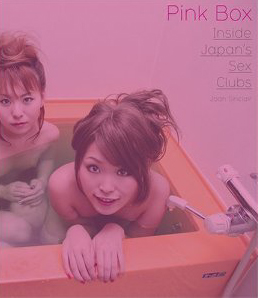
WoWasis book review: Joan Sinclair’s ‘Pink Box: Inside Japan’s Sex Clubs’

Written By: herbrunbridge - Sep• 11•10

What struck us here at WoWasis about Joan Sinclair’s photo-essay book weren’t solely the photographs, but the glossary, referencing 177 terms used in Japan to describe the world of fuzoku, or commercial sex. That’s how we discovered mantaku, female anatomy ink prints, transferred from the lady’s posterior to paper, and sold to the customer as a souvenir. And Sinclair’s photos essentially become an illustrated glossary, giving the reader a sense of place in a world that relatively few Westerners will encounter (the signs are nearly all in Japanese, a sure indicator that Westerners won’t necessarily be welcomed in these establishments. 

Above all, Pink Box: Inside Japan’s Sex Clubs (2006, ISBN 13: 978-0-8109-9259-7) is a joyous romp through Japan’s commercial sex industry. Her photos are often garishly lit, purposely designed to copy the ambient light in these establishments, and contain images of customers, entertainment providers, and signs and “menus.” The menus themselves are fascinating in their depiction of an often complex set of options available to customers, including what the customers want the ladies to say — or not say — to them during the act. She reports on nearly fifteen different types of establishments, from mocked-up bullet train “grope” venues to soapy massage establishment. 

Sinclair focuses on the fun aspect of this world, and is non-judgmental, from a Western perspective: “All I ask is that viewers not assume that this profession is inherently degrading. It’s more complicated than that. These women are not powerless, they are not on drugs. They have made conscious choices; they have their own dignity.” This is underscored by James Farrer’s excellent opening essay, providing a history of Japan’s commercial sex industry, and its emphasis on “Play.” 

The West has always had an uncomfortable relationship with easily available commercial sex in its own hemisphere, and Western political, NGO, and religious organizations are rampant in trying to enforce their “moral colonialism” on the East. Sinclair, who lived in Japan herself, has given Westerners a unique introduction to this fascinating world by painstakingly making friends with people who initially were probably concerned that her work may result in another Western “hit piece.” Her social and political savvy resulted in this book, fascinating for readers, and important for researchers interesting in further investigations into this hidden realm. Buy it now at the WoWasis estore, powered by Amazon.

Judge puts the kibosh on more NGO pedophile follies in Cambodia

Written By: herbrunbridge - Sep• 09•10

Here at WoWasis, we earlier this year reported on alleged scams run by NGOs (non-governmental organizations) in Southeast Asia that have resulted in false allegations of pedophilia on the part of innocent Westerners. In August of this year, a Cambodian judge ruled in favor of a man he considered unjustly accused. 

According to the Phnom Penh Post, Presiding judge Plang Samnang found French national Jean Marie Beranger innocent of charges that he molested a teenage boy on the street in the city of Kampot, citing unreliable and conflicting testimony. Unfortunately, Beranger spent several months in a Cambodian prison before he was judged innocent.

False accusations of pedophilia in Asia have plagued western visitors for years, as documented in Steve Raymond’s 1995 book Poison River.

6 Tips to avoid being drugged & robbed Thai street women

Written By: herbrunbridge - Sep• 08•10

When drinking with a street lady, watch your assets, not hers

Judging by news stories and interviews with a number of individuals conducted by WoWasis researchers, the practice of Thai street ladies meeting a man on the street, accompanying him to his hotel room, drugging him, then robbing him while unconscious, is rampant.

In each case, the process is identical. While in the man’s room, the woman puts crushed sleeping pills into the man’s drink while he isn’t looking. Several sips later, he’s passed out for several hours. When he wakes up, all his cash and valuables are gone.

In a variation of this crime (see story link #2, below), the customer is actually drugged on the street at a sidewalk bar. In all cases, the danger is always present that the victim will fall, hit his head, and die. If this happens to you, your death will probably be ruled heart attack by the authorities.

Such cases are especially common in Bangkok and Pattaya. These stories aren’t printed in Bangkok’s The Nation and the Bangkok Post newspapers, as there are so many incidences of this crime that it’s no longer newsworthy. But take a look at the following articles from the Pattaya Daily News, all written during the past few weeks:

http://www.pattayadailynews.com/en/2010/07/27/two-jordanians-drugged-robbed-at-pattaya-hotel/

http://www.pattayadailynews.com/en/2010/08/04/danish-national-drugged-by-unscrupulous-working-girl/

http://www.pattayadailynews.com/en/2010/08/31/habitual-offender-implicated-in-american-drugging-robbery/

Here are 6 great tips that will help you to avoid this scam:

1) While drinking at street bars, keep an eye on the drink at all times. While drinking with a lady, if you look briefly away from your beer, keep your finger inserted in the bottle. Don’t let her taste your mixed drink, as she could palm a drug into your drink without your knowing it.

2) When possible, stay at a hotel that takes the woman’s ID card and enters the information in a logbook prior to her entering your room. Women practitioners of this crime will tend to avoid these hotels, as their information will be on record. Some of these hotels will call your room when the woman leaves the hotel, and will not return her ID until you answer the phone and indicate that all’s well. 

3) Stay at a hotel that offers safe deposit boxes, and use them. If never makes any sense to carry more than a few thousand baht with you, and leave the Rolex, along with the rest of your cash and valuables, in the box. In addition, Rolex-wearing men are often deliberately targeted.

4) Don’t wear expensive jewelry when you’re out at night. It makes you a target (see #3, above).

5) If you’re in your hotel room with a woman, keep your drink with you, in plain sight at all times. The most opportune time to dose your drink is when you’re in the bathroom, taking a leak.

6) If you use a laptop computer in your room, use a Kingston (cable) lock to secure your computer to a safe and durable spot. Virtually every hotel room has a durable spot, from an iron window grill to the wooden slat directly under the drawer of your desk. Thieves generally prefer snatch-and-grab loot, and probably won’t be carrying bolt cutters.

Even the savviest travelers get scammed occasionally, but ensuring that your valuables are safely locked away and watching your drink will minimize your losses.

The Good Manner: How do I find an apartment in Bangkok for a 3 month stay?

Written By: herbrunbridge - Sep• 08•10

The Good Manner: Advice on Thailand from WoWasis’ Pa Farang
This week’s dilemma: How do I find an apartment in Bangkok for a 3 month stay

Hello Pa Farang, 

We live in Australia and wish to base ourselves in Bangkok for our winter. How can we rent a one room apartment, close to rail/skytrain transport. How much should we budget for the expenses. Thank you. 

–  Thomas 

Dear Thomas, 

A lot of this depends on your budget and requirements. By the latter, we’d mean that if you want to be close to an adult entertainment district, you’d want to be close to Sukhumvit line BTS Skytrain stations Nana, Asoke, or Perhaps Phrom Phong. Although you can get a nice one bedroom apartment near Skytrain for 20-25k baht, most would be 1 year plus leases and you would have to do the walking around yourself. 

In your case, if just for 3 months then serviced apartment is way to go. Check out this list: http://www.bangkok.com/hotels/serviced-apartments.htm  Prices are listed. 

In terms of overall budget, you can eat for as little as $10 per day USD in street stalls. You can also spend $100 per person on a pricy Western dinner at a fine restaurant. We’d recommend buying a cheap mobile phone for $25 USD, and load up minutes by buying phone cards at 7-11. Pa Farang goes to the Telewiz shop at the Emporium, where he buys bulk minutes which end up costing me 7 cents USD per minute for calls to the US. I spend about $5 USD per day at my corner WiFi shop for internet service. These shops are ubiquitous. My overall telecom costs are roughly $50 USD/week, but I use the internet a lot and call overseas frequently. Beers at most bars cost $3 USD. 

A couple of caveats. Our pal Neal, who himself looked recently, found real estate agents  not to be  a good resource here in Bangkok, and ended up getting house by himself, just by walking around. In your situation, Thomas, you’ll want to do it over the internet. For those of you looking for a one year rental, or perhaps (gasp) to buy a place, read the excellent WoWasis post called Building scams in Thailand: Why is my concrete structure falling apart? 

All in all, Bangkok’s pretty inexpensive if you budget correctly, and I hope the above figures have helped. Best of success, Thomas, and enjoy your stay in Bangkok! 

Mariyat-dee, 

– Pa Farang 

Read Pa Farang’s other columns for more advice on relationships and cultural matters  in Southeast Asia

Bachelor in Bangkok: Khun Lee on the difficulty of moving your Thai girlfriend out of your home

Written By: herbrunbridge - Sep• 04•10

No one wants to be James Bond! I have lived in Bangkok quite some time now, and the biggest shock in my expat life so far is that nearly every guy who moves to Paradise tires very quickly of the single life and moves a lass in to his living quarters and lives the same domestic existence that he had in his home country. Maybe I grew up watching too many James Bond movies? I always thought that a dream life for any man would be to have thousands of gorgeous ladies to choose from, maintain his freedom and independence and therefore live the life of an international playboy. Geez was I wrong!  I am most certainly in the minority here as a man who enjoys his freedom and all the luxuries that come with being a single guy living in Paradise.  

What is even more shocking is that these guys tend to fall into the same destructive patterns of behavior that they had in their relationships in the West.  Such as allowing the gal to control the relationship, thinking that they have to spend a lot of money on her to keep her happy, and losing track of all their friends because they chose a jealous and possessive mate.  The number of guys here who choose a controlling gal and then give up all of their independence in an attempt to appease her is absolutely shocking.  Thai gals are taught to be gentle, demure and to take care of their man.  However, if a guy acts like a weakling who needs his Mother to tell him when to use the toilet, any gal will seize control of the relationship and it is all downhill from there.  It seems no one wants to be James Bond! 

My advice to those guys who are contemplating moving to Paradise is to ask yourself if you want to live the life of a single man, or do you really need to be in a committed relationship?  If you just want to spend all of your time with one gal, it certainly is not necessary to move out of your home country in order to do this!  Stay where you are, make that easy money that comes with working in a rich country, and take your holidays here! 

Another very common situation is the man who falls for one of the first ladies he meets, moves her in, and then after a period of time starts to long for the single life again.  Unfortunately, I have several friends who fall into this category at the moment.  It can be EXTREMELY difficult to move one out once they have dug their heels in and feel like they are living on easy street.  Let’s face it, most western guys make good money and the gals often are living a luxurious life in a large, well located apartment in the central business district along with having a maid and eating most meals out in fine restaurants.  Most gals would rather die than give up such an aristocratic life. I have a friend right now trying to move his gal out of the apartment, and she is threatening to have her 5 brothers come to town and take care of him if he dares bring the subject up again. I know this gal and believe me when I say that this is no idle threat. So please decide on what kind of life you want to lead before making that big move.  There is an ancient Chinese saying “to know others is wisdom, to know yourself is enlightenment.” 

I did meet a nice young man the other day that is way too wise for his tender age. A friend has a nephew who married with a Thai gal. They subsequently moved to the USA, and have recently returned for an extended vacation in Thailand. She decided to go upcountry to visit her relatives, but he chose to stay and spend time with his uncle. When I asked him why he didn’t accompany his wife, his response was “she comes from a VERY poor family and I know that if I had gone with her there is an excellent chance most of her family members would view me as an ATM machine and ask me to give them money.” I have nothing but admiration for this fine young man! How did you get so smart? Perhaps the uncle has taught him the ropes! 

I know an entertainment provider who happens to be a deaf mute.  She is also incredibly popular with the customers! Errrr…I wonder what that says about our taste in women?  Do we think gals talk too much? Reminds me of a quote from a friend “my perfect gal would be a young large-breasted stunner who is able to speak but chooses not to.”

Have you ever noticed that in Bangkok the regular gals dress slutty and the entertainment providers dress just like normal teenagers in the West?  So many times I walk around the upscale shopping centers and the normal gals are wearing extremely short, sexy skirts that leave nothing to the imagination, and then later that same evening I go to Nana Plaza and most of the entertainment providers come to work wearing jeans and a t-shirt.  

Want to know just how rich we are in comparison to the average Thai? Pepsi has been having a promotion which is called “win enough money to retire for the rest of your life.” The grand prize is considered to be a lifetime’s earning for a typical Thai. It is 1 million baht, or about $30,000 dollars U.S.  Now before you laugh out loud, divide that sum by an average farmers working life of 25 years and you will get 40,000 baht a year.  Believe it or not, that is about right!  Oh how lucky we are!!

Read Khun Lee’s other WoWasis columns for more advice on navigating the adult dating scene through the backstreets of Bangkok

WoWasis book review: ‘The Yamato Dynasty’ by Sterling & Peggy Seagrave

Written By: herbrunbridge - Sep• 03•10

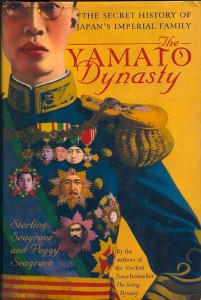
Here at WoWasis, we’ve never read a Sterling Seagrave book that we could easily put down. We were glued to our chair, reading The Yamato Dynasty: the Secret History of Japan’s Imperial Family (1999, ISBN 0-7679-0496-6) by Seagrave and his wife Peggy Seagrave, when our back gave out, and we were now really glued to the chair, and it took us a half-hour to get extricated from that situation. That’s what a great book will do to you, and all of the Seagraves’ books, from The Marcos Dynasty on down, have been in the same category: fascinating, impressively written and researched reads for people wishing to more about the historical facts behind the great underbelly of Asia. 

As the Seagraves so forcefully reveal in the book, that bad back of ours was nothing compared to getting murdered by the backroom power structure behind the several generations of Japanese Yamato rulers, from Meiji, to Taisho, to Hirohito. As the Seagraves say, “Japan is more than a one-party dictatorship. It is a one-class dictatorship by a financial elite evolved from the clan lords of previous centuries. Their rule by manipulation, intimidation and corruption is as complete as that of the Stalinists…” Here,  the reader will thrill to the lèse-majesté laws that stifle the press and anyone voicing a public opinion: a violation is punishable by death. The royal family is shown to have a relationship with the underground Yakuza, enabling them to control Manchuria on the way to the massacre at Nanking, where 20,000 women and little girls were raped, and 20,000 military-age men were gasolined, used for live bayonet practice, buried alive, you name it, and none of it was pretty. 

In more recent memory, rigged public works contracts (p. 274) and the Tsutsumi scam over the 1988 Nagano Olympics (pp. 281-283) seem to have some degree of intersection with various royal family members or hangers-on. Think you know Japan? If you know all the back-alley secrets the Seagraves have revealed in this book, we’ll bet you do. Buy it now at the WoWasis estore, powered by Amazon.

WoWasis book review: Iris Chang’s ‘The Rape of Nanking’

Written By: herbrunbridge - Sep• 03•10

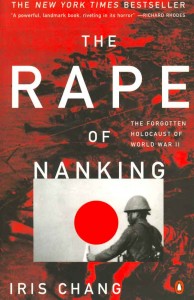
When we at WoWasis attended Iris Chang’s funeral in 2004, it became apparent to us, after the heartfelt tributes of her friends and family, that she was Japan’s final Nanking victim. For a number of years, Chang lived and breathed the Nanking massacre as she was writing her book. After it was published, the ghosts, that had captivated and finally captured her, remained. She sought still more ghosts prior to her death by her own hand, as she was engaged in writing a book about the Bataan Death March at the time.

Chang’s The Rape of Nanking: the Forgotten Holocaust of World War II (1997, ISBN 02-7744-7) is a tough story, essential reading for individuals whose interests span WWII, Asia, and Chinese-Japanese relations. For atrocity buffs, it’s a masterpiece, on par with the best writings on the Khmer Rouge and the Holocaust.  Beacuse of Chang, the story is now well-known, how the Japanese army slaughtered 300,000 Chinese within a period of a few months. What pushes Chang’s book beyond the realm of “accident watching” is it’s meticulous research, detailing the events leading up to the event, those who attempted to prevent it, the story of John Rabe, who prevented thousands of more murders, and efforts successful and unsuccessful to bring the perpetrators to justice. The photographs in the book are harrowing and grisly, and it’s difficult to believe that these images, burned permanently into Iris Chang’s mind, didn’t play a major role in her death. Buy it now at the WoWasis estore, powered by Amazon.

WoWasis book review: Boye De Mente’s ‘Some Prefer Geisha’

Written By: herbrunbridge - Aug• 29•10

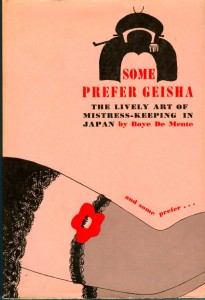
This wonderful book, written by Boye De Mente as a tribute to the geisha was printed in Japan, but occasionally can be found in used bookstores. The full title is Some Prefer Geisha: the Lively Art of Mistress-Keeping in Japan (1966) and it boasts some lively brush and ink illustrations by Tadahito Nadamoto interspersed throughout the book. 

The fly-leaf describes the book best: “Some prefer geisha. Some prefer call girls, cabaret hostesses, coffee-shop waitresses, and other modern types. Some even prefer their own wives upon occasion. But all agree that mistress-keeping in Japan is here to stay — whether the girls wear kimono, or black lace or, in a communal bath, nothing at all.” And De Mente takes a no-holds barred look at it all, with terrific stories, including WWII GIs who used an ambulance with a female “patient” to charge other GIs $5 for a half-hour of entertainment, to a number of women that take special pleasure in seducing “good” husbands with a loving wife at home. 

In 167 amazing pages, De Mente takes a grand tour through the history of Japanese mistresses, to various types, hostess-hunting, notes on seduction, and how much money should be paid by customers wishing to formally end a relationship with a mistress. The book is a tour de force of the water trades (mizu shobai), and an important research resource for any scholar investigating this aspect of Japanese culture.