The sharper edge to traveling in Asia

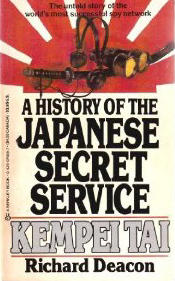
WoWasis book review: ‘Kempei Tai: Japanese Secret Service’ by Richard Deacon

Written By: herbrunbridge - Dec• 24•11

Veteran espionage historian Richard Deacon really seems to love the Kempei Tai, Japan’s pre-Cold War military police-based intelligence agency. His Kempei Tai: A History of the Japanese Secret Service (1983, ISBN 0-8253-0131-9) is replete with personal histories of its founders and leaders, stories of intrigue, and arcane espionage factoids. The author emphasizes intelligence-gathering as practically a Japanese mania, ending the book with a chapter on how contemporary Japanese businesses utilize intelligence to gain competitive advantage. As Deacon avers, spycraft in Japan was, and is, a noble, patriotic calling. The book describes the Black Dragon society, espionage during the Russo-Japanese war, China intrigue, and activities relating to Pearl Harbor. But perhaps the most interesting chapters deal with Japanese Naval espionage on the west coast of the U.S. prior to WWII, and the efforts to counter it. 

 What the book lacks is any criticism of the Kempei Tai’s involvement in killing civilians, P.O.W.s, and even its own naval personnel, themes that are addressed in a number of other books, Sterling and Patty Seagraves’ Gold Warriors, among them. The Seagraves’ book describes Japan wantonly looting Asian countries of gold and valuables in the years prior and during WWII and hoarding it in secret underground facilities in the Philippines. In many cases, POWs were forced to dig out the caverns, and were intentionally buried alive to keep the secret secret. The Kempei Tai had a huge hand in the story, and Deacon either chose to ignore it, or chose not to report it (in fairness, the Seagraves book was meticulously researched, and was published ten years after Deacon’s). 

With that caveat, we found Deacon’s book to be a valuable resource on details of the Kempei Tai’s origin, founders, and leaders, and the chapters on U.S. west coast spying prior to WWII a necessary backdrop to anyone interested in the internment of American citizens of Japanese descent during WWII. Buy it now at the WoWasis eStore.
PC Air’s ladyboy flight attendants now flying in Thailand

Written By: herbrunbridge - Dec• 24•11

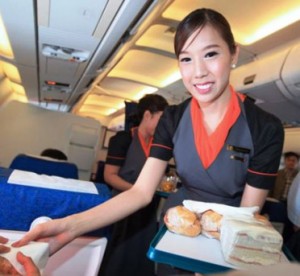
Inflight service from Phuntakarn Sringern (courtesy MailOnline)

As WoWasis reported earlier this year, Bangkok’s PC Air began to interview ladyboys as flight attendants. Now, they’re flying! This month, as reported by MailOnline, PC Air President Peter Chan has hired four ladyboys as flight attendants, Chayathisa Nakmai, Dissanai Chitpraphachin, Nathatai Sukkaset and Phuntakarn Sringern, after receiving more than 100 applications. The airline noted that “the qualifications for the ladyboy flight attendants were the same as for female flight attendants, with the additional provisos that they be like women in how they walk and talk, and have a feminine voice and the right attitude.” These four made their inaugural flight from Bangkok to Surat Thani. 

PC Air is in the process of making up its formal schedule, and currently offers package tours to China, Japan, Korea, and Singapore. Its motto, printed on the fuselage of its aircraft, is I believe it’s “My Way.” Ladyboys are ubiquitous in Thailand, working in jobs from bank executives to make-up counters, and we applaud PC Air for taking a great step in the area of gender equality and service.

Also see the WoWasis post on Cebu Pacidic Airlines’ dancing flight attendants in the Philippines, with links to videos.

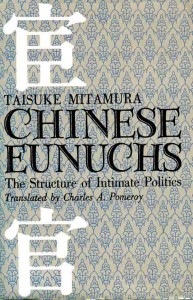
WoWasis book review: ‘Chinese Eunuchs: The Structure of Intimate Politics’

Written By: herbrunbridge - Dec• 13•11

Although the last of the remaining Chinese court eunuchs died in the early 20th century, the world continues to be fascinated by them. Kyoto University scholar Taisuke Mitamura’s Chinese Eunuchs: The Structure of Intimate Politics (1963, 1970 English translation by Charles A. Pomeroy) is an informative, readable monograph on the history of the individuals and their impact on China. The book’s jacket flap tells it better than we can: 

In the world of China, through the long centuries almost to modern times, eunuchs either ruled or were the powers behind the throne for long periods of time. Dynasties were built upon and around eunuchs, and dynasties crashed because of eunuchs. The structure of intimate policies was so great that eunuchism often played a kingly role while the emperor fiddled in his harem, pondering such momentous decisions as to which of 122 wives or concubines to huddle with on a certain night… Prof. Mitamura pulls no punches, presenting the sordid and often macabre details of an amazing system which finally was cut off for good on November 5, 1924, when Hsuan T’ung Ti, the last emperor of the Ch’ing dynasty, was driven out of the Tsu Chin Palace where he had been allowed to live after the 1912 revolution. 

On that day a host of eunuchs, “crying pitifully in high-pitched, feminine voices,” left the palace forever, thus ending a system that had endured for over 2,000 years and through 25 dynasties. The author describes in sharp and cutting detail the various methods of castration, tells of the high valuation placed upon the pao, or “treasure” (the severed parts), for the eunuchs had to show their pao to be advanced in rank, or to produce a substitute, which was permissible. Another reason for preserving the pao was so that it could be buried with the eunuch after his death. In this case, too, it was permissible to use a substitute. The eunuchs hoped [o be restored to masculinity in the next world, for the Chinese had a great fear of deformity. Also, it was believed that Jun Wang, the king of the underworld, would turn those without their pao into female asses. 

A secret formula is revealed—for making a revolting concoction called Hung Pills. One ingredient was the “menstrual discharges of beautiful maidens 13 or 14 years old.” Another was powdered human waste. The pills were considered a powerful restorative capable of curing five kinds of fatigue, seven kinds of wounds, and general debility. 

This book, however, isn’t just about eunuchs. There’s a notable passage regarding the characteristics of jealous women: 

Scholars of the Ming dynasty were tireless in writing about the evils of jealous women, in the Wu Tsa Tsu, a collection of essays rich in anecdotes, the author, Hsieh Chao Chi, says: “Confucius says that women and men of small character are difficult to manage. As a rule, women possess such undesirable qualities as jealousy, stinginess, obduracy, sloth, inaptitude, foolishness, cruelty, short temper, suspicion, gullibility, attachment to trivia, displeasure, worship of heretical religions, and infatuation. Of these, jealousy is the worst.  

We at WoWasis found the book to be a remarkable treatise not only on eunuchs in general, but on the squabbles, courting practices, culture, and political strife of the Chinese dynasties. In here, there’s enough of murder, mayhem, and intrigue to keep historians, scholars, and general interest readers sitting at the edge of their seats, relieved that they weren’t there to participate in this perilous life and era. Buy it now on the WoWasis eStore.

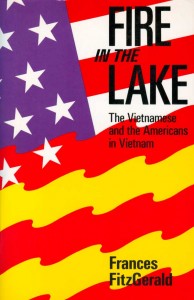
WoWasis book review: Frances FitzGerald’s ‘Fire in the Lake: The Vietnamese and the Americans in Vietnam’

Written By: herbrunbridge - Dec• 09•11

What would Frances FitzGerald say today? Her Pulitzer Prize/National Book Award/Bancroft Prize for History-winning book Fire in the Lake: The Vietnamese and the Americans in Vietnam (1972, ISBN 0-679-72394-3) was published in 1972. The U.S. still maintained a military presence there, and Nixon was still in power. Today’s visitors to Saigon/Ho Chi Minh City are hard-pressed to find any outward sign of communism among the mercantile establishments that define inner Saigon. 

Today, those reading this landmark book do so primarily to understand Vietnam prior to the ending of the American War. FitzGerald’s study is exhaustive, perhaps too much so, as she tends to belabor many of her main points along this 554 page highway. Her writing style is on the dry side, and this is no quick read. What makes this book compelling is her explanation of Vietnamese society in all its permutations: country vs. city, old vs. new, communist vs. traditional, north vs. south, and Buddhist vs. Catholic, to name a few. Corruption is at the heart of her description of South Vietnamese politics, accelerated by the vast sums of money imported into the country by the United States.  It defines a cookbook for the failure of a policy intended to save a country from a political philosophy disliked by a foreign power, in this case not a colonialist entity (Vietnam had nothing the U.S. wished to purloin or import). 

She predicts that Vietnam would unite under one political philosophy, although she wasn’t sure of its make-up, and one gets the feeling she might have been surprised by the maelstrom of the helicopter evacuations from atop the U.S. embassy. If the Western reader wishes to attempt to understand Vietnam, this book remains important, although it’s over 40 years old. Vietnam today is a fascinating mixture of avarice, traditional culture, mercantilism, corruption, and yes, communism (try to start a business, you’ll see what we mean). It’s unique, wonderful, and frustrating, and FitzGerald’s book provides a still-relevant explanation of what makes the country tick. Buy this book now at the WoWasis eStore.

A 3-way for my wife and I in Bangkok?

Written By: herbrunbridge - Nov• 21•11

The Good Manner: Advice on Thailand from WoWasis’ Pa Farang
Today’s question: a 3-way for my wife and I in Bangkok?

Dear Pa Farang, 

We will be traveling to Bangkok at the end of January. We are married (she is Chinese; I  am white) and looking for adult fun for both of us. She is bi-sexual I am straight. Can you make any suggestion?  –  Mike

Dear Mike,

This won’t be difficult to find in Bangkok, as many bar women are bisexual, and usually have a girlfriend who could engage as well.

In terms of concrete suggestions, there are two spots in particular that might be of value, as they are not bars in the traditional sense, although they do serve alcohol. . The Eden Club is at Sukhumvit Soi 7/1, (between Soi 7 and Soi 9, near Nana Skytrain Station, Exit 1), adjacent to the World Inn Hotel. Here, you select a woman of your choice, and she selects a girlfriend (you must take two). Tell the manager what you have in mind. They even have a menu of services offered. Reviews recently have been varied, but it may be worth a visit.

Another option is a soapy massage parlor. Visit the WoWasis soapy massage page for more details on these venues, as well as addresses. Many veteran observers suggest that Nataree has the best looking hostesses, and we’d suggest that you first tell the manager what you’re looking for, and he or she will make a suggestion.

These are two options that have value. Have a great time in Bangkok, Mike!

Marayat Dee,

– Pa Farang

Read Pa Farang’s other columns for more advice on relationships in Southeast Asia

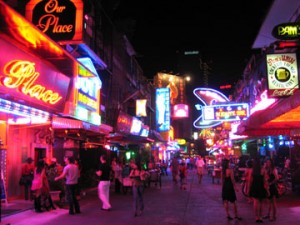
Deadly bar scams on Bangkok’s Soi Cowboy?

Written By: herbrunbridge - Nov• 10•11

For several years now, we’ve been hearing allegations that patrons have been unfairly overcharged at several bars on Bangkok’s Soi Cowboy. When they’ve challenged the bill, they’ve told stories about being physically threatened.  The allegations have been made in particular regarding  a number of bars owned by an Iranian who is known locally as “The Arab.” These allegations have been out on the street so long that savvy locals are avoiding these bars, which include, in alphabetical order,  Déjà Vu,  Kiss, Midnite, Rawhide, Rio, Sahara, and Spice Girls.

A letter appeared recently in Stickman’s column on Bangkok nightlife, interesting enough that we are printing it here verbatim:

“I know better than to go into an Arab-owned bar in Soi Cowboy.  I’ve been (grossly) overcharged two times and I have vowed never to set foot in one of his bars again.  Against my better judgment, I went into Midnite last week with an out-of-town friend who got dragged into Midnite by one of its seductive hostesses.  I warned my friend about going into this bar but he insisted on going in because of the cutie that was wrapped around his arm.  Plus, he was buying so he was going to be on the hook, not me.  I’ve been living in Thailand for 3 years so I know the drill.  What I did was instruct my friend to pay cash for every round of drinks as they came in.  That is exactly what we did.  Every round was 720 baht (an outrageous 180 baht per San Miguel Light and 180 baht for each lady drink) and we paid cash for every round.  We had EXACTLY four rounds and paid 720 baht X 4 = 2,880 baht.  By the way, we had to fight off another 6 – 8 dancers and servers that came up and pestered us for drinks.  About half of them spit out a venomous keeneow insult at me when I said “No.”  We got up to leave and our server came up and presented us with a bin stuffed with chits that totaled 5,280 baht.  Not only had we paid for all our drinks already, they essentially doubled the total with phony chits.  I was floored by the aggressive, blatant attempt to overcharge us.  I calmly told the grouchy server that we had already paid cash for every round and owed nothing.  She huffed off and returned with the sour-faced mamasan who insisted we pay 5,280 more baht.  My friend tried to explain to the mamasan that we had already paid but she wasn’t going to hear any of it.  During the conversation, 5 Thai bouncers appeared and surrounded us.  These bouncers looked very eager to beat up some farangs.  My friend and I are pretty big guys and while we may have been able to fight our way out of Midnite, getting into a fight with a Thai is a no win situation, especially if you live here.  The result is that I was able to negotiate the bill down to 3,000 baht.  A small, small victory.  Moral of the story?  Don’t EVER set foot in an Arab-owned bar again.”

If such allegations are indeed true, then it hearkens back to the classic scams run in upstairs bars on Patpong Road, which local expats stopped going to years ago. And predictably, one day some innocent patron protesting his unfair bill will get beat up. Bill padding scams are legendary in Angeles City bars in the Philippines, but are now, from the reports we’re hearing, becoming more common on Soi Cowboy in Bangkok.

So if it’s your first time on Soi Cowboy, we’d suggest you walk into a friendly non-girlie bar, such as the Old Dutch, engage an expat in conversation, and ask which bars are safe. And if you do visit any of the bars mentioned in paragraph one, caveat emptor.

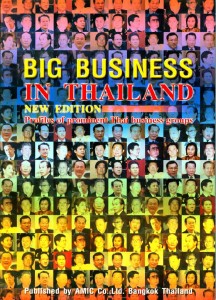
WoWasis book review: ‘Big Business in Thailand’… unveiling the mystery of Thailand’s business families

Written By: herbrunbridge - Nov• 08•11

So you’re a Westerner who wants to open a large business in Thailand. You don’t really know the lay of the land, but you find that things keep getting in the way. Could be bureaucratic red tape, “tea money,” or even worse, you’re stalled and you don’t know why. Could you have run afoul of a large family? In most Western countries, something like that wouldn’t matter. But in Thailand, it means everything. And as a non-Thai, you won’t even know who most of these families are, what they own and control, and who comprises them. 

Unlike most Western countries, in which corporations have boards of directors that can hire and fire upper management, Thai corporations are run by families. Generations of families. Westerners reading Thai newspapers see these family names all the time, but can’t tie it all together. But Vichai Suwanban, in his Big Business in Thailand: Profiles of Prominent Thai Business Groups (New Edition, 2003, ISBN 974-91973-5-6) go a long way to explaining in detail who these families are, and what they own and control. 

And control is everything. Here, Vichai describes the histories of 30 of the most prominent business families in Thailand, provides family lineages, successions, and strategic marriages. He tells what they own, describes business squabbles, and uncovers so much important material that we’re surprised it even got published. Which is perhaps the reason it’s currently out of distribution (look around in Bangkok’s used bookstores — you may find one). 

In the opinion of us here at WoWasis, this is one of the most important books on Thai business ever written. Read between the lines, and fascinating stories are unveiled. We’ll end our review by listing the families described in the book, along with several of the well-known companies they own outright, or in which they hold a 50% or better stake. 

Asavabhokin
Assakul
Bencharongkul
Bhirombhakdi (Boonrawd Brewery — Singha Beer)
Bulsuk
Chaiyawan
Chiaravanont (TAC –Telecom Asia Corp.; C.P. Seven Eleven Stores)
Chirathivat (Central Pattana, Central Retail, Central Plaza, Robinson’s, World TradeCentre, Silom Galleria))
Chokwatana
Dannernchanvanich
Darakanonda
Karnasut (Bangkok Post, Oriental Hotel)
Lamsam (Loxley)
Malinonda
Osathanukroh (M-150 energy drink)
Phornprapha
Poolwaralak
Ratanarak
Sabsakhon
Shinawatra (Shinawatra Silk, Shin Communications, AIS telecom, Politics)
Sirivadhanabhakdi (Chang Beer, Mekong Whisky, Beer Lao, Panthip Plaza)
Sophonpanich  (Bangkok Bank)
Srivikorn (Gaysorn Plaza shopping center)
Taepaisitpongse
Umpush (Siam Paragon, The Mall Company, The Emporium)
Wanglee
Wattanavekin (Amarin Plaza, Ploenchit Centre, Erawan Hotel)
Wiriyaprapaikit
Wongkusolkit (Amarin Plaza, Erawan Hotel)
Yoowithya (Red Bull energy drink)

WoWasis book review: Skip Thomsen’s ‘Affordable Paradise: The Secrets of an Affordable Life in Hawaii’

Written By: herbrunbridge - Nov• 06•11

Most of us here at WoWasis either live or have dreamed of living in the tropics. Many countries present problem with that (notably Thailand) unless you’re a citizen of that nation. That’s where Hawai’i comes in. Especially on the Big Island of Hawai’i, and most especially in the city of Hilo, where property is still affordable, and city amenities (a university, art deco-era architecture, etc.) are nearby. And if city life is not for you, country places on the island are affordable, too. In either case, flying to Southeast Asia from Hawai’i is a lot shorter than it is from your home country, if you’re a Westerner. And that’s where Skip Thomsen’s book comes in.

Skip’s Affordable Paradise: The Secrets of an Affordable Life in Hawaii(4th edition, 2011, ISBN 978-0971918504) covers just about everything you’ll need to know to get started.  Thomsen knows his stuff, about real estate, anti-corrosion sprays, shipping, cultural issues, and lots more.  He doesn’t pull punches about crime, and paints a very realistic picture about a paradise that isn’t necessarily a perfect fit for all, but will be for most of us.

Here are some of the issues this book addresses:

Can I afford to buy a house?
What is the REAL cost of living?
How about career opportunities?
Can I bring my pets?
What about the schools? Are there good charter schools?
Am I to believe the blog and forum stories I read?
How do I manage the big move across the ocean?
Will I be able to find work?
What is the medical and doctor situation like?
What about being accepted in the Island culture?
Is the weather really always perfect?
And are there any issues I need to know about that might make me NOT want to live in Hawaii?

One of the WoWasis team has a house in Hilo, and this book covers just about everything, and in keeping with the stated premise, it’s under $15. We’d call this book indispensable for anyone contemplating living on the Big Island of Hawai’i, or anywhere else in the tropics, for that matter. If you want to live in the tropics, owning a place where you actually own your property has some real advantages. Buy the book now at the WoWasis eStore.

Bachelor in Bangkok: Khun Lee on the class structure of Thai women

Written By: herbrunbridge - Oct• 29•11

One mistake many foreigners make when dealing with the gals in Thailand is not recognizing what class the lass comes from.  Many western countries do not have a definite class structure so it is understandable that guys often make this simple but fatal error. Thailand, as most of you know already, has a very specific class structure which determines nearly everything about the individual from the time of their birth right through to their final demise.  It is extremely difficult (but not impossible) for a Thai person to break away from their inherited class level, and most just accept it as fate and live their lives accordingly.  Many foreign men additionally make the mistake of thinking that since they don’t care about status and class, it therefore doesn’t make any difference whatsoever what class level their new girlfriend happens to be.  Nothing could be further from the truth.  Her class level will determine who she can be friends with, what kind of job she can get, what school she can attend, and every aspect of relationships and where she fits in to society at every level.  Many lower class gals even feel uncomfortable going to the better shopping malls, restaurants and night clubs inBangkok, even if they go with a higher class person.  You can buy expensive clothes and jewelry for your low class gal, but all Thai people will still know exactly who she is from a mile away. 

One of the most amazing aspects of this class structure is that the parameters are accepted and acknowledged by everyone in Thai society.  I have been in many countries where the lower class people resent the middle and upper class, and don’t totally accept their inferior lot in life.  Thailand is exactly the opposite.  The lower class not only accepts and acknowledges their status, they often look down at other low class people who may be 1/100th of a shade darker or have a slightly more menial job.  If one would rank the social status of Thais from 1 to 100, many Thais would refuse to socialize with anyone who was 1 or 2 levels lower on this scale, and conversely would be scared and intimidated to even talk to someone who is just 1 or 2 classes higher.  Try to get your gal to ask a stranger for directions when you are lost out in public somewhere inThailand and see the look of anguish on her face.  She will look around the immediate area and attempt to find someone from her own social level to approach as anyone else would be totally unacceptable. 

I must admit I find it amusing every time some extremely hot gal with slightly tan skin tells me how ugly she is, and how if I want to see real beauty I should meet her friend with the white skin.  I come from a country where 80% of the people have white skin so why the hell would I care about that?  Yes, not only social class but beauty is determined by these subtle differences.    

There is a flip side to this phenomenon for the extreme lower class gals.  They are already at the very bottom of the structure, so they can laugh out loud, dress and talk anyway that they want, sell their bodies, stagger around in public drunk, and pretty much do anything that they please because they can’t fall any lower on the social scale.  Like Bob Dylan wrote, “when you have nothing you got nothing to lose.”  Nearly every Thai person is totally obsessed with climbing higher on the social ladder, and also making sure that he or she doesn’t do anything that will cause a drop on the class scale.  The unfortunates (or fortunates whichever way you may think) are at the rock bottom already with virtually no hope of climbing higher so they can do whatever the f**k they want!  In many ways it is quite liberating, and I have a personal theory that many western guys are more attracted to the dark skin gals than the white skin gals, because these tend to be the ones so low on the class structure that they can be animated and fun loving without fear of negative consequences.  

I remember sitting at my favorite beer bar inNana Plaza joking around with one of the service girls.  We have known each other nearly ten years, and she often gives me advice and counseling much like a big sister would.  I had a lot to drink (as usual) and a super hot gal walked by the bar and sauntered into the plaza to work in one of the many naughty nightlife places.  I joked with my friend that the gal was so hot I was going to run after her and tell her I wanted to be her new boyfriend.  Naturally I was just fooling around but my friend got a really serious look on her face and said “now brother, if you want a new girlfriend go to meet an office gal, university gal or anybody who doesn’t work in here.  We are no good.”  She had actually thought I was serious, and it brought out her protective instincts.  I mentioned to her that she need not worry, and that I knew already that 95% of the gals inside that den of sex and mayhem were unsuitable for anything other than some short time sex and fun.  She twisted her head around, glared at me and said “you actually think 5% of us are good?  You have a lot to learn.  Try 1% and I might buy it.”

Read Khun Lee’s other WoWasis columns for more advice on navigating the adult dating scene through the backstreets of Bangkok

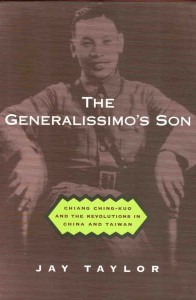
WoWasis book review: Jay Taylor’s ‘The Generalissimo’s Son: Chiang Ching-kuo and the Revolutions in China and Taiwan’

Written By: herbrunbridge - Oct• 29•11

In this book, The Generalissimo’s Son: Chiang Ching-kuo and the Revolutions in China and Taiwan (2000, ISBN 0-674-00287-3), Jay Taylor provides a fascinating history of the man who presided over much of the political modernization of Taiwan. Ching-kuo was, at one point, a communist student in the Soviet Union, and maintained ties there throughout his life (his wife, Faina, was Russian). He also kept open communications with mainland China, Singapore (he was good friends with Lee Kwan-yew), and, of course the United States.

A political moderate, Ching-kuo adroitly juggled the disparate factions in Taiwan, which included the allies of his father Chiang Kai-shek (Taylor’s subsequent history of Kai-shek, The Generalissimo: Chiang Kai-Shek and the Struggle for Modern China is also a must-read for anyone wishing to gain insight into the Taiwanese and Chinese dynamic in the 20th century). For many in the west, Ching-kuo is perhaps best noted for guiding Taiwan away from authoritarian rule and accepting forms of dissent, and creating an environment conducive to becoming a technological giant.

During most of Ching-kuo’s life, the Kuomintang (KMT) was the Republic of China’s (the official name of Taiwan) only political party, but the book describes how Ching-kuo’s politics began to change, especially with Gorbachev’s success in opening up the Soviet Union’s political system. He rejected cronyism, and made tough decisions in order to ease out political allies who, he felt, would not follow the path he increasingly took too political reform. The book offers numerous insights into his personality:

The “friends of Ching-kuo” club convened with their wives at the house on Ch’angan East Road or at the Yangming Mountain house, calling the latter “The Drunken House” after a famous restaurant in Ch’engtu. When each new dish arrived, the whole table would toast, draining their glasses of rice wine. Of course the finger game was the most dangerous event, with the defeated draining not a small tumbler but a vessel of wine. Ladies as well as gentlemen slipped under the table. But the Dean (as he was still known to his pre-iQ49 friends — even after he became president) never seemed besotted. Occasionally, the guests left with different shoes or coats than the ones with which they arrived. Wives were not among the items confused at such times, but the occasions may have led to some of the affairs Ching-kuo is alleged to have had with the spouses of subordinates. In public he was never seen accompanying a woman other than Faina, but he did apparently carry on several liaisons in the 1950s and 1960s.

As Ching-kuo’s power increased, he tried to maintain his contact with ordinary people by taking Sunday walks in the countryside. From 1950 until he became president in 1978, he visited 320 towns and villages, dropping in on families unannounced and eating a simple lunch with the locals in dirt-floored cafes. Sometimes he took dried noodles along to supply his own food. Even in Taipei in the 1950s he occasionally drove himself around town unescorted. One dav, when driving a Jeep back to the city, he picked up a hitchhiker. He asked the man where he was going and then went out of his way to let the rider off at his destination. The man thanked him and rewarded him with a NT $10 tip. Ching-kuo accepted the note and when he arrived home gave it to Faina. “Look,” he said, “I actually earned some money today.”

The author refers to Ching-kuo as “a master of toughness and finesse,” a theme recurrent throughout this 520 page book. The book is recommended for anyone wishing to understand the progression of Taiwan from an authoritarian regime to a more open political entity, and in the process, becoming an economic power. Buy it now at the WoWasis eStore.