The sharper edge to traveling in Asia

WoWasis book review: ‘The Good Muslim’ by Tahmima Anam from Bangladesh

Written By: herbrunbridge - Apr• 04•13

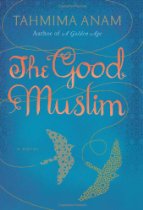
AnamGoodMuslimBangladeshi author Tahmima Anam’s novel, The Good Muslim (2011, ISBN 978 984 8765 90 6) isn’t all that easy to suss out, if you’re neither conversant in Islamic theory nor recent Bangladeshi history. A little background information, such as an understanding of the struggle that carved Bangladesh out of East Pakistan, is helpful. So is some knowledge of the different facets of Islam.

Maya, Anam’s heroine, is caught between her affections for her young nephew, the religious aspirations of her increasingly fundamentalist brother, and the philosophies of various other friends and family members. The overriding element of the story is the essentially powerlessness of women in an Islamic society. And make no mistake about it, today’s Bangladesh is Islamic, as Western visitors have discovered. Getting a beer in the capital of Dhaka isn’t easy. In other cities and towns, it’s nearly impossible, unless one is a member of a private club. But, of course, the story isn’t about beer.

Maya’s young nephew’s comings and goings provide the vehicle that dictates the action in much of the book. He’s a troubled child, stealing and having attention problems. His mother has recently died. Her brother’s concern that Maya teaches his son to play cards and learn foreign languages convinces him to send him to a remote madrasa (Islamic school), and soon, Maya finds that he’s being physically abused, presumably sexually. Her decision to take action flies in the face of the law, her brother, and fundamental Islamist beliefs in the respective roles of men and women.

Much of the fiction coming out of Bangladesh today is written by women, and the theme of liberation, for society and women in general, is a topic at the forefront of the writings of many of today’s Bangladeshi authors. The oppression of women in societies such as Bangladesh’s is anathema to many of us living in the west, who’ve never experienced living in a geographical area in which women are presumed guilty in virtually any situation where men are the accusers. It’s a suffocating experience for the reader, who desperately wants logic to prevail through a story in which logic has no place, where books are burned, and where aspirations are stifled. For the Westerner, it’s a frustrating read, and reminiscent of the film Ramparts of Clay, 1971 French drama directed by Jean-Louis Bertucelli, the story of an Algerian village woman living in an oppressive culture with few positive options. Anam’s first book, The Golden Age, won the Commonwealth Writer’s Prize for Best First Book. The Good Muslim is her second, and a worthwhile foray into the nuts and bolts of a society that struggles with the goals and aspirations of a significant percentage of its population. Buy it here at the WoWasis eStore.

WoWasis book review: Revisiting Han Suyin’s ‘A Many-Splendored Thing’

Written By: herbrunbridge - Mar• 30•13

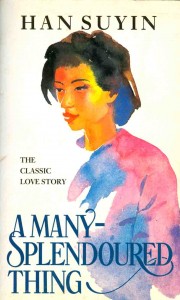
SplendoredSuyinHan Suyin died in November of 2012 at the age of 95. Her book A Many-Splendored Thing, published in 1952, was the basis for the film starring William Holden and Jennifer Jones, and has influenced numerous writers. A recently written book, Janice Y.K. Lee’s The Piano Teacher, is probably one of those.

So we went scurrying back to re-read the book. She was a physician, and Han Suyin was the pen name of Elizabeth Comber, born Rosalie Matilda Kuanghu Chou. She was born in Xinyang, Henan, China. Her father was a Belgian-educated Chinese engineer, and her mother was Flemish.

The book takes place in Hong Kong, and is essentially a love story involving her eponymous doctor and Mark Elliott, an English journalist stationed in Asia. The two are buffed about by the changing political situation in mainland China and Elliott’s increasingly dangerous assignments in Asia, which ultimately determines his fate in Korea. Both Han and her heroine are Eurasians, and the attitudes among natives and expats alike toward mixed-race peoples are a fundamental underpinning of the book, as is the Communist takeover of China. While we find that the lovey-dovey prose gets to be a bit much, Han’s descriptive capabilities are extremely powerful, and among the best we’ve ever read. We highlighted many of them scattered throughout the book in a delicious pastiche of life in Hong Kong in the early 1950s. Her description of a Hong Kong dawn is superlative:

And yet there is a moment when night removes itself and day comes. But it is difficult to seize it: dawn, morning and day run into each other. The slight dawn breeze stirs faintly under the grey clouds heaped on the land and the sea, rasps some banana leaves, fingers the flames of the forest, sighs through the casuarinas. It sidles down into the harbour, prowls round the poised ships swathed in grey mist on a leaden sea. Towards the east, where the aircraft carrier anchored yesterday, a strip of lighter, paler grey widens slowly, turns white and opalescent like the belly of a fish. The ships are now clear, like pencil marks against the grey silk of the water. Land smoke from uplifted chimneys can be seen looping sluggishly skywards. Here walls, there a roof, the glimmer of a window alight. The aircraft carrier, a bristly black hedgehog, is now surrounded by a widening primrose patch, the sun. One moment all was grey and night-still, the next it is light, and in the hills the birds go mad. The light streaks the water with magenta, sweeps the mist away from the green hills, turns the ships black and red and white. The last cobweb cloud vanishes. Cars honk, boats hoot, ferries churn, trams ring wild bells, magpies call impatient names at each other, the cicadas tune up, and all is heat and toil, for day is here.

And can there ever have been a more senses-inspiring and delicious description of Chinese New Year:

Chinese New Year is the noisiest jollity of Hongkong. Weeks before the day, the shops, open till midnight or later, are crowded with people and crammed with monstrous arrays of food. Oranges and bananas, laichees, pears and apples and quince, carambolas and grapes, tangerines and persimmons, pummeloes, pineapples and mangoes; baskets smothered in paper roses embracing bottles of brandy, whisky, gin, vermouth, port, sherry, Cointreau, Kummel, Bols and Benedictine, wines and liqueurs from all over the world. Enormous ribboned boxes of chocolates from Switzerland, tins of shortbread and biscuits from England, cartons of candy and Kraft relishes from America; swag-bellied jars of candied orange peel, whole cumquats, pineapple chunks, ginger cubes, lotus buds, walnuts and almonds and coconut balls. Californian whole tinned chicken and Chinese dehydrated ducks flattened as waffles with billed heads looking out of their wicker envelopes; entire sucking pigs basted a delightful brown; speckled red and white sausages in bouquets hanging from shop ceilings; and the shouting which is the ordinary conversational tone of the Cantonese; and the perpetual click and slack of wooden slippers clattering on the stone pavements; and the blare of radios going full blast night and day on five thousand shop counters six feet from each other; and the cars honk-honk-honking their way through the packed streets; the houses gaudy with scarlet paper on doors and lintels and walls; the incense sticks smoking in handfuls at corner steps and under tables to the earth and hearth gods; the children gay in shiny bright satin clothes; the lovely sweet-scented enkianthus, bell flower of New Year, swaying in tall vases; and rows and rows of plum and early cherry blossom and narcissi at the Wantsai Flower Fair.

And the firecrackers — a threat to hearing and to health, to sleep and sanity. The law limits their cannonade to a bare forty-eight hours, during which Englishmen plug their ears with cotton wool, swallow sleeping tablets, and shun the streets. In unrelenting, soul-smashing, ear-pulverizing thunder, without stop during the light hours and the dark, the firecrackers sizzle, roar, pop, burst, whoop, smack, thud and bang; backfire behind and under cars; whizz from balconies and windows; salvo at street crossings, detonate under empty tins. Suspended from the roof of famous restaurants three storeys high, and reaching down to the tarmac road, they burst steadily for over half an hour at the modest cost of a thousand dollars every six minutes. The streets are rivers of red paper and cinders, everything smells of roast pork and gunpowder. With lunatic joy we hear so much money vanish in fire and sound, for thus a frugal race explodes in frenzied extravagance on ritual occasions: funerals, the birth of sons, and the New Year.

ChinaPromoBannerHan’s prose explodes in consistently powerful descriptions throughout the book. These are but two, but there are dozens in this 322 page book, all delightful or sobering, for all is not well in the colony. She pulls few punches in indicting certain members of the expat and wealthy Chinese communities, but less so in her analysis of Chinese communists. Han’s own life was a fascinating story. A Many-Splendored Thing is autobiographical, but many more books could have been written on her storied life. The book stands well to the test of time, and today, 60 years later, remains a fascinating and timeless account of an Asian city-state in transition.

WoWasis book review: ‘Wave,’ a tsunami memoir by Sri Lanka’s Sonali Deraniyagala

Written By: herbrunbridge - Mar• 27•13

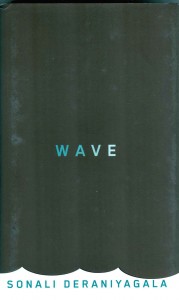
DeraniygalaWaveBookSri Lankan Author Sonali Deraniyagala lost her husband, two sons, and mother and father in the Dec. 26, 2004 tsunami, which killed an estimated 230,000 people. Her story is told in Wave (2013, ISBN 978-0-307-96269-0). It’s a story of tragedy, a personal loss reiterated, emphasized, and relentlessly pounded into the reader on virtually every page. But it’s neither a particularly insightful nor compelling book, for readers looking for answers for dealing with personal tragedies.

The reviewer wants to be on her side. After all, she’s lost everything but her own life. But after  seven years and 228 pages, she just can’t get on with it. She’s barraged by memories that don’t stop, challenging her every move, enveloping thoughts, weakening relationships. The caterwauling never ceases. Somewhat not surprisingly, her therapist is the first person she thanks in her acknowledgements.

People who’ve deal with their own personal tragedies will find no solutions here, and that’s the most frustrating part of the book. The author’s not the only one with a loss. We here at WoWasis are reminded of the days we spent in an oncology clinic, in which every attendee was having chemotherapeutic poisons flushed into his or her bloodstream. No one was having fun, but two schools emerged. One philosophy celebrated the joy of having one more day on the earth, where the sun still shown, flowers still bloomed, conversations with friends and loved ones still occurred, a baseball game somewhere was still being played. The contrarian philosophy was essentially all about “Why Me?” What did I do to deserve this?  Life was so perfect before, now it’s been taken away. A black curtain had descended, seemingly blocking out the simplest joys. In talking with these patients, the conversation was all about death, the events that would lead up to it, the pain and grief surrounding it, the terrible frustration in having life end before it was perceived that it should.

Deraniyagala’s book is all about grief as well. Relentless, oppressive, and obsessive grief, offering respite for neither her nor her readers. OK, we wanted to shout to the author. We understand your pain. But now what are you gonna do about it? And the only answer we seem to get is her verbal facility in compounding grief with more grief.

The best part of the book is the beginning, in which she describes the maelstrom of the tsunami and the several days thereafter, in which she, who nearly lost her own life, finds proof of the death of her family. It’s a harrowing first person account. Beyond that, we were seeking character development, although this is no novel. But there wasn’t any. And we are left with a lonely grieving woman, crying into the wilderness.

We predict there won’t be many poor reviews of this book. Perhaps this will be the only one. Writing a negative review of a book written by someone who’s experienced this degree of personal tragedy seems a bit like running over an injured puppy to put it out of its misery. It’s retailing for $14 USD. For readers looking for a 228 page cry, here’s the place to be. Buy it here at the WoWasis eStore.
WoWasis book review: ‘The Piano Teacher’ by Janice Y.K. Lee

Written By: herbrunbridge - Mar• 23•13

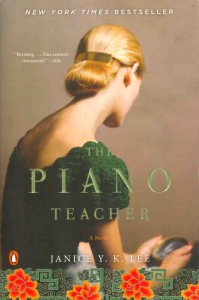
PianoTeacherBookAfter finishing Janice Y.K. Lee’s ‘The Piano Teacher’ (2009, ISBN 978-0-14-311653-0), we went scurrying back to Han Suyin’s landmark novel of 1952, A Many-Splendored Thing. There are similarities, to be sure. The setting for both is pre-1955 Hong Kong, and they are essentially love stories that revolve around the unsettled military, political, and social situation that continually pokes, prods, threatens, and injures its inhabitants. This is the first novel for Lee, whose literary career includes stints as editor at Elle and Mirabella magazines, and it’s a good one, although it would be hard to believe she didn’t absorb Han’s book, which isn’t mentioned in the acknowledgements. We re-read ‘Splendored’ again right after this one, and the story lines parallel to a certain extent. While Lee doesn’t yet have Han’s descriptive capability, she handles the love portion of the story more realistically and less cloyingly. The protagonist in each book is a Eurasian woman, and each book describes how Eurasians were often treated as social outcasts. But enough about Han.

Lee covers two simultaneous plots, one taking place in 1941-1942, the other in 1952. Will Truesdale plays a major role in each, in love with Eurasian Trudy Liang in the first period, and having a relationship with Claire Pendleton in the second. Pendleton is a piano teacher who is introduced early on as a petty pilferer from her employer, an albatross that hangs over her head for the entire novel, yet never is quite brought to resolution. Truesdale seems torn between the two women for much of the book, and some of Lee’s most masterful writing describes Liang’s evolving relationship of him as Hong Kong increasingly falls under the wrath of Japanese occupation. Lee’s done her homework on the Japanese military’s increasingly draconian takeover, and the actions of the characters cooperating with the conquerors are magnificently written.

We found Trudy Liang, outwardly a gay party-girl, to be the most compelling character in the book. Her story drives the second part of the tale, which gathers its best momentum in describing her interaction with Otsubo, a Japanese officer who holds her fate — as well as that of her friends — in his hands. It’s Lee’s facility in addressing Hong Kong’s Japanese period that saves it from being “just another love story,” and puts some teeth in the book. Many memorable love stories have tragedy woven through them, and this one’s no different. The mark of a great character is that he or she will stick with you for a day or so after reading the book, and that was the case with us as far as Trudy Liang was concerned.

Overall, this is a very good book, one that will appeal equally to romantics, lovers of Hong Kong, and history enthusiasts. Lee’s got a talent for weaving it all together in a story that moves quickly, intelligently, and forcefully. Buy it now at the WoWasis eStore.

Korean island of Yongyu-Muui hopes to become a gambling mecca

Written By: herbrunbridge - Mar• 17•13
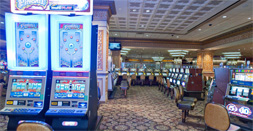
eightcity-casino-projectOur gaming correspondents at www.onlinecasino.sg  have just published a fascinating article on South Korea’s attempt to divert some of the gambling revenue that’s now going to Macau by putting billions of dollars into turning the island of Yongyu-Muui into a world-class gaming destination. Here’s what they have to say:

The Korean island that’s taking on Macau

A fishing island off the coast of South Korea’s third city, Incheon, is the latest location hoping to claim a slice of Asia’s lucrative gambling tourism market. Under recently announced plans, the city aims to redevelop Yongyu-Muui Island District into a gambling and leisure resort – and it has Macau squarely in its sights.

A $290 billion vision

Under the plans, Yongyu-Muui will be transformed into into EIGHTCITY, a gambling and leisure complex that will span some 80 square kilometres (nearly three times the size of Macau), and be shaped in a figure of eight.

Although the island is looking towards the casino trade primarily, it is looking to feature other attractions, too. These include concert halls, shopping malls, a marina resort, conference facilities and even a Formula One-standard motorsport circuit.

This change isn’t going to come cheaply, nor happen overnight, however. Incheon City’s plans for the redevelopment call for $290 billion to be spent over the coming 18 years, with the project due to be complete in 2030.

A threat to Macau?

Its focus on the number eight is no coincidence. Eight is considered a lucky number in countries such as China, and it’s China’s middle and upper class gamblers and tourists that 8-City’s planners have squarely in their sights, along with gamblers from Japan.

This could potentially be bad news for Macau. Much of Macau’s gambling profits comes directly from high rollers and VIPs making the trip from China. Likewise, it has also been increasingly targeting middle class families as well to diversify its customer base.

Although Macau has faced competition from the likes of Singapore in recent years, Korea’s much closer proximity to China could potentially be bad news for the territory. EIGHTCITY will be closer to such major Chinese cities as Beijing, Shanghai, Tianjin and Qingdao than Macau is. It is also close to Incheon International Airport, South Korea’s largest airport.

That said, with its reputation as Asia’s home of gambling still very much intact, and companies still eager to invest in new casinos, Macau’s position is unlikely to be threatened for the foreseeable future

Thai Teens’ pregnancy rate appears to be uncontrollable, feeding Bangkok’s bar scene

Written By: herbrunbridge - Mar• 08•13

NoFuckingLogobIn our tours around Bangkok’s night spots, we here at WoWasis has noted that seemingly a majority of the city’s bar girls are young mothers. In an article published by Reuters this week, the situation appears to be accelerating.

The article reports that “even though the overall birthrate is dropping, teen births are on the rise. Out of every 1,000 live births, 54 are from teen mothers aged 15-19 – higher than in the United States and ten times higher than Singapore’s teen pregnancy rate. What’s more, it’s rising fast. The number of live births by Thai teenage mothers aged 15-18 increased 43 percent between 2000 and 2011, a Thai annual public health report shows.”

The article goes on to state: “A 2011 report by the United Nations Population Fund (UNFPA) and Thailand’s National and Economic and Social Development Board (NESDB) shows the number of women hospitalized in connection with abortions increased by over 16 percent between 1994 and 2009, hitting 60,000 in 2009.

“Yet abortion is illegal in Thailand except in cases of rape or incest, to save a woman’s life or preserve her physical or mental health, and if the woman is under 15 years of age. Under Thai law the penalty for performing illegal abortions is up to five years in prison or a fine of up to 10,000 baht ($340). Despite this, illegal clinics and back street abortions abound. In 2010, Thai police found 2,000 fetuses on the grounds of a Bangkok Buddhist temple. They were to have been sent there from illegal abortion clinics.”

What the article does not state is that a large number of girls who elect to keep their babies park them with their mothers or relatives, then enter (or return) to the bar industry. The children are then raised by family members, with the mother paying only an occasional visit. Because of the Thai proclivity for saving face, teen sex is rarely discussed, and sex education in schools is essentially non-existent. The end result isn’t rocket science. It’s more young women entering the bar scene on a yearly basis. Entering the bar life in Bangkok, young women from upcountry become quickly educated on birth control methods, although whether they elect to use them is a matter of choice.

Failure to present teens with adequate birth control information, as well as lack of access to condoms and birth control pills, results in a massive supply chain to Bangkok’s huge and still growing adult bar industry.

Pa Farang answers: Why can’t my American boyfriend keep his butt clean?

Written By: herbrunbridge - Mar• 07•13

pafaranghalo[1]The Good Manner: Advice on Thailand from WoWasis’ Pa Farang
This week’s dilemma: Why can’t my American boyfriend keep his butt clean?

Dear Pa Farang,

I am a Thai lady, and my American boyfriend showed me your column. He’s away, so I’m writing. He never keeps his butt clean. He leaves poo marks all over my bed and the towels. He won’t use the toilet hose, and doesn’t use toilet paper very well. We live in a nice building on Sukhumvit and a lady did our washing before. Now she stops because she doesn’t want to touch his underwear. I went to Emporium and bought expensive new sheets. He got butt marks on them the first night, now they won’t come out. He’s marked our new sofa, too.

I tell him, but he just laughs and doesn’t listen. He thinks it’s funny. What can I do to make him stop this?

– Clean Girl

Dear CG,

Unfortunately, many Americans have bad toilet habits. They are not as clean as Thais. In fact, I read a recent study that said many Americans don’t wash their hands after using the bathroom. You’ve got a teaching job ahead of you if you want to keep this boyfriend. The fact that he thinks it’s funny is your worst problem. Before I ask you what he’s been eating, here’s an idea.

I assume that you’re in a relatively expensive building, so he must make a good sum of money. I’m going to make the assumption that he pays the bills, too. Instead of complaining, tell him that you’re going to buy new sheets, towels, and underwear every time he “marks” them. Then go to your favorite store and buy three sets of sheets, thirty pairs of men’s underwear, and twenty or so new towels. Tell him how much it cost him, then tell him you’re going to do it again next month. Immediately replace all “marked” items with your new sheets, towels, and underwear. Throw the old ones away. In the U.S., they call it “house training” when they teach a puppy not to poop on the floor. If it costs him a lot of money, you may be able to house train your American boyfriend.

You said that when he used your new sheets, he “got butt marks on them the first night, now they won’t come out.” I’m asking you because my readers will ask me: what’s he been eating? If it’s nothing toxic, buy a new washing machine and show your boyfriend the bill.

I have a feeling this will go a long way to solving your problem. And by not complaining, you’ll be showing The Good Manner.

– Pa Farang

Read Pa Farang’s other columns for more advice on relationships and cultural matters  in Southeast Asia

WoWasis book review: ‘Who Needs a Road? The Longest and Last Motor Journey Around the World’ by Harold Stephens and Albert Podell

Written By: herbrunbridge - Mar• 04•13

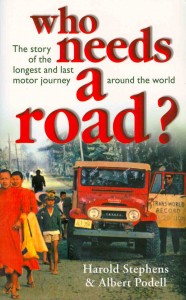
StephensRoadPic1aBack in 1999, we here at WoWasis drove 4000 km through South Africa, Namibia, Botswana, and Zimbabwe. We broke down in soft sand up to our axels in the bush with lions nearby, got an accidental fill-up of diesel 200 km from the nearest Kalahari town, and did it all while driving solo in a Toyota Hilux. We thought we were studs; no one had heard of anyone doing that route solo before.

But as studly as we were, it can’t compare with the arduous 42,252 mile drive made by Harold Stephens and Albert Podell, who circumnavigated the globe by Toyota Land Cruiser in 1965-1966. It took them 581 days, and is chronicled in their fascinating book Who Needs a Road? The Longest and Last Motor Journey Around the World (1967, ISBN 67-25177). Out of print for a number of years, the book was republished by Bangkok-based Stephens in 2011. The new version features an update on the people and places discussed in the original book, including fellow travelers (a number of people tagged along at one point or another), lovers, and interesting people (Everest climber Tenzing Norgay was one of them). As the authors point out, it will probably never be done again, due to political boundaries and wars. The book is 487 pages, including the index, and moves quickly, covering the bases on cultural and political elements along the way. Stephens and Podell were real gamers, as they dealt with minefields, continual breakdowns, mysterious flying hairy crab-spiders, and nefarious encounters. At one point, they’d taken three New Zealand women along for the ride. Things got dicey when the shared a meal with a local Police Commissioner in Algeria:

As the cheese was brought out, things took a turn for the worse, for the Commissioner made a request we had somehow to refuse. “I wish,” he said, “I wish to buy that girl from you.” He pointed to Barbara, blonde and chesty and glowing. I didn’t blame the Commissioner a bit, but we had to get out of  – and without offending him, for a man who’d killed fifteen French during the war with guns and plastique wasn’t going to think twice if insulted by an American.

“How much will you pay for her?” I asked, following the custom.

“How much do you wish?” he countered, and I could see we were in for some Arab haggling. Barbara had stopped glowing. I asked the Commissioner what he thought was a fair price, and he offered fifteen hundred American dollars, in either cash or gold.

“Well, that’s very generous/’ I answered, “but only for an average girl. It’s not enough for her. Barbara here’s an exception.” Exceptionally pale at the moment, I noticed.

“How much do you want?”

“Well, we just couldn’t part with her for less than $3,000. I mean she’s no ordinary girl: lovely hair, nursing skills, nice disposition, and -” “-and lots of meat,” the Commissioner smirked, a bit of spittle driveling into his dish of couscous. “All right, I give you $2.000. It’s too much for her, but since you’re my good friend, I’ll give it to you.”

“I’m sorry, but we just couldn’t take less than $3,000, even from a good friend like you. We turned down $2,700 for her in Marrekesh from the Sultan. We have to send half the money to her mother.”

“You do not bargain, Mr. Stephens.”

“Three thousand dollars is a bargain for a girl like Barbara.”

“As you wish. All right. I take her.” We were astounded. My trick had backfired – I couldn’t conceive of anybody paying $3,000 for a woman outside of divorce court, but there it was. Barbara looked about readv to faint, and the veiled wives were already giving her the Cinderella look when Al cut in.

“But there’s one thing Mr. Stephens forgot to mention, Commissioner. You see, we had planned to sell these girls as a group. They all go together. But since you are our friend, you can have the other two at a big discount, only $2,000 each, $7,000 for all three.”

“No, I do not want the other two. They are too skinny. Look,” he said, pinching Liz, who screamed, “No meat. All bones. I could not even get $200 for her from the nomads. I only want the other one.”

“But you see — well you see — we have to sell them together. The one you want is the prize of the flock and we need her to help us sell these other two miserable ones. Nobody will buy these scrawny chickens otherwise. Come on, special for you, as our friend, only $7,000 for all three.”

“No, no deal.” And with a sigh of relief we moved on to Algiers, the girls sitting in the back of the Land Cruiser singing at the cop of their lungs, “Maori Battalion march to victory, Maori Battalion staunch and true, Maori Battalion march to glory…”

There are many other astounding stories in this faced-paced tale. If, like us, you’ve gone through a few of your own adventures, are planning some, or want to know what you might get into when you get rolling on yours, this is the book for you. Buy it now at the WoWasis eStore.

Bachelor in Bangkok: Khun Lee’s Three Reasons to be wary of “dating” a bar girl

Written By: herbrunbridge - Mar• 03•13

BachBKKLKee1cI was chatting with a friend the other day and he happened to mention that he was “dating” a gal who works in a Nana Plaza go-go bar. It is needless to say that one doesn’t “date” such a gal, but merely pays a certain amount of money for a certain amount of time and sex.  So as I was literally standing on his chest and attempting to pound some sense into him, he blurts out some rubbish along the lines of her being different because she has only worked in the bar industry 4 days and therefore he has met her before she has become tainted.  My friend did manage to survive my assault (although it is doubtful he will survive what she will do to him) and the incident reminded me of just how many guys have told me that if you meet a gal early in her “professional” career it increases your chances of finding a somewhat unspoiled gal.  Now that does bring up a rather interesting subject-just what percentage of the negative personality characteristics associated with entertainment providers are acquired after a gal has entered the industry?

I have given this subject much thought this week, and have arrived at the conclusion that although the vast majority of the gal’s character is set in stone before she arrives in the industry, there are 3 distinct changes that tend to occur in the girl’s life after she begins working as a pro:

1) For the first time in her life, she is surrounded by peers who are heavily into drugs, alcohol, gambling, scamming and living a totally hedonistic lifestyle.  Ironically, one could probably say the same thing about many westerners who live overseas for the first time.

2) Her entire concept of money is ruined forever by the reckless and frivolous amounts of cash that are literally thrown in her direction.  Before these gals come to the nightlife jobs they are usually living in a poor rural area where every baht counts.  After just a few weeks (days?) of living and working in the industry money runs through them like beer through a punter with a bad prostate.  One of my best bargirl friends told me that she now views 1,000 baht in the same way that she used to view 100 baht, and 10,000 baht is the equivalent of 1,000 and so on.  This effect of a 10x multiplier happens so fast that it would be nearly impossible to record the actual timeframe.

3) She now has access to Thai boyfriends.  As hot as these gals look to us, in Thai society they are the bottom of the barrel.  Most have never had a chance to have a Thai man spend time with them in any meaningful way.  With their new found wealth, they can pay the rent, motorcycle and whiskey needs of a low-class Thai boyfriend.  Sadly though, much of the money that they originally thought they would send home to their family is now ending up being spent in order to keep the guy interested in them.

Bearing all this in mind, does my poor lost friend actually have a better chance with his new found love, knowing that she is new in the industry?  I have repeatedly told him that there are millions of “normal” Thai gals who would love to have a western boyfriend; therefore it is just not necessary to take your chances with a bargirl.  He says that he is looking for the one good gal among the sharks, the proverbial needle in the haystack. My response to him was “why look for a needle in the haystack when there is a huge pile of needles right over there not hidden in a haystack?”

Read Khun Lee’s other WoWasis columns for more advice on navigating the adult dating scene through the backstreets of Bangkok

WoWasis book review: ‘Take China: The Last of the China Marines’ by Harold Stephens

Written By: herbrunbridge - Feb• 28•13

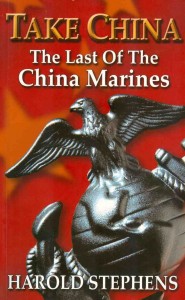
StephensTakeChina1aHarold Stephens, author of Take China: The Last of the China Marines (2003, ISBN 0-9642521-8-X), maintains that the book is a novel, but in actuality it’s a memoir, his autobiographical tales of serving with the U.S. Marines, transitioning from the end of World War II to mainland China. He’s changed the names, but it’s all true, and most of the fascinating tales occur inside China, particularly in the cities of Tsingtao and Shanghai, before Mao’s Red army took over.

Stephens begins with his stint in Okinawa, a bloody, rotting hell that he was happy to leave. When the bombs dropped on Japan, he thought he’d be going home. Not so, he was being shipped to China, to assist Chiang Kai-shek. The author’s stories about ship life provide an interesting sidelight:

Our secluded area provided another service that made life a bit easier. Washing clothes aboard a troop ship was a problem. No washing machines. No laundry service. Marines crammed into the heads, under the showers, and attempted to scrub away the dirt and smell from their dungarees with salt water. Others had found an easier way, by lying their clothes to long lines and dragging them aft of the ship. The pounding sea usually washed them clean, but before long everyone was crowding the aft deck vying for space to tie their lines. Often times it became a real mess when lines tangled and fights would ensue.

Under our lifeboat we didn’t have that problem. We dangled lines over the side, with our clothes securely fastened to one end. At the water’s edge below us, the ship cast a wake that kept our laundry a yard or two away from the side of the ship. It worked as long as they didn’t pump the bilge.

Where the book really shines, though is in its description of China and her people. He painstakingly learned Mandarin, and got to love the country and her people. He chronicles the quotidian life of a Marine life as well, discussing the personalities and actions of officers and enlisted men. Many a bar and bordello is visited in this book, and there are bar fights galore. To us here at WoWasis, the most fascinating part of the book describes his interactions with the White Russians who ended up in China, living a temporary existence, and waiting to go to the U.S., or perhaps back to a more forgiving Russia. Many of them came by way of Siberia, through Harbin, then to Shanghai or Tsingtao. They weren’t all poor either, as was the case with the beautiful Katarina and her two aunts, whose apartment was like a museum. Katarina’s story is perhaps the most memorable of the book. Here’s one scene:

I am a white woman, a White Russian, you remember?”

I didn’t have time to answer. She came to me and threw her arms around my neck. “I can’t bear it any longer” she sighed. “I want you. I need you.” I could feel my pulse quicken. She reached down and took the towel from around my waist and threw it over the back of the chair. She took off her coat and placed it too on the chair. Without taking her eyes from me, staring straight at me, she took off her boots and stockings, removed her dress and inner garments, and stood there in front of me completely naked. 1 could only look upon her Vargas-girl body in disbelief. Her skin was flawless, and absolutely white. Her breasts were firm; her waist thin. She stood there, letting my eyes and thoughts feast upon her. She held her garments in her hand, and then slowly turned to place them on the chair.

 She saw something that made her gasp. She jumped back as if she was confronted by a demon with fangs about to pounce at her. She clasped her hands over her mouth. The door to my closet was open.

“What is it?” I called and leaped toward her.

“Your uniform!” she cried.

“My uniform,” I replied, “what about it?” I saw my uniform that Yee had hung carefully on a hanger, along with my shin. The chevrons were exactly as I told him to sew them on.

“What’s wrong with that?”

“The stripes! You are only a corporal,” she stammered.

“What’s wrong with that?” I said, completely confused.

“I thought you were a captain.”

What becomes of Katarina is a strong plot line that drives much of the second half of the book. The fate of many of the White Russians was sobering. Stephens also reveals other interesting data that many of us didn’t know, beginning with the fact that U.S. Marines were there, at that time, in the first place. Another grim data point is that the Japanese murdered their comfort women en masse in the caves of Okinawa.

Stephens is a master storyteller, and this one is highly recommended. Buy it now at the WoWasis eStore.