The sharper edge to traveling in Asia

Pa Farang on My old Bangkok haunts are going away. What’s happening?

Written By: herbrunbridge - Apr• 28•13

pafaranghalo[1]The Good Manner: Advice on Thailand from WoWasis’ Pa Farang

This week’s dilemma: My old Bangkok haunts are going away. What’s happening?

Dear Pa Farang,

Hi there–greetings from the US. I used to live in Bangkok 1989-1990 on Soi Polo off of Wireless Road. There was a fantastic streetside restaurant there that did fantastic grilled chicken and grilled pork–used to eat breakfast there almost every day. Would you happen to know if that place is still there, in business? Also, I’ve heard various rumors that the legendary Thermae Massage/coffee shop is no longer–is that true? In any case thanks for your time and enjoy Thailand as much as I used to!!

– Steve

Dear Steve,

Sure enough, a lot has changed since you lived there. The Thermae indeed still exists, but has moved to a new location just down Sukhumvit. I’ve received reports that the women there are younger now, which will come as a shock to veteran punters. Many of the older gals now work at the Beer Garden on Sukhumvit Soi 7.

I’m not sure about the streetside spot on Soi Polo, but Bangkok abounds with streetside stalls selling fantastic, inexpensive food, and they all have the ubiquitous red plastic chairs, too.

Washington Square, home of a number of legendary GI bars, has now been plowed under. You’ll want to read Dean Barrett’s Farewell to Washington Square. You’ll also be interested in Khun Lee’s two-part take on the difference between the Bangkok of 1995 vs. 2010.

Like other cities, Bangkok keeps evolving, but a free and easy access to great food, entertainment, and culture remain hallmarks.

– Pa Farang

Read Pa Farang’s other columns for more advice on relationships and cultural matters in Southeast Asia

Farewell to Bangkok’s Washington Square by Dean Barrett

Written By: herbrunbridge - Apr• 28•13
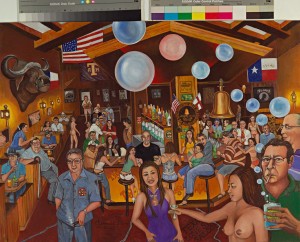
Texas Lone Starr, painted by Richard Diran

Texas Lone Starr, painted by Richard Diran

One of Bangkok’s most treasured entertainment zones, Washington Square on Sukhumvit, has been plowed under. It was a haven for GIs, spooks, writers, oil workers, and drinkers. Bangkok author Dean Barrett has written a fine tribute to Washington Square, reprinted here as it appeared in the April, 2013 issue of After Dark Magazine.

            Molly thanks me for buying her a lady’s drink and before we drink we wish each other luck.  Molly is one of the girls who used to work at the Texas Lone Star Saloon.  Not a girl really, few of the women who worked in the bars of the Square were under thirty.  Molly is plump, quiet, always friendly, and, like many of the girls who worked in the Square, has not had an easy life.

            She is sitting now outside the Easy Pub, one of the two remaining bars left in the Square.  All around us are abandoned concrete buildings ready for destruction or else the rubble of those already demolished.  At the Soi 22 entrance to the Square (which is now the only entrance) the other remaining bar – New Square One – faces an abandoned massage parlor building which a few months back was destroyed by a roaring fire.  The only advertising remaining on its façade is a line of four faded Chinese characters for “Ancient (traditional) Massage.”  But even without a fire the massage parlor had little time left.  For several years Bangkok’s land prices had been rising and every year there had been persistent rumors that the Square was doomed – destined to be razed to the ground and replaced by yet another towering condominium or shopping center.  But the years passed and nothing happened.   Until it did.

            The night is cool and pleasant and an occasional burst of laughter or a few lines of music drift over from the open-air bars on the nearby soi.  I mention to Molly that I thought I saw shadows flitting about inside the abandoned building facing us.  She said the workers sleep in that building and in the morning begin their work of clearing the Square once again.  Above us, in the dark sky, a bright full moon plays hide-and-seek with slow-moving cloud formations.  The moon, the clouds, the abandoned buildings, the piles of rubble, the darkness around us and the strange silence – the Square seems to have transformed into the kind of phantasmagorical landscape one sees only in dreams.

            The Square always was a very different place from the rest of Bangkok.  It was often referred to as “Little America” and many of the customers were American veterans of various wars.  Their message – if you asked – was that they had fought for their country and if necessary would fight again – just don’’t ask them to live there.  Of course, there were non-Americans as well and many oil workers taking a welcome break from working in the Middle East.

            My first encounter with the Square was twelve years ago when I came back to Thailand to live.  I carried my suitcase inside the Texas Lone Star Saloon and – it being early afternoon – there were no customers and only two girls in the back.  Sound asleep.  One woke up and accompanied me up the outside stairs to where my room was.  Walking up a dark, malodorous stairway with a friendly and flirtatious bargirl I remember thinking, ah, I must be back in Bangkok.  I didn’t know it then but years later I would write a mystery series in which the detective lives over a Washington Square bar based on the Lone Star.

            And over the years I met many of the customers of the Square, the regulars who were dubbed “Squaronians.”  Squaronians were colorful, unique, friendly and, in some cases, a bit too fond of drink.  It was an inimitable clientele within an incongruous setting:  Within a stone’s throw of the many macho bars were the famous Mambo ladyboy show and the well known Bourbon Street Restaurant, massage parlors and an undersized Thai restaurant or two.   And of course there were the small food stands on wheels selling everything from fruit to toys.

            Molly and I begin talking about customers we had known over the years, many of whom had become my friends.  There was Dennis House, always known as “the Doc.” And everyone knew Mekhong Kurt, whose online newsletter gave readers up-to-the-minute information on the comings and goings of customers, managers and owners alike.  We talked about Gator and Crazy John and Cowboy John and Khun Richard (Diran – who painted the famous scene inside the Lone Star) and all the others we’d known, and of course the irrepressible George Pipas, the grossly overweight owner of the Lone Star.  Molly says that despite his gruffness and frequent swearing – “change the goddamned music!” – George really cared about the girls and they all loved him.  We talked about all of the customers we could remember and then, for a time, we drank in silence, lost inside our own memories. 

            Several young Thai men walked past to where they had parked their cars and then drove off.  Beside Molly’s chair two scrawny kittens began wrestling one another.  I had at first thought the sacks nearby were filled with sand for the next flood but Molly said it was plant food.   Despite the scene of destruction, whichever former bargirl owns the Easy Pub had set out a line of well tended potted plants – perhaps, like the bar itself, a sign of life remaining amid rubble.  And in a small pot close to the plants, khun Bee – another long-time Lone Star employee – lit incense to a makeshift shrine in fervent hopes of attracting customers.

            Molly went inside and came back with another beer for me.  We began talking of what happened to the girls and the cooks in the various bars.  When the bars closed some had returned to Essarn but many now worked in the bars along soi 22.   We both knew of times when the girls had called a taxi for a customer who’’d had too much to drink; often they would go in the taxi with him to make sure he got back to his apartment without losing his money or falling over before he got inside.  There was in the Square a special relationship between the women who worked in the bars and the frequent customers that I have never seen in any other nightlife area of Bangkok.  It seemed to be formed of familiarity, tolerance, understanding and a similar philosophy toward life by those who had already lived a great deal of it. 

            At one time or another, the Lone Star had witnessed book signings, guitar playing, drunken bargirls or drunken customers, and sometimes arguments, fights and brawls, but most problems could always be solved and grievances forgiven by buying a man a beer or a girl a drink.  There were many humorous occasions such as the time a customer would walk into the Lone Star, see only two or three bargirls working, and with pride and showmanship, ring the drinks-on-me bell.  Only to watch in horror as five or six more who had been eating inside the back kitchen appeared, all cheerful over having heard the bell ring.  

            I noticed Molly’’s empty glass and told her to get another drink.  I had known her for all of the ten years she worked at the Lone Star and I knew she was raising two daughters.  How these women managed to survive now let alone raise children never failed to amaze me and still does. 

            She returned and thanked me.  And once again we sat in silence surrounded by pools of semi-darkness and strange shadows, surreal images of what seemed like fortresses overrun by invaders and then abandoned.   I thought of the times gone by.  Ten years before, Doc Dennis, Cowboy John, Mekhong Kurt and I set up an early website of mine.  We did it up above Taffy’’s New Square One pub in a room littered with debris.  But we did a kind of radio show with it and I would always start by describing our “studio” above Bangkok’s beautiful Washington Square with its lovely trees and gardens and babbling brooks and gushing fountains – a paradise on earth.   Those who knew the Square and its concrete shophouses and bars always got a kick out of it.

            All of them – the Doc, Mekhong Kurt, Cowboy John, George Pipas and many more are gone now.  Some to cancer, some to drink, some simply because it was their time.  Memories are good things: it’s nice to recall people you liked and the unique camaraderie and the places you frequented.  But sometimes – when the people and places within those recollections are gone forever – sometimes memories can hurt.

WoWasis book review: ‘Bangladesh: Six Decades (1947-2007)’

Written By: herbrunbridge - Apr• 25•13

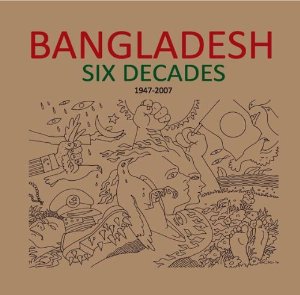
BDesh6DecadesWe here at WoWasis find the statistics to be chilling. In the Bangladesh Liberation War, an estimated 3 million people were killed, 200,000 women raped. Pakistani troops kept comfort women, many taken from universities. These women gave birth to an estimated 10,000 babies, and eventually Bangladeshi President Sheikh Mujibur Rahman suggested that he be listed as each baby’s father on the birth certificate in an effort to mitigate the shame factor in these women’s lives.

Understanding the reasons behind the war and the events leading up to it and beyond it are the objectives of Bangladesh: Six Decades (1947-2007) [2010, ISBN 978-984-8985-00-7], a nine chapter photo and text essay edited by Professor Anisuzamanan, Muhammad Zamir, and Syed Manzoorul Islam. The book is a historical overview of the country formerly known as East Bengal and East Pakistan, and is divided by time frames, covering the most historically important players, including Sheikh Mujibur Rahman, Zulfikar Ali Bhutto, Mohammad Ali Jinnah, Yahya Khan, Indira Gandhi, Khaleda Zia,  and Sheikh Hasina. This 184 page book is loaded with pictures, not all of them easy to look at; vultures feasting on the dead is never less than sobering. There’s a small amount of editorializing in the book, not surprising, considering that Bangladeshis today still bear the scars of the war.

The book is an important one for anyone wishing to understand the history of Bangladesh, as well as for those investigating the country’s rich school of fiction literature. Some historical background is necessary to fully understand what is happening in many of those tales. A caveat: the book sells for 2000 taka ($25 USD) in Bangladesh. It’s carried at the Omni Bookstore in the departure lounge at the airport in Dhaka. But it’s sold for $110 USD overseas, publishers’ price. That’s a big disparity. The book is worth having, so we’d recommend buying it at the airport when you leave the country.

WoWasis book shopping review: a superior English bookshop at Dhaka’s international airport in Bangladesh

Written By: herbrunbridge - Apr• 24•13

HazratShahjalalAirportThere’s not a lot to do for international travelers in the departure area of the Hazrat Shahjalal airport in Bangladesh’s capital of Dhaka. On top of that, the restrooms are crappy, literally. Most cow pastures are cleaner. This is amazing, given that international flyers, who have the money for plane tickets, presumably, would have learned proper bathroom habits. Since the restrooms are hardly ever cleaned, it’s just best to stay out of them. Just hold it until you can use the restroom on your departing aircraft (if you insist on crapping all over the toilet seat, please join your friends and do it at the airport, not on the plane, thanks).

What came as a shock to us here at WoWasis was the discovery that this airport has one of the finest English-language bookshops in any airport we’ve seen, namely Omni Books in the departure lounge. The store has tons of wonderful Bengali fiction, a terrific supply of picture books, historical non-fiction, you name it. Most of these books are in English. On top of that, the clerk was a young man that knew so much about Bangladeshi literature that he could make recommendations. We bought ten or so books, and all were winners. Shopping at the store was a magnificent experience.

There’s also an Omni Books store in Dhaka itself, but as we reported earlier, Dhaka traffic is such a mess that it might take you hours to get to the store. We’d suggest buying your books at the airport. The airport bookshop is not to be missed. But we guarantee you won’t want to do your reading in the airport bathrooms.

Omni Books locations:

Hazrat Shahjalal International Airport

Departure Lounge

Kurmitola, Dhaka-1229   Phone: 8901808

Email: omni@bangla.net

Email: omnibooks@citech.net

Dhanmondi (Dhaka)

Genetic Plaza, Level-3

House #16, Road#27(old)

16 (New), Dhanmondi

Dhaka-1205

Phone: 8121472, 8126433

E-mail: omnibooks@citech.net

WoWasis book review: ‘Saraswati Park’ by Anjali Joseph, a novel from India

Written By: herbrunbridge - Apr• 23•13

SaraswatiParkBookHomosexuality is a theme we here at WoWasis have yet  to encounter while reading through the Bangladeshi fiction we’ve been reviewing recently, but it strongly resonates through Indian writer Anjali Joseph’s first novel, Saraswati Park (2010, ISBN 978-93-5029-061-3). Set in Bombay (Mumbai), the activities primarily concern Ashish, a young student whose emerging gay consciousness involves him in relationships alternatively exhilarating and confusing.

Ashish’s family isn’t much help. He’s been sent to live with an uncle, a frustrated writer, and aunt, whose relationship is teetering. His adolescent friends are as confounded as he is by the concepts of love and relationships, and potential familial responsibilities weigh heavily in many of their decisions. The book is more than a gay “coming out” book, though. The drama in this fast-paced book is driven by disappointed expectations, socially, financially, and romantically.

As the book reaches its finale, Mohan and Lakshmi, the uncle and aunt, and Asish have seemed to have found their respective ways out of the morass, but yet have a number of future questions unfulfilled, offering some degree of hope within a framework of the knowledge that more challenges may be looming. Overall, this is an interesting, compelling book that does a very good job of investigating the social intricacies of love and culture. Buy Saraswati Park here at the WoWasis eStore.

WoWasis travel review: Railroads in Bangladesh

Written By: herbrunbridge - Apr• 22•13

ALCo (American Locomotive Company)  DL537 locomotive, #6409 at Rajshahi station

ALCo (American Locomotive Company) DL537 locomotive, #6409 at Rajshahi station

The Bangladesh Railway, a principle transportation agency of the country, is a Government – owned and Government – managed organization. It covers a length of 2,855 route kilometers, employing a total of 34,168 regular employees. Watch a video of a Bangladeshi locomotive at the station in Rajshahi.

The Bangladesh Railway website isn’t well-developed, but does have a master schedule in English, helpful, because there may not be an English one at your station, which includes the main Kamlapur station in the capital city of Dhaka.

One of the first things the seasoned Western traveler to Bangladesh will encounter is the lack of signage in English. To us here at WoWasis, it was most apparent beginning with the main train station in the country’s capital of Dhaka. There is zero signage in English and even the numbers are listed in Bengali. Which means good luck on finding the right ticket window, a discernible train schedule, the right platform, or the right train carriage. In addition, uniformed train personnel are nearly impossible to find. But there is a solution, which is exactly the solution you’ll need to every dilemma and question in the country. The solution is the friendly Bangladeshi people.

Bengladeshis will always come to your aid, in big ways. We’ve had then lead us to the proper ticket windows, to our train cars, and even lend us sleeping bags on cold winter trains (neither trains nor hotels have heaters in Bangladesh).

We recommend that Westerners buy a first class ticket when possible. Buy it in advance, as you never know if a particular train will be sold out. On an overnight train, we further recommend buying all three seats in a berth, so you can lie down and fall asleep. If it’s a cold time of year, bring something really warm, as the cars are drafty and unheated.

There is no guarantee that your train will depart on time, and waits of two hours are not uncommon. Hang tight, buy some peanuts, and enjoy watching your fellow travelers.

Bachelor in Bangkok: Khun Lee on Songkran, the Thai New Year Festival, and the jealousy of Thai women

Written By: herbrunbridge - Apr• 22•13

BachBKKLKee1cI managed to survive Songkran, the Thai New Year, and lived to love another day at least.  Writer Dean Barrett chose to flee the country at water works time, as Songkran is the period that everyone douses everyone else with water, regardless of age, sex, national origin or whether or not you are dressed for the occasion.  I have to question his judgment on this matter.  Three days of lovely young Thai lasses wearing cut-off short and tank tops, boobs hanging out and soaking wet from head to toe and practically raping every man who walks by.  Hmmmm, it was a living hell and I must say that Dean wouldn’t have enjoyed it nearly as much as I did.  It was really embarrassing the time that 4 soi Cowboy go-go girls recognized me, wrestled me to the ground and proceeded to rub their hands and faces (and many other parts of their anatomy) all over me.  Never again will I submit to the humiliation, degradation and sexual exploitation.  Dean, next year I will flee the country with you for sure.  I feel so…….cheap and used.  It just sucks being treated as a sex object.

Speaking of Songkran, I was playing along with the water fights on day number 1 of the festival with my best mate from Sunderland, England.  He looked around at the thousands of people who were engaged in soaking each other with water and the general mayhem involved in the outright insanity and he quipped “in England everyone would be fighting and punching each other after the first five minutes if this festival was held there.”

One of my favorite subjects to rant on about is the value of dating normal Thai gals as opposed to just being engaged in the pay for play game with the bar girls.  Recently both my best mate and I were reminded of the nastiest side effect in this method of madness.  Normal Thai girls are jealous, and sometimes CRAZY jealous.  When you pay a gal for sex there are generally no feelings involved, you simply pay your money and the gal earns some money.  It is a financial transaction and as with any financial transaction the customer calls the shots.  The gal comes over to see you at the time you require, you have your fun and she goes about her business as does the customer.  When normal Thai girls (gals not involved in the naughty nightlife business) spend time with you, they are polite, demure and lovely in every way.  Really they are the epitome of beauty, grace and femininity.   The sex is so good that really any sexual experience with a professional gal pales in comparison.   When the relationship grows, they treat you like a movie star and I must admit that in no time in my life have I felt so loved and cherished as I have in my relationships with Thai gals.  When a Thai gal decides that she likes you, you are floating on air and living in paradise.  The problems begin when she decides that she is absolutely crazy about you and you are her one true love.  Many Thai gals at this stage become possessive, jealous, neurotic, controlling and manipulative.  This angel who has been treating you with so much love, respect and kindness suddenly begins to look for hairs in your bedroom, interrogate you about every phone call received and every photo found in your room, and throws temper tantrums any time you want to do something other than spend time with her.  Based on this I have acquired a new philosophy of life, and I want to share it with my cherished readers:

“My goal in life is to find many hot, sexy, demure Thai gals who like me just enough to want to fu*k my brains out all night long as if I was their long lost love, but don’t like me quite enough to want me to be their boyfriend.”

Yes, I know my goal is a noble one, and will most likely be difficult and time consuming to pursue, but I vow to fight on as long as the body is willing and the mind is soaked with alcohol.

Foreign men living in Thailand tend to have a relatively low opinion of western women.  I must admit that the only time I ever look at a western woman here is to give myself a laugh or jokingly poke fun at a friend by saying “wow look at this one walking down the street” just as a 300 pound white whale is passing by.  Generally western women are obese, aggressive and extremely judgmental in my opinion.  However, I can recall two instances where I actually met an open minded and insightful lady whose main goal in life was not to look down upon the local populace.  The first instance was while I was sitting in one of my favorite go-go bars watching the local talent and a Swiss lady sitting next to me tapped me on the shoulder and said “this place is great! If I were a man I would come here every day.”  She was cool.  The second instance I was sitting on the skytrain with a model girlfriend of mine (who happens to have absolutely perfect legs) and an American woman sitting next to me asked if we would tell her where my girlfriend bought her stockings.  I remarked that she wasn’t wearing any stockings.  Her response was to roll her eyes as she good naturedly quipped “I think I am going to kill myself.”   At least there are a few western women who have managed to escape the war against sex and femininity being waged back there.

On Soi Nana, at the front of the Nana Hotel is the Golden Beer bar.  Readers should check out Golden as it has a bevy of beautiful lasses as well as 60 baht lady drinks.  The view of the carnival-like atmosphere surrounding the Nana Hotel parking lot is beyond compare.

Read Khun Lee’s other WoWasis columns for more advice on navigating the adult dating scene through the backstreets of Bangkok

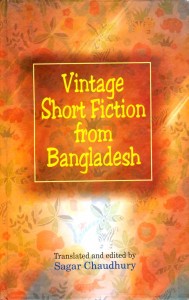
WoWasis book review: ‘Vintage Short Fiction from Bangladesh’ by Sagar Chaudhury

Written By: herbrunbridge - Apr• 20•13

ChaudhuryVintageEditor  and translator Sagar Chaudhury’s Vintage Short Fiction from Bangladesh (2008, ISBN 984 05 1790 2) is a real labor of love, encompassing thirteen stories in a 140 page book. In addition to the stories, there is a four page glossary that will assist the western reader in understanding many of the terms used by the writers. The stories were written over a period of four decades, spanning the 1960s through the 1990s. Here at WoWasis, we found that we liked several stories more than the others, and would actually recommend Niaz Zaman’s From the Delta over Chaudury’s collection, for readers unfamiliar with fiction from Bangladesh. Chaudhury’s book, we feel, is more geared toward those wishing to delve more deeply into the literature.

The real gem in this collection is Selina Hossain’s Akali’s Life at the Station (Akalir Stationer jeeban), the compelling story of a young prostitute working a railway station. This ten page story is a well-written tale, poignant, indicting, and sweet. Here’s one paragraph:

In time Akali gave birth to a lovely little girl. Nishi Khala named her Putul, and she indeed looked as pretty as a doll. With the three-month-old child in her lap, Akali again came back to her life at the station. She had by then started selling her body to anyone paying for it-that was her chief means of livelihood. As a result both happiness and sorrow vanished from Akali’s life.

Hossein’s story is the best of the bunch, and stayed with us for days afterward. Other authors included in this anthology are Kayes Ahmed, Shawkat Ali, Jyotiprakash Dutta, Akhtaruzzaman Elias, Hasan Azizul Huq, Mahmudul Huq, Syed Shamsul Huq, Abu Ishak, Shawkat Osman, Hassan Hafizur Rahman, Zahir Raihan, and Syed Waliullah.

WoWasis book review: ‘From the Delta: English fiction from Bangladesh’ by Niaz Zaman

Written By: herbrunbridge - Apr• 20•13

ZamanDeltaAnyone desiring to get a good feel for the breadth of fiction writing in Bangladesh would do well to pick up a copy of the outstanding anthology From the Delta: English fiction from Bangladesh (2010, ISBN 978 984 506 004 2), edited by Niaz Zaman. This is one of the best fiction collections we here at WoWasis have ever read, and it’s indicative of the writing talent that has thrived in the Bengali arena for decades.

The first story, Sultana’s Dream, by Rokeya Sakhawat Hossain, comes as something of a shocker. It was written in 1905, and it’s feminist science fiction, an amazing story based on the premise that men are essentially second class citizens, while women run the show and travel through the skies in “air-cars.” The full story is available online, and here are two  examples of Hossain’s thought-provoking prose, the first regarding the position of men in this imaginary society, the second regarding the futuristic technology available:

– ‘I have seen some of them [men] doing their work. Do you think they work all the seven hours?’ – ‘Certainly they do!’

 – ‘ No, dear Sultana, they do not. They dawdle away their time in smoking. Some smoke two or three cheroots during the office time. They talk much about their work, but do little. Suppose one cheroot takes half an hour to burn off, and a man smokes twelve cheroots daily; then you see, he wastes six hours every day in sheer smoking.’


She screwed a couple of seats onto a square piece of plank. To this plank she attached two smooth and well-polished balls. When I asked her what the balls were for, she said they were hydrogen balls and they were used to overcome the force of gravity. The balls were of different capacities to be used according to the different weights desired to be overcome. She then fastened to the air-car two wing-like blades, which, she said, were worked by electricity. After we were comfortably seated she touched a knob and the blades began to whirl, moving faster and faster every moment. At first we were raised to the height of about six or seven feet and then off we flew. And before I could realize that we had commenced moving, we reached the garden of the Queen.

 Hossain’s story whets the appetite for the stories that come later. There are 24 stories in this 211 page compilation, and most of them are compelling. All combine human interest and Bengali culture, and they’re fascinating. Several of them take place in London. It would be difficult to pick a second favorite, as there were many. We particularly enjoyed Aali A. Rehman’s Grandmother’s Wardrobe, though, a story of misplaced and forgotten riches.

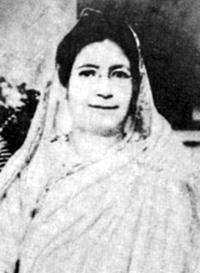
Roquiah Sakhawat Hossein

Roquiah Sakhawat Hossein

Writers contributing to this well-selected anthology include: Kazi Anis Ahmed, Syed Badrul Ahsan, ShahidAlam, RazaAli, Mohammad Badrul Ahsan, Dilruba Z. Ara, Tulip Chowdhury, Towheed Feroze, Farah Ghuznavi, Roquiah Sakhawat Hossein, Khademul Islam, Syed Manzurul Islam, RaziaKhan, Razia Sultana Khan, Rubaiyat Khan, Munize M. Khasru, Nuzhat Amin Mannan, Maithilee Mitra, Shabnam Nadiya, Farhana Haque Rahman, Aali A. Rehman, Neeman A. Sobhan, Syed Waliullah, and Niaz Zaman.

This wonderful collection is highly recommended as not only a terrific collection of fiction, but as an important introduction to Bangladeshi culture.

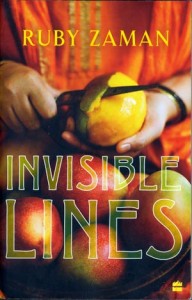
WoWasis book review: ‘Invisible Lines’ by Ruby Zaman from Bangladesh

Written By: herbrunbridge - Apr• 09•13

ZamanInvisibleLinesThe setting is revolutionary-era Bangladesh, and political players include Pakistan, India,  Bengali revolutionaries, and perhaps the central focus of the book, the Biharis. Bangladeshi author Ruby Zaman’s Invisible Lines (2011, ISBN 978-93-5029-071-2) weaves a thrilling tapestry of intrigue, war, and romance in this thriller, but Western audiences are advised to consult an encyclopaedia to understand these players as they sit down to read.

And who are the Biharis? Here’s what Wikipedia says: “Stranded Pakistanis, also known as Biharis, mainly describes the Muslim Bihari ethnic group from the Indian State of Bihar, currently residing in Bangladesh, descendants of migrants from Bihar to East Pakistan at the time of the Partition of India to join the Muslim state of Pakistan. They spoke Urdu, which became the official language of Pakistan, but put them at odds with the Bengali-majority in the region.”

The book does have a protagonist of sorts, Zebunnessa Rahim, the daughter of a Bihari businessman. The book however, chronicles the fates of a number of individuals over two extended familes, Bihari and Bengali, who continue crossing over each other over two continents. We here at WoWasis found the story to be intriguing enough to keep us enraptured throughout the entire book. The war which eventually created the nation of Bangladesh created enemies from friends and turned erstwhile revolutionaries into perceived reactionaries, a situation created when Muslims who fought for Pakistani independence were deemed traitors by Bengalis trying to win independence from Pakistan.

The story is woven intricately by Zaman, and her forays into culture, from weddings to parties, borders on the anthropological. We frankly wished that the author had differentiated the names a bit more. This is a book that trandscends time periods, and her women have names that are similar enough for Westerners that we found ourselves having to retreat through the book to get everyone straight. Shilu, Seema, Sakima, and Sabiha are women who appear in the book, long with the men Shafiq and Samir. That’s a lot of esses. What would have helped tremendously would be a family tree or two, a great place to return to for the temporarily dislodged reader.

But all that aside, this is a very good book. It’s a very good introduction to the forces that created both Pakistan and Bangladesh, and we loved the story and its cultural elements. Ruby Zaman is a lawyer by training, and this is her first book. It’s a good one, and we look forward to her next. Buy it here at the WoWasis eStore.