The sharper edge to traveling in Asia

Adult Nightlife in the Ermita section of Manila: small, but interesting

Written By: herbrunbridge - May• 10•10

Aside from a few expensive hostess bars on Mabini Street, just south of Pedro Gil Street, there doesn’t seem to be a whole lot going on in the Ermita section of Manila, Philippines, with the exception of the LA Café at the corner of Salas and MH del Pilar Streets. The few others bars running north on Del Pilar up through Padre Faura Street are all almost empty. 

We found LA Café to be exceptional. Here, dozens of freelancers hang out, where beers are 110 pesos, and lady drinks 80 pesos, cheap. There are no bar fines, and ladies set their own rates, running from approximately 1000 to 4000 short time. There is a short time hotel two blocks away that charges 300 pesos for 3 hours, and food can even be ordered through room service. All employees at LA Café are extremely friendly, and one even offered to go with us for a night on the town after her shift ended at midnight. Now that’s service! This bar is highly recommended.

Backstreet Bangkok: the family factories of Oven Street

Written By: herbrunbridge - May• 10•10

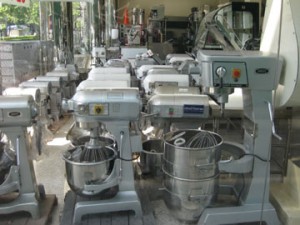
Mixers manufactured right on Bangkok's 'Oven Street'

Have you ever wondered where that woman who sells those delicious fried beetles and grubs bought her cart? Or who makes those beautiful mortars and pestles that we all see being used to make   tasty plates of som tam(Papaya salad)? Well neither had I until I moved to Kluai Nam Thai, a neighborhood near Phra Kanong,Bangkok. One of the many things that I have found most interesting about this area, are the streets that are geared toward the manufacturing and sale of items of a particular industry or genre. 

While dodging motorbikes and soi dogs on the sidewalk, you may find yourself stumbling onto Tin street, where Tinsmiths design and create several everyday items using tin. You may also find sois specializing in the manufacture of ceramic, iron, or sheet metal items. On Rama 4 road, seemingly every address is engaged in either making or selling kitchen appliances and utensils. As a matter of fact, the first two floors of my apartment building consist of a retail shop for all things cooking related. The next three buildings down, there are men welding, shaping, buffing, and installing electric elements on ovens, cook tops, steamers, and street vendor carts. I find this fascinating for two reasons. First, because in the western world we rarely see these hard working people who create these machines in action. They are confined to factories and warehouses outside of the city limits. Second, because I believe it encourages a sense of community. What better way to work as a team than to all have a hand in producing for a single industry? If the Restaurant industry is doing well, then the retail shops will be selling more kitchen appliances to new and current establishments. In turn, more appliances will need to be produced. This allows the entire street to work together, and profit from each others’ success. 

             Here, people enjoy their neighbors and more importantly, they need them.  With high end condos and businesses moving down Sukhumvit Road like a tsunami,they will now need each other more than ever. I wonder how long these small sois will last and if “Oven Street” will stand the test of time.  The next time you’re moseying down a street and see sparks flying from a doorway, take a look inside.  You might be surprised at how interesting it is to watch these hard working people create the things that we use on a daily basis.

Loi Krathong Festival in Chiang Mai, where lighted lanterns fly skyward

Written By: herbrunbridge - May• 10•10

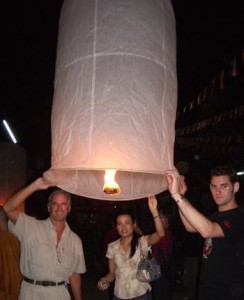
Cape Canaveral, we have lift-off

Every November on the evening of the full moon, a spectacle of lights can be seen in the skies of Thailand.  Like oversized fire flies, thousands of paper lanterns (cohm) slowly fly over every town and city in the country.  Below, the rivers are aglow with small Krathong boats made from bamboo, banana leafs, and flowers.  Aboard each of them is a payload of burning incense, candles, coins, and the wishes, hopes, and prayers of the people who set them adrift.  This is Loi Krathong, and during the full moon of the 12th lunar month, people all over Thailand celebrate the end of the rice harvest, and pray for good growth in the coming season.  Considering that Thailand has led the world in rice exportation since the 1960’s, it’s a pretty serious affair.           

Loi Krathong can be enjoyed anywhere in the country, but many would agree that it can be found at its absolute best in Chiang Mai, where without the hindrance of tall buildings and crowds, you have a clear view of the glowing sky.  This along with the cool weather and a feeling of old world romanticism, there’s no better time to visit the ancient capital.  While hundreds of people line the banks of the Mae Nam Ping River waiting to send their boats downstream, craftswomen can be seen just a few feet away painstakingly creating the beautiful Krathong, working fervently to keep up with the demand for the ornately decorated boats.  Several streets are closed down to traffic for the occasion, making it the perfect opportunity to enjoy the festivities by foot while en route to the river. 

For around 50 baht ($1.50 USD), you can also purchase a paper lantern, or Cohm from one of dozens of vendors, who are always kind enough to give you a crash course in lighting it.  A roll of tissue paper is soaked in fuel and suspended from the bottom by a wire frame.  After being lit, the Cohm is held in place while it fills with hot air.  Once full, it will begin to fly on its own.  Note: If visions of burning trees, power lines, and roof tops are flooding your mind, you can relax.  The few incidents we’ve seen of palm trees ablaze resulted in their being quickly extinguished by brave locals.  You shouldn’t have any trouble finding someone to help you get yours off the ground and safely into the air.  This wonderful event is an excellent way to begin the cool season, but make reservations early, as most hotels and guest houses in Chiang Mai tend to book quickly.

A clean execution: is this the world’s most dangerous shower?

Written By: herbrunbridge - May• 09•10

From our ‘How do I tell your mother how you really died?’ dept. 

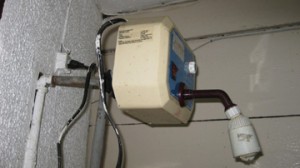
This electric shower will get rid of dandruff permanently!

Here at WoWasis, we’d wager that most shower electrocutions occur in Asia, and this photo, taken in a hotel in Bontoc, Philippines, explains it all. Just imagine soaping up, raising your arms for a rinse, then snagging that nasty electric cord just behind the nozzle. Cause of death on your official certificate would be cardiac arrest, although “death by frying” would be more like it. Less of a burden on your family, too, because cremation’s already been taken care of.

Check out another “hot” electric deadly shower in Thailand

How do I use a Philippine Toilet Bucket?

Written By: herbrunbridge - May• 09•10

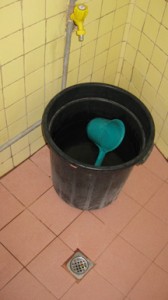
Your best hygiene buddy in most Philippine CRs (comfort rooms)

Glad you asked. But first, what is a toilet bucket? It’s a plastic bucket of water sitting under a water spigot, which you’ll find in 99% of all restrooms in the Philippines. Especially in the country. Inside the bucket, you’ll find a dipper. And when you get the hang of it, you’ll find that the whole shootin’ match is much cleaner than toilet paper. In general, SE Asians are cleaner than the rest of the world because they wash immediately after using the restroom. The Thais have made the toilet hose into a national icon, and Filipinos aren’t far behind.  

Here’s how it works:
After you’ve finished your business, grab a bar of soap with your left hand, and sneak it down the front of the toilet bowl, close to where you’re going to want to wash (hey, thank us, no one else is going to tell you this stuff!). Take the dipper with your right hand, scoop up a bunch of water, and dump the whole thing down your backside a couple of times. This washes away most of the detritus. Now that your nether regions are good and wet, use your left hand to soap up everything real good. Now use more water, and clean everything, soap and bottom, over and over, till you’re squeaky clean. You’ve just given everything a good bath. Once you’re completely rinsed (5 dippers’ full?), take a towel (or paper, if that’s all you have) and dry off. Now you’re convinced, aren’t you?  Here are a few extra notes: 

1) Walk into the bathroom with soap and towel (it’s easy to forget until you make it a habit).
2) Turn on the spigot, and fill the bucket constantly as you go. This is a courtesy for the next person.
3) Philippine toilets often don’t have flushing mechanisms. Instead, you simply pour water down the hole until everything goes down the pipe. If it hasn’t after you’ve washed, just throw more water down the hole. 

You’re going to need this technique if you go off the beaten track in the Philippines. And some of the best stuff is off the track. You may even enjoy this technique so much that you bring it home and use it in your own bathroom.

Christina Aben’s fascinating Ganduyan Museum in Sagada, northern Luzon

Written By: herbrunbridge - May• 09•10

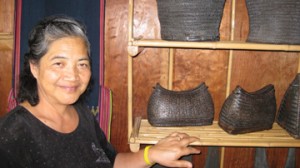
Christina Aben at home in her museum

Founder and curator of the town of Sagada’s Ganduyan Museum, Christina Aben is a national treasure. But neither she, nor her family knows it. Through decades of meticulous collecting of tribal pieces, Aben amassed a spectacular collection detailing a vanishing Igorot (Philippines mountain tribes) culture. “When we were kids, we were always stepping over the stuff,” says her daughter Marina. “It’s really just mom’s hobby.”

 What passed unnoticed is that Christina was born with a curator’s eye for quality and rarity. Along with that, she has a designer’s eye for presentation. And she’s a natural raconteur, being able to tell each visitor was each piece in the museum is important. This one-room museum, sitting above the family’s coffee shop, is certainly one of the world’s great small museums, run by a passionate collector wishing to share her art and culture with the world. When we walked into the museum and asked her to tell us about it, she remarked “if you’d like to listen I certainly have the time.” 

As mentioned earlier, she has a designer’s eye for display, and her pieces have enough space around them to be appreciated as individual works, something that isn’t the case at the Bontoc Museum, which, although compelling in itself, remains something of a warehouse. Because she only has a limited space, she must choose what to display, and how to display it. And she’s an enthusiastic hostess who loves to share the meaning of her pieces within the entire Igorot framework. She’s erudite and informed, and loves to throw in the fact that she was a housewife with a high school education. So much for school. 

The world’s legendary art collectors, people ranging from Isabella Stewart Gardiner to William Randolph Hearst, bequeathed their collections to future generations, but were never accessible to the common people. Christina Aben is one of a special breed, someone who has created a vision, nurtured virtually in secret over decades, and was finally able to execute it. Like Bangkok’s Ban Phiphithaphan, another small museum run by a passionate collector-turned-curator,  Sagada’s Ganduyan Museum represents the best of a fascinating corner of the art world, inhabited by passionate collectors who gladly share their passion with the world while they can, without the benefit of public endowments.

Death by Hanging: Sagada’s cliffside coffins

Written By: herbrunbridge - May• 09•10

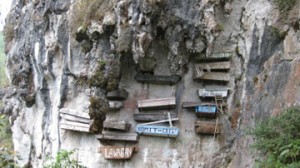
Death from above

At over 5,000 feet in altitude, and accessible only by roads that are fit for off-roading, the visitor really has to want to come to the Philippines village of Sagada. In addition to Christina Aben’s Ganduyan Museum, the cliffside and cave coffin sites are the biggest draws in this small, quiet hillside town. For hundreds of years, locals have buried their people, wrapped in fetal positions, in tiny coffins that have been stacked away from churches. To get to Echo Valley, where a number of coffins aree displayed, one actually has to traverse a church cemetery. Roughly a 15 minute walk down a gorge, the visitor is rewarded with a fully-dressed cliff of coffins, each of which is held up by two metal spikes driven into the cliff face. There is room for future generations too, as spike holes have been driven below the lowermost caskets, awaiting new residents. 

A little further down the main road, one encounters the Lumiang Burial Cave, where dozens of coffins have been stacked near the cave opening. Again, there are plenty of spots for new arrivals. 

Overall, we found the excruciating drive to Sagada worth the trip. Aben’s museum is unique in the world, and death rituals are a fascinating element of any culture, whether you’re talking about Vienna’s wonderful Bestattungs Museum, or Bangkok’s grisly Siriraj Hospital Museum.

4 Major Road Hassles while driving on the Philippine Island of Luzon

Written By: herbrunbridge - May• 09•10

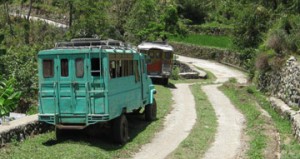
One of the better roads you'll find in northern Luzon

We’ve found the driving on the main island of Luzon to be among the world’s worst driving experiences, on a par with some of the toughest conditions in Africa. On the other hand, hiring a car and driver isn’t a panacea either, as you will only pay surcharges for the driver’s time, meals, and hotels, but probably be paying his “commission” at each food and hotel stop as well. So perhaps you’re left to renting a car and driving the island yourself. Here’s what you’ll find: 

1)      Road maps are either non-existent, or worthless. In most cases, you’ll do as well with a national map of the Philippines. In any case, there is no map that will adequately describe the miserable road conditions, among the worst in Asia.
2)      With the exception of a few roads around Manila, and the expressways, roads are always under construction, and as a rule, only fit for a 4-wheel drive vehicle with high clearance. Classic examples include the road from Sagada to Bontoc, and the Bessang Pass to Bontoc. Any map will indicate these are significant routes, but both are under construction, and the Bessang route is missing a bridge over a river not fordable by a sedan.
3)      There are no signs. Period. Oh, you might get a road sign every 50 km or so, but you’ve got to ask constantly. What signs there are can be contradictory. Traveling from Baguio to Manila, we were directed to the high speed expressway. 3 km or so later, we made a left turn at a sign that said “Manila,” only to find that we were instead being sent to the old road, 20 km to the east. Welcome to the Philippines.
4)      No streetlights, even on expressways. Why would a country build a significant high speed toll road, and not include lighting? As a result, everyone drives with high beams and at extremely high speeds at night, trying to get off this dangerous roadway as soon as possible.

 Corruption is the clue. The lack of signs and lighting, and poor road conditions, have been cited by numerous individuals as prime examples of the corruption involved in the highway department. Signs and lighting were budgeted, but the money went into politicians’ pockets. Roads will never be finished in our lifetimes, because there’s always plenty to skim off the top. That’s a fact of life in the Philippines. So if you do drive yourself, here are our recommendations: 

1)      Rent a 4-wheel vehicle with good clearance. You’ll be needing it.
2)      Carry a GPS, with a map of the Philippines pre-loaded. The road info will probably not be all that important, but you’ll know your direction and distance to population areas.
3)      Unless you’re on an expressway, figure 3-4 hours per every 100 km. 

The good news is that Filipinos are friendly, polite, and willing to help with directions as you meet them along the way. Do remember that frustrated as you are with the asininity of the Philippine highway system, the fellow you ask for directions is not to blame, and is just as much a victim of corrupt politics as you are.

Is harassing Western shoppers the new Vietnamese national sport?

Written By: herbrunbridge - May• 03•10

Going shopping? The hounding starts almost as soon as you leave the airport!

Let’s operate from a basic premise.  We shop because it’s fun, whether it’s as simple as the excitement of acquiring something new, or the joy of learning something from the object or service obtained.

To a very large extent, elements within the Vietnamese character are so pervasive and predictable, that shopping in Vietnam is pretty much hell, we’d say.  Pestering and cheating are the two main reasons. Pestering is the topic of the day, although one could write a book on scams prevalent in Vietnam.

Hounded out of the shops
Whether it be the north, south, or central part of the country, hounding Western shoppers is a way of life for the Vietnamese shopkeeper.  It isn’t enough for the merchant to be satisfied that someone’s walked into a shop, gazing mindfully and an object or two, suitable for granny’s birthday or Vickie’s graduation.  Immediately, the shopper has an unwanted companion at the elbow, shoving unwanted goods in his or her face, yakking uncontrollably about what ever object the harassed shopper appears to be looking at, and making the customer feel just plain miserable.  When the shopper is hounded out the door by the shopkeeper, invectives will commonly be hurled at the retreating shopper, and all other shopkeepers within earshot begin laughing derisively.

Pestered off the streets
OK, you say, let’s give the shops a wide berth, and buy directly from those nice ladies in ethnic garb standing on the street corner, selling crafts.  My friend, you’ve made a grave error.  Show any interest at all, and the tribeswoman will grab her goods, lock, stock, and barrel, and begin pursuing you down the street, shoving goods in your face, and dogging you for blocks.

Bedeviled in the markets
Ah, you clever soul.  You’ll stay out of shops, avoid the street tribes, and confine yourself to street markets, will you?  Sorry, strike three.  Here, virtually every stall keeper opens the conversation with “Buy from me, buy from me…  buy from meeeee!”  You still will be dogged, may even be followed by a confederate with an armload of goodies, yammering at you while you’re fleeing along the midway.  Expect him or her to hurl the usual insults as you make your mad dash away, and thrill to the laughter of other stall keepers enjoying the witty one-way repartee.

How do I buy anything with some degree of comfort?
Try top-notch shops, used to dealing with Westerners.  Their informal market surveys have told them Western people walk when bugged, and quite a few owners have lived a while in western countries.  They know the value of being politely near enough to answer inquiries without carrying on a non-stop rap the length of the Vietnamese constitution.

When buying crafts, our most pleasurable experience was trekking out to the ethnic villages themselves, and buying from the girls selling shirts, blankets, bags, and jewelry made by their parents.  The girls are sweet and multilingual, and the prices are far less than you’ll pay in town.  You avoid the middleman and the pestering, you get to meet wonderful people, and the money goes directly to the families.

What are you gonna do, Vietnam?
If Vietnam really wants to play hardball in the world of commerce and tourism, she’d better start a major re-education project to tell the nation’s shopkeepers how much money they’re losing.  They’re not just pestering them out of their stores, they’re driving them outside the country’s borders, where pleasurable shopping experiences lie in virtually every other country in Southeast Asia.

And if the commercial folks working for the tourism branch of the Vietnamese government get around to reading this article, we’d be happy to offer it as essential reading in a course it can offer to tradespeople wishing to enhance their income, retain customers, and make a few new friends.

Shoplifting scam at Bangkok’s airport nabs unsuspecting tourists

Written By: herbrunbridge - May• 03•10

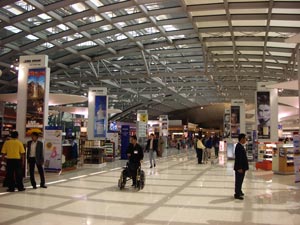
Scene of the crime: Suvarnabhumi's legendary shopping concourse

Allegations of an elaborate and expensive extortion scam operating out of Bangkok’s Suvarnabhumi airport have shaken Western visitors. England’s Sunday Times reports that in this scam, visitors are allegedly accused by airport shop owners of shoplifting, are arrested, detained, and “encouraged” to pay a hefty bribe to be released, which can amount to $13,000 USD.  The Times reports that at least one couple who paid the bribe is taking legal action. 

This scam is thought to be initiated by dishonest shop employees, who drop an unpaid-for item into visitors’’ shopping bags with legitimately paid-for merchandise. Upon leaving the store, a security guard checks the bags, finds the inserted item is not listed on the receipt, and arrest the visitor. 

It has been further alleged that the Thai Tourist Police are in collusion. 

It has also been reported that a similar scam is run out of Bangkok’s Suvarnabhumi airport, in which “yaba” (amphetamine) pills are surreptitiously inserted into the luggage or hand-carry items of Thai women returning from overseas trips. They are then arrested and forced to pay a bribe to free themselves.  

Some sound advice: When traveling through Bangkok’s Suvarnabhumi airport, be wary of ANYTHING being surreptitiously inserted into one of your shopping bags, pockets, or any other personal item you may be carrying. This could potentially occur inside a shop, or when you’re walking anywhere near a shopping area within the airport.